Whenever I pull a fresh model off my printer bed, I know that choosing the best color to 3d print for painting—typically a neutral mid-tone gray or matte white—makes all the difference for smooth color coverage. Over the years, I’ve tested dozens of filaments paired with various acrylics and markers to see what actually holds pigment best without obscuring layer lines. In this guide, I share hands-on insights on print color choices and review five reliable paint sets and marker kits that bring your 3D models to life.
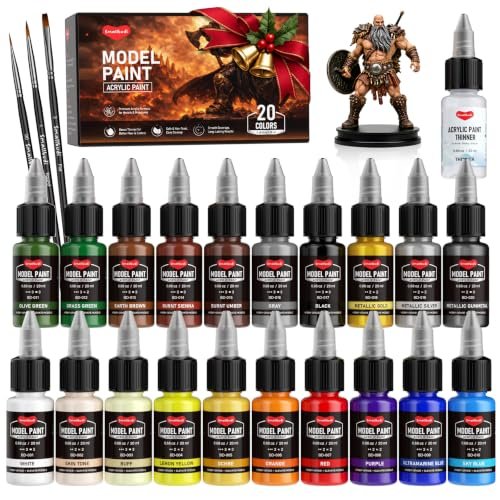
Smallbudi 20 Colors Model Paint Set 20ml
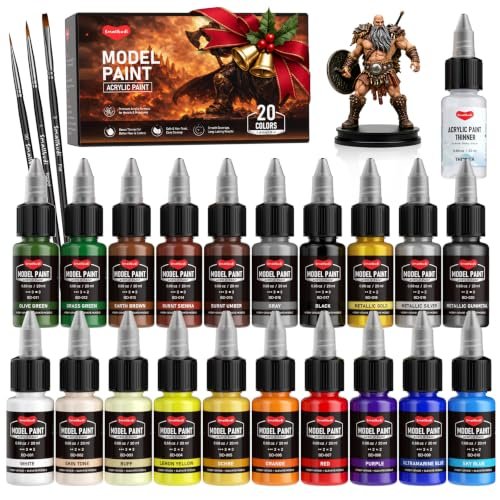
When painting detailed tabletop figures, this set offers rich pigment concentration that covers layer lines smoothly without pooling in fine crevices. The pre-thinned formula flows nicely directly from the bottle, which saves prep time and keeps fine surface details crisp. It also includes an acrylic thinner bottle and three detail brushes, making smooth transitions and glazing surprisingly simple right out of the box.
Key features that stand out:
– Complete kit with 20 essential colors including metallics and skin tones
– Pre-thinned formula ready for direct brushwork or airbrushing
– Included acrylic thinner for custom glazing and blending
– Color wheel and beginner reference guide included
- Pros:
- High opacity means fewer coats needed over darker prints
- Dries down to an even, clean matte finish
- Great brush assortment for tiny miniature crevices
- Cons:
- The bottle dropper tips can clog occasionally if not wiped clean after use.
Best for: Miniature painters and tabletop hobbyists working on detailed resin prints.
Expert Opinion: This set hits a sweet spot for resin miniatures printed in standard gray; the matte finish hides minor surface layer artifacts while keeping surface textures razor-sharp.
Recheel Acrylic Paint Markers, 30 Colors Dual Tip
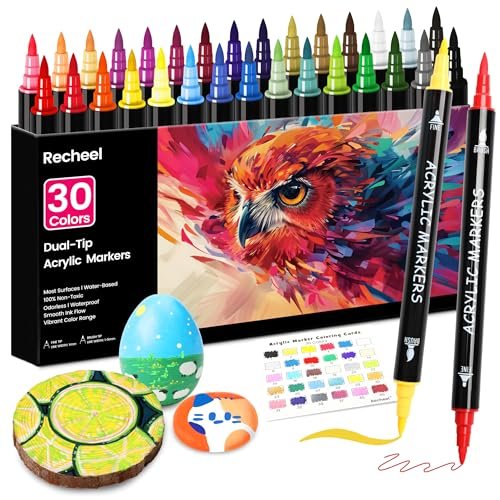
Markers are a massive time-saver for geometric and decorative prints, and this set stands out with its dual-tip versatility. You can easily lay down broad coverage with the flexible 1-5mm brush tip while using the fine 1mm tip for precise edge cleanup. The water-based acrylic ink dries fast and leaves vibrant, fade-resistant color over raw or primed 3D surfaces.
Key features that stand out:
– Dual-tip design featuring a 1mm fine tip and 1-5mm flexible brush tip
– Quick-drying acrylic ink formulation that resists smearing
– Wide palette of 30 distinct, highly pigmented shades
– Adheres cleanly to plastic, PLA, PETG, and cured resin
- Pros:
- Zero setup or brush cleaning required between color changes
- Brush tips bend comfortably into panel lines and surface gaps
- Excellent color consistency across all 30 markers
- Cons:
- The broad tip can run dry faster when coloring large, highly porous FDM prints.
Best for: Quick touch-ups, edge lining, and multi-color detailing on PLA prints.
Expert Opinion: If you print in neutral white or light gray PLA, these pens deliver crisp contrast and let you bypass messy paint palettes for fast accent work.
HissiCo 55PCS Acrylic Paint Set of 36 Colors (60ml)
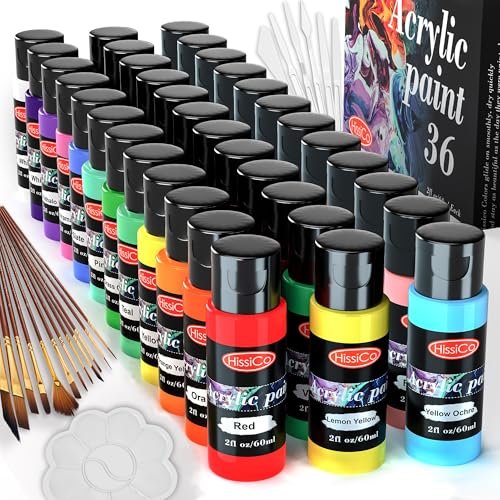
If you regularly tackle large-scale cosplay props or multi-piece terrain, having large 2-ounce squeeze bottles makes this kit an absolute workhorse. The creamy texture provides rich color blending capabilities, allowing you to whip up unique custom gradients on palettes without burning through your paint stash. The included 12 brushes and mixing tray provide a sturdy all-in-one workstation for bigger printing projects.
Key features that stand out:
– Generous 60ml flip-top squeeze bottles for easy flow control
– 36 rich colors conforming to ASTM D-4236 non-toxic standards
– Full starter accessory kit with 12 brushes and a mixing palette
– High-viscosity formula holds brush strokes and textured effects well
- Pros:
- Huge volume of paint per bottle for large functional prints
- Blends smoothly with water or medium for base coating
- Flip-top caps prevent accidental dry-out during long painting sessions
- Cons:
- The heavy-body consistency requires thinning down if you want to avoid brush marks on smooth prints.
Best for: Large-scale FDM prints, cosplay props, and scenic diorama bases.
Expert Opinion: For large prints made with black or dark gray filament, this kit provides the heavy pigment load necessary to block out base layers in minimal passes.
VVF 18 Colors Model Paint Set with Thinner
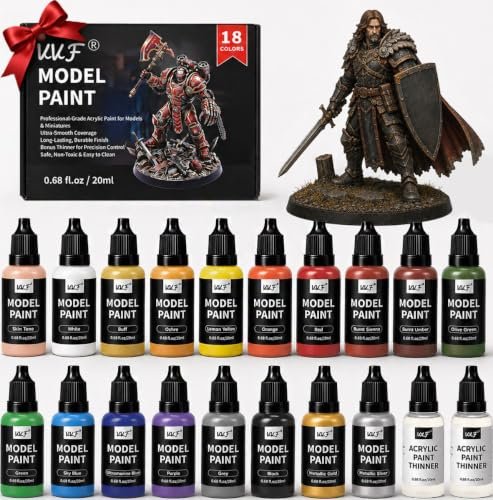
Designed specifically for scale modeling, this kit comes pre-thinned for immediate brush application straight from each 20ml dropper. The paint lays down with balanced flow, creating a smooth matte finish with zero detail clogging across intricate resin or FDM features. You also get two full bottles of acrylic thinner, giving you plenty of control for custom washes or airbrushing setups.
Key features that stand out:
– 18 targeted modeling shades with 16 matte colors and 2 realistic metallics
– Pre-thinned consistency formulated specifically for miniature brushwork
– Comes with 2 dedicated bottles of thinner for adjusting viscosity
– Safe, water-based formula engineered for plastic, resin, and metal
- Pros:
- Flows into recesses without obscuring subtle print details
- Metallics provide convincing sheen without chunky flake appearance
- Dropper bottles make portion control precise and waste-free
- Cons:
- The color selection focuses strictly on military and gaming tones, lacking neon options.
Best for: Tabletop gaming minis, scale armor models, and mechanical 3D prints.
Expert Opinion: This set is a standout for prints produced in medium gray resin; the matte tones balance out micro-layer visibility and take dry brushing exceptionally well.
Coogert 30 Multicolor Acrylic Paint Pens Markers
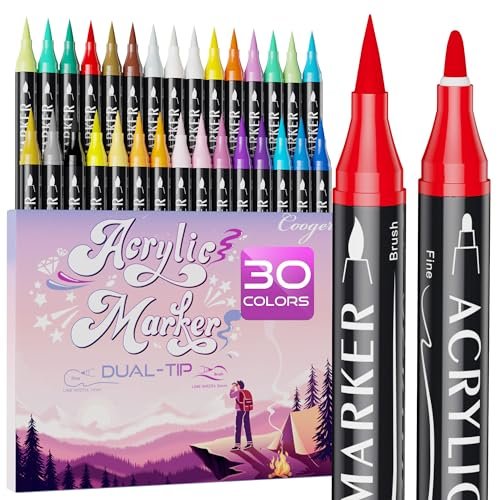
These dual-tip markers are fantastic for hobbyists who want clean lines without pulling out cups of water and messy wash jars. Featuring a fine 1mm tip and a 0.5-5mm brush nib, they let you switch between lettering tiny insignia and coloring broader panels effortlessly. The water-based ink flows without flooding, making it safe to use on textured 3D prints without the fear of sudden paint spills.
Key features that stand out:
– Versatile dual-ended nibs with a 1mm detail tip and 0.5-5mm brush
– Smooth anti-jamming ink feed mechanism
– 30 bright, water-based hues suitable for multiple plastic types
– Non-toxic, quick-drying formula resistant to handling wear
- Pros:
- Excellent control when detailing small raised lettering on prints
- Dries quickly to prevent accidental finger smudges
- Vibrant saturation on both light and dark print surfaces
- Cons:
- The nib tips can fray slightly if worked too aggressively over rough, unsanded layer lines.
Best for: Adding accents, text, and decorative colors to articulated toys and gadgets.
Expert Opinion: When working on white or light-toned prints, these paint markers offer pinpoint control that beats standard detail brushes for lettering and trim.
Choosing Between Bottled Model Paints and Acrylic Markers
- Miniature details vs. broad parts: Bottled miniature paints like Smallbudi and VVF are thinned to settle smoothly without filling in fine panel lines or facial features, whereas markers are built for quick, clean fills.
- Prep time and workflow: Paint markers like Recheel and Coogert eliminate palette setups, water cups, and brush cleanups, making them the superior choice for fast accents and line work.
- Surface area economy: For large helmet prints, armor pieces, or terrain sets, HissiCo 60ml bottles provide the raw volume needed so you never run out of primary base coat colors mid-project.
- Print base color interaction: If you print in neutral gray filament or resin, either brush paints or markers will register true to color, whereas printing in black demands the high-opacity pigments found in dedicated model paints.
Final Verdict
Match your paint selection to your project scale and printing medium:
- For Detailed Tabletop Miniatures: The Smallbudi 20 Colors Set takes top honors for miniature figures. Its balanced matte finish, inclusion of a color wheel, and dedicated thinner give you total control over fine resin details.
- For Fast Prints and Everyday Hobby Detailing: The Recheel Dual Tip Markers are my go-to recommendation for maker projects, signs, and articulated toys where setting up a wet palette feels like overkill.
- For Large Props and Cosplay Armor: Pick the HissiCo 55PCS Set. The high-capacity 60ml bottles give you all the volume needed to cover heavy FDM parts without worrying about running dry.
FAQs: Finding the Best Color to 3D Print for Painting
What is the best color to 3D print for painting miniatures?
Neutral gray is widely considered the best color to 3D print for painting. Mid-tone gray does not distort the opacity or temperature of topcoat paints, makes layer defects easy to spot during sanding, and provides a balanced middle value for both shadow washes and bright edge highlights.
Is white or black filament better for painting?
White filament is ideal if you plan to use vibrant, translucent paints, speed paints, or acrylic inks, as the bright background naturally boosts color saturation. Black filament works best for dark, gritty paint jobs like grimdark armor or machinery, but it requires significantly more coats of light colors to get full opacity.
Can I paint directly on 3D prints without a primer?
While you can apply high-pigment acrylics or paint markers directly onto PLA or cured resin, applying a dedicated primer coat is always recommended. Primer fills tiny microscopic gaps between layer lines and gives your acrylic paint a grippy tooth to adhere to, preventing peeling over time.
Why do bright filament colors make painting harder?
Bright colors like red, neon green, or vibrant blue bleed through thin coats of acrylic paint. If you paint a yellow or flesh tone over red plastic, you will likely need three to four extra layers of base coat just to neutralize the underlying plastic tint.
What base color works best for metallic paints?
If your 3D print is going to be finished with metallic paints like gold, silver, or bronze, a smooth black or dark brown base is best. Dark undercoats give metallic pigments richer depth and reflective contrast compared to printing in white or pale gray.
Should I sand my 3D prints before applying paint?
Yes, light sanding helps smooth layer lines and scuffs the plastic surface so that acrylic paints and markers bond securely. Start with 220-grit sandpaper to knock down prominent ridges and finish with 400-grit before laying down your first coat of paint.
Affiliate Disclosure: As an Amazon Associate, I earn from qualifying purchases made through links on this site.