I’ve spent countless hours tuning radios, and I know that even the best CB radio setup can be crippled by a cheap cable. When I was dealing with high SWR readings, switching to a high-quality coaxial cable instantly dropped the interference and boosted my clarity. This guide dives into five top-rated cables, helping you find the absolute best cb coax cable to ensure strong transmission and minimize signal loss on the road or at your base station.
Contents
- Wilson 305-830 18-Foot Belden Coax Cable with PL-259/FME Connectors – 18FT
- RFAdapter CB Coax Cable, 20ft RG8x Coaxial Cable UHF Male to Male Low Loss, 50 Ohm for HAM Radio Antenna
- RFAdapter RG58 Coax Cable, CB Antenna Coaxial Cables, 10ft PL 259 UHF Male to Male Cable, 50 Ohm Low Loss for HAM Radio Antenna
- MOOKEERF CB Coax Cable 10ft, Low Loss RG8X Stranded Core CB Antenna Cable with PL-259 and FME/PL259 Male Connector – 10 Foot
- Roadpro RP-8X18CL 18FT CB Antenna Mini-8 Coax Cable with PL-259 Connector, Clear
- Comparison Insights: Finding Your Ideal Coax
- Final Verdict: Which Cable is the Right Choice?
- Frequently Asked Questions About Best CB Coax Cable
Wilson 305-830 18-Foot Belden Coax Cable with PL-259/FME Connectors – 18FT

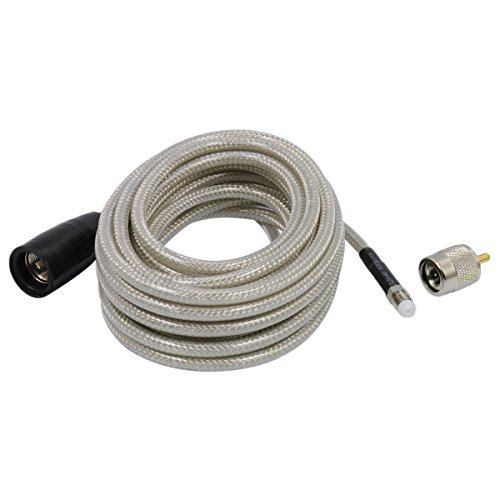
If you’re running a large truck, SUV, or a vehicle where routing the cable is a nightmare, the Wilson 305-830 is a lifesaver. This 18-foot cable uses Belden’s high-quality super low-loss Mini-8 cable, which minimizes power loss compared to thinner RG58 cables. What really sets this cable apart is the removable FME connector. This tiny connector allows you to easily push the cable through tight firewalls or door jams, and then you simply screw on the standard PL-259 connector once it’s routed.
Key features that stand out:
– Tinned copper stranded center conductor
– High-quality super low loss mini-8 cable
– FME and PL-259 connector for an easy install
– Vinyl boot to protect the connection point
– 18 feet long
Pros:
– Makes professional installation significantly easier thanks to the FME connector system.
– Uses durable, low-loss Mini-8 cable for superior performance.
– Tinned copper helps resist corrosion and maintains signal integrity over time.
Cons:
– It’s often priced slightly higher than basic RG58 cables due to the specialized connector system.
Best for: Truckers and users who need to route cable through extremely tight spots.
Expert Opinion: This is a top-tier choice for difficult vehicle installations. The combination of Belden quality cable and the FME quick-disconnect system minimizes frustration and ensures a clean, reliable setup.
RFAdapter CB Coax Cable, 20ft RG8x Coaxial Cable UHF Male to Male Low Loss, 50 Ohm for HAM Radio Antenna

When hunting for the best cb coax cable, RG8x (Mini-8) is a standard high-performance choice, and this RFAdapter 20ft option delivers. Built with a pure copper inner conductor and double shielding, this cable excels at preventing signal leakage and interference. At 20 feet, it’s ideal for mobile setups on larger vehicles or for connecting your base station radio to an outdoor antenna mast. The high-quality UHF (PL259) connectors are fully molded, ensuring a durable and waterproof connection suitable for both indoor and outdoor amateur radio use.
Key features that stand out:
– Low Loss RG8X Cable better than standard RG58.
– 17AWG thicker pure copper inner conductor for higher power applications.
– Double shielding to prevent signal leakage and interference.
– Molded nickel-plated brass UHF PL259 connectors with gold-plated pins.
– Waterproof and flexible PVC jacket.
Pros:
– Excellent choice for higher-powered radio systems due to the thicker conductor.
– Double shielding drastically reduces background noise and interference.
– The 20-foot length offers great flexibility for various installations.
Cons:
– Being RG8X, it is thicker and slightly less flexible than RG58, making tight bends difficult.
Best for: Users running moderate to high power, or those requiring superior signal integrity over 18+ feet.
Expert Opinion: If signal loss is your primary concern, RG8x is the way to go, and this RFAdapter version provides excellent construction quality, particularly with the molded connectors, ensuring longevity even when exposed to the elements.
RFAdapter RG58 Coax Cable, CB Antenna Coaxial Cables, 10ft PL 259 UHF Male to Male Cable, 50 Ohm Low Loss for HAM Radio Antenna

Sometimes, the best solution isn’t the thickest cable; it’s the most manageable. The RFAdapter RG58 is perfect for short jumper applications—connecting your radio to an SWR meter, or for basic mobile setups where the antenna is close to the radio (like mounting on the rear of a Jeep). This 10-foot RG58 cable is flexible, making it easy to tuck away, and provides a low-loss connection suitable for standard 4-watt CB operation. It uses a tinned copper inner conductor and robust brass connectors to resist corrosion, maintaining signal quality without introducing extra static.
Key features that stand out:
– 10FT PL259 jumper cable for short runs.
– High quality and 50 ohm low loss tinned copper inner conductor.
– RG 58 coax cable with over 95% braid coverage.
– Does not introduce static or interference when bridging devices.
Pros:
– Very flexible and easy to manage in cramped vehicle spaces.
– Excellent for use as a jumper cable between radio and SWR meters or antenna tuners.
– Highly resistant to oxidation and corrosion.
Cons:
– RG58 has higher signal loss per foot compared to RG8x, making it unsuitable for very long runs (over 18 feet).
Best for: Short runs, jumper cables, and mobile users prioritizing flexibility and minimal bulk.
Expert Opinion: Don’t underestimate the RG58 for short applications. For standard 4-watt CB radios, the low loss of a 10-foot run is negligible, and the improved flexibility makes installation much cleaner than wrestling with a thick RG8X cable.
MOOKEERF CB Coax Cable 10ft, Low Loss RG8X Stranded Core CB Antenna Cable with PL-259 and FME/PL259 Male Connector – 10 Foot
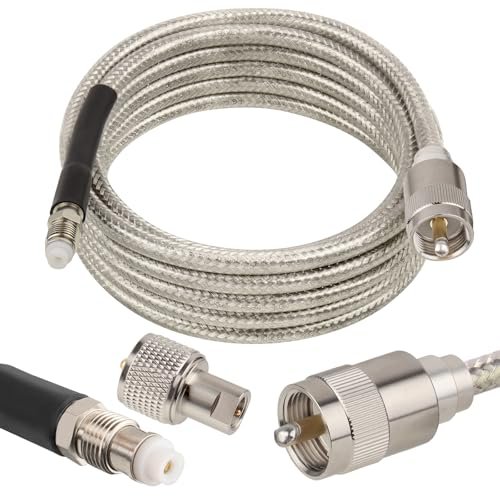
The MOOKEERF RG8X cable brings high performance together with installation flexibility. Like the Wilson cable, this product features the crucial FME connector, allowing you to easily route the cable before adding the standard PL-259 end. This cable is specifically designed for ultra-low signal loss, featuring a stranded pure copper inner conductor that provides excellent electrical performance while keeping the cable more flexible than solid core RG8X options. The enhanced waterproofing (FEP jacket) makes this an exceptional choice for antennas exposed to harsh weather.
Key features that stand out:
– Ultra Low Loss RG8X (Mini-8) pure copper inner conductor.
– Great Flexibility due to the stranded center conductor.
– Strong Link PL-259 and FME Connectors for easier routing.
– More than 95% shield performance against EMI and RFI.
– Waterproof FEP jacket for outdoor harsh environments.
Pros:
– Combines the low-loss performance of RG8X with the installation convenience of the FME connector.
– High shielding performance minimizes noise and maximizes signal transmission.
– Stranded copper increases durability and allows for easier bending than typical RG8X.
Cons:
– Only available in a 10-foot length, limiting its use for large vehicle installs or base stations.
Best for: High-performance mobile users who need low-loss cable routed through challenging vehicle access points.
Expert Opinion: This is arguably the best cb coax cable for mobile performance when you need both high conductivity (pure copper RG8X) and flexibility. The upgraded link between the connector and the cable is a significant detail that improves reliability.
Roadpro RP-8X18CL 18FT CB Antenna Mini-8 Coax Cable with PL-259 Connector, Clear

Roadpro is a well-known name in the mobile radio accessory world, and their Mini-8 coax cable is a solid, no-frills performer. This 18-foot RG8X cable is popular among truckers and enthusiasts because of its high-quality construction featuring 144 braided strands of copper. This high braid count is critical because it significantly improves the cable’s shielding and conductivity, leading to lower SWR readings and better overall signal clarity. The clear jacket is a unique aesthetic feature, although performance remains the priority.
Key features that stand out:
– 18FT Mini-8 Coax Cable (RG8X performance standard).
– 144 braided strands of copper for superior shielding and flexibility.
– Standard PL-259 connector pre-installed.
– Durable PVC jacket.
Pros:
– Exceptional shielding due to the high strand count (144 strands).
– Standard 18-foot length is perfect for most tractor trailers and large SUVs.
– RG8X construction offers significantly less signal loss than RG58.
Cons:
– Lacks the FME connector, meaning routing the PL-259 plug can be challenging through tight spots.
Best for: Reliable, standard 18-foot installations where high braid count is desired for maximum protection.
Expert Opinion: If you are comparing basic RG8X options, always look at the braid count. The 144 strands on the Roadpro are a huge indicator of quality shielding, making this a reliable, workhorse cable for minimizing noise interference.
Comparison Insights: Finding Your Ideal Coax
When comparing these cables to find the best cb coax cable for your needs, the choice usually boils down to cable type, length, and connector convenience.
The fundamental difference lies between RG58 and RG8X (Mini-8). For short jumper runs (under 10 feet) or standard 4-watt CB operation, the highly flexible RG58 cable is acceptable, especially if routing ease is paramount (like the RFAdapter RG58).
However, if you are running higher power (over 100 watts) or need runs longer than 15 feet, the lower loss RG8X cable is necessary. The RG8X options from Roadpro, Wilson, and RFAdapter will always deliver better performance across distance, ensuring more power reaches the antenna rather than being dissipated as heat in the cable.
For installation convenience in vehicles, cables featuring the FME connector system (Wilson and MOOKEERF) are indispensable, as they allow the main connector to be attached after the cable has been passed through a small hole in the vehicle’s body or firewall.
Finally, durability is key: look for cables with tinned or pure copper conductors and high strand counts (like the Roadpro’s 144 strands) to guarantee the best shielding and longevity against oxidation.
Final Verdict: Which Cable is the Right Choice?
Choosing the absolute best cb coax cable depends on your specific installation scenario:
For Maximum Installation Ease (Truckers/Complex Installs): Go with the Wilson 305-830 18-Foot Belden Coax Cable. The proven Belden quality combined with the FME connector system guarantees both low-loss performance and a frustration-free install.
For Uncompromising Performance Over Distance: The RFAdapter CB Coax Cable, 20ft RG8x is the winner here. It offers the thickest pure copper conductor and excellent double shielding, making it ideal for base stations or large vehicle applications where signal clarity is non-negotiable.
For Short Jumper Runs (Radio to SWR Meter): The RFAdapter RG58 Coax Cable, 10ft is the perfect highly flexible, low-profile solution. You get reliable connectivity without the bulk of the larger RG8X cables.
Frequently Asked Questions About Best CB Coax Cable
What is the difference between RG58 and RG8X coax cable?
The main difference is the conductor thickness and signal loss. RG8X (Mini-8) has a thicker inner conductor (17AWG vs. 20AWG in typical RG58) and thicker dielectric insulation, resulting in much lower signal loss per foot, especially at CB frequencies. RG58 is more flexible but is best suited for shorter runs (under 15 feet). If you are looking for the best performance over longer distances, RG8X is highly recommended.
Does the length of my coax cable really matter?
Yes, absolutely. Coaxial cable introduces resistance, which causes signal loss. While manufacturers often recommend specific lengths (like 9 or 18 feet) to help match impedance and lower standing wave ratio (SWR), the most critical factor is using the shortest high-quality cable possible to minimize power loss. Never coil excess cable; route it properly or buy the exact length you need.
Why do I need low-loss coax?
Low-loss coax ensures that the maximum amount of transmitting power reaches your antenna and that the best possible signal returns to your radio. High signal loss can lead to weak output signal, decreased range, and often results in higher SWR readings, which can eventually damage your radio equipment.
What is an FME connector and why is it useful?
An FME (For Mobile Equipment) connector is a tiny threaded connector designed to be small enough to pass through narrow vehicle spaces, such as door frame gaps or drilled holes in the firewall. Once the cable is routed, the standard, bulkier PL-259 connector screws onto the FME end. This saves the installer from having to drill a very large hole just to fit the plug through.
How often should I check my coax for damage?
It is smart to visually inspect your coax cable, especially where it connects to the antenna or where it passes through a tight vehicle spot, at least twice a year. Look for cracks in the jacket, kinks, or corrosion near the connectors. Damage to the shielding or conductor can drastically raise your SWR and lead to poor transmission quality.
Can I use the same coax for both CB and HAM radio?
Yes, most coaxial cables designed for 50-Ohm systems (like all the products reviewed above) are compatible with both CB (27 MHz) and most standard Amateur (HAM) radio frequencies. However, high-frequency (VHF/UHF) HAM operations may require specialized cables with even lower loss characteristics than standard RG8X.
Affiliate Disclosure: As an Amazon Associate, I earn from qualifying purchases made through links on this site.