I’ve spent hundreds of hours assembling, tweaking, and running prints across budget machines, and finding a reliable large cheap 3d printer used to mean endless bed-leveling headaches and failed overnight jobs. Today’s budget-friendly FDM printers come packed with high-speed CoreXY frames, reliable automatic calibration, and multi-color printing setups that won’t drain your bank account. In this guide, I break down the best affordable options with decent print volumes so you can start making functional parts, cosplay props, and creative designs without spending a fortune.
Bambu Lab P1S Combo
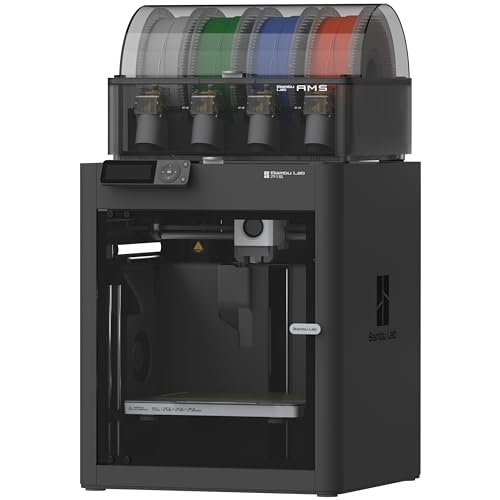
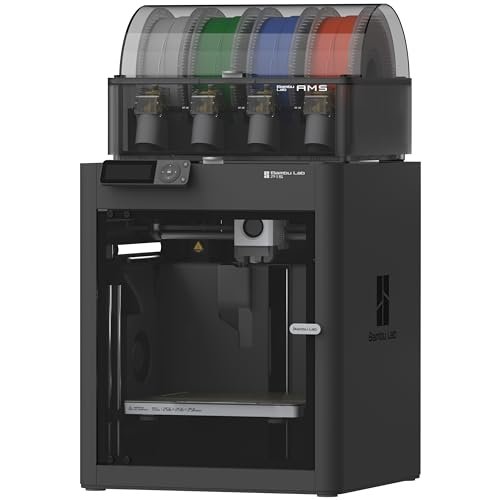
The Bambu Lab P1S Combo offers an enclosed build environment paired with the proven Automatic Material System (AMS) for seamless multi-color projects. Its enclosed chassis helps stabilize internal temperatures when working with tricky filaments like ABS and ASA. With speeds reaching 500mm/s and automatic bed leveling right out of the box, it completely removes the traditional setup friction.
Key features that stand out:
– Up to 16-color printing capability via linked AMS units
– High-speed printing up to 500mm/s with 20,000 mm/s² acceleration
– Fully enclosed body for printing temperature-sensitive filaments
– Hands-off automatic bed leveling and vibration compensation
– Quick 15-minute out-of-the-box assembly
Pros:
– Outstanding print quality right out of the box with minimal tuning
– Enclosed chamber expands your material options to engineering plastics
– AMS unit handles multi-filament loading and roll switching automatically
Cons:
– It is louder during high-speed printing than open-frame bed slingers.
– The proprietary parts ecosystem limits third-party hotend modifications.
Best for: Makers who want reliable multi-color prints and the ability to print ABS or ASA without tinkering.
Expert Opinion: The P1S Combo is the benchmark for hassle-free 3D printing because it combines enclosed high-speed performance with dependable multi-material feeding at an accessible price point.
Bambu Lab P2S Combo
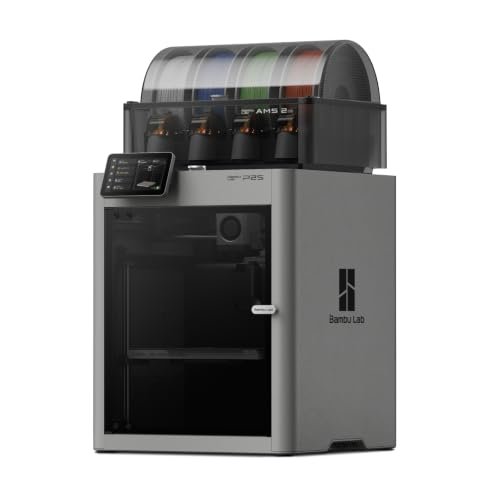
The Bambu Lab P2S Combo pushes speed and filament management even further with its upgraded AMS 2 Pro system. It features active flowrate compensation driven by a PMSM servo extruder, keeping layer lines crisp and corners sharp even at blistering speeds up to 600mm/s. The integrated filament drying system running at up to 65°C ensures your spools stay dry while printing, eliminating moisture-induced stringing on long jobs.
Key features that stand out:
– Max print speeds up to 600mm/s with high-precision servo extrusion
– AMS 2 Pro system featuring built-in filament drying up to 65°C
– Adaptive airflow system with chamber heat retention up to 50°C
– AI failure detection and built-in carbon air filtration
– Rapid 15-minute initial setup with quick-swap nozzle design
Pros:
– Active filament drying keeps moisture-sensitive materials printing cleanly
– Higher top speed and smarter airflow regulation improve overhang quality
– AI monitoring saves filament by catching printing errors early
Cons:
– The advanced feature set pushes the higher end of budget territory.
– Replacing specialized AMS 2 rollers requires more careful maintenance.
Best for: Intermediate hobbyists and small workshops needing enclosed, dried-filament multi-material production.
Expert Opinion: The active spool heating in the AMS 2 Pro solves one of the biggest pain points in multi-color printing, making the P2S Combo a massive step up for material reliability.
Bambu Lab P1S 3D Printer
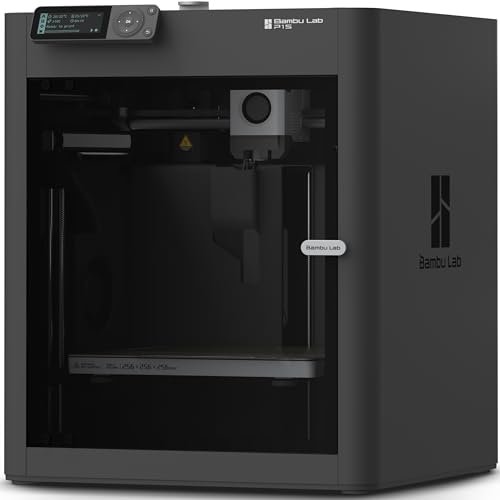
If you want the enclosed printing benefits of the P1S platform without paying upfront for multi-color hardware, the standalone Bambu Lab P1S is an outstanding choice. It delivers the same rigid enclosed frame and 500mm/s printing speed, making it ready for tough materials like PETG, ABS, and ASA right away. You still get effortless automatic bed leveling and high-speed motion compensation without having to assemble complicated kits.
Key features that stand out:
– Fully enclosed body tailored for ABS, ASA, and PETG filaments
– High-speed motion system reaching 500mm/s and 20,000 mm/s² acceleration
– Full automated bed leveling and resonance testing
– Fast 15-minute setup experience for beginners and pros
– Upgrade path to multi-color printing later via add-on AMS
Pros:
– Cheaper entry point into the enclosed Bambu ecosystem
– Handles warp-prone filaments far better than open-frame printers
– Solid construction with dependable first-layer consistency
Cons:
– The basic text-based screen is somewhat dated compared to modern touchscreens.
– You will need to purchase the AMS separately later if you want multi-color prints.
Best for: Budget-conscious users focused on durable single-color functional parts in engineering filaments.
Expert Opinion: This standalone machine gives you high-speed enclosed printing at a wallet-friendly price, leaving the door open to add multi-material capabilities down the line.
Bambu Lab A1 3D Printer
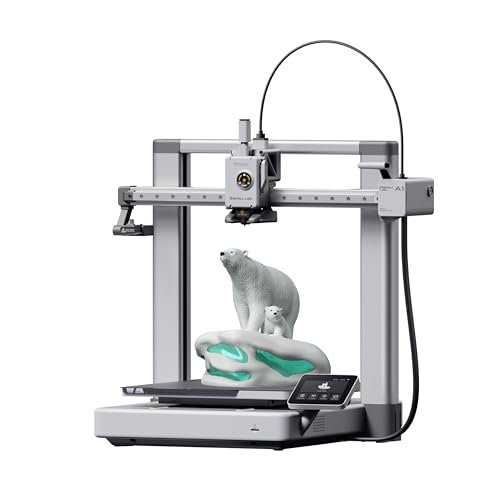
The Bambu Lab A1 brings premium calibration tech down to an affordable, open-bed design with a generous build area. Its active flow rate compensation monitors nozzle pressure in real-time, resulting in exceptionally clean surfaces and smooth seams. Thanks to its active motor noise canceling, this machine runs surprisingly quiet, making it suitable for bedrooms, offices, or shared spaces.
Key features that stand out:
– Full-auto calibration covering Z-offset, bed leveling, and vibration resonance
– Active flow rate compensation using nozzle pressure sensors
– High-speed printing up to 10,000 mm/s² acceleration
– 1-clip quick-swap nozzle mechanism for rapid maintenance
– Whisper-quiet stepper motor noise cancellation
Pros:
– Extremely smooth surface finish thanks to real-time extrusion tuning
– Quiet operation makes it practical to run right beside your desk
– Quick-swap nozzle lets you change sizes in seconds without tools
Cons:
– The open bed makes it unsuitable for printing ABS or nylon without an enclosure.
– It requires significant clearance behind and in front for the moving bed.
Best for: Beginners and prop makers looking for an easy-to-use, ultra-quiet workhorse for PLA and PETG.
Expert Opinion: For pure value and print quality on standard filaments, the Bambu A1 is easily one of the most refined and beginner-friendly bed slingers on the market.
FLASHFORGE Adventurer 5M 3D Printer
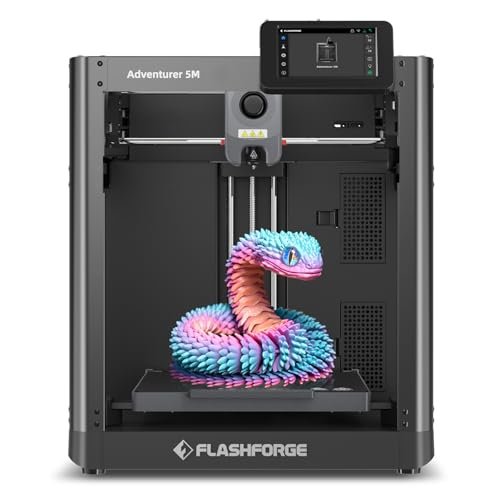
The Flashforge Adventurer 5M stands out as a rapid, reliable CoreXY machine that offers fast prints at an entry-level price point. It boasts an impressive travel speed of 600mm/s backed by a high-flow 32mm³/s nozzle that keeps up with demanding layer heights. Thanks to the 3-second quick-change nozzle system, you can swap between detail work and rapid prototyping without wrestling with heater wires or wrenches.
Key features that stand out:
– CoreXY motion structure capable of 600mm/s speeds and 20,000mm/s² acceleration
– One-click automatic bed leveling system
– High-flow hotend with a fast 35-second warm-up time to 200°C
– Direct drive extruder reaching up to 280°C with dual-fan cooling
– Dual-sided textured PEI spring steel build plate
Pros:
– Incredible speed and acceleration for a budget CoreXY printer
– Fast hotend heat-up times cut down pre-print waiting
– Nozzle swaps take seconds without extra tools
Cons:
– The open-frame construction limits consistent ABS printing without a DIY enclosure.
– FlashPrint software has a steeper learning curve than Bambu Studio.
Best for: Makers looking for top-tier CoreXY speeds and easy nozzle changes on a strict budget.
Expert Opinion: The Adventurer 5M offers raw CoreXY speed and effortless leveling at a price that rivals traditional bed slingers, making it an exceptional performance bargain.
Bambu Lab A1 Combo + LED Lamp Kit
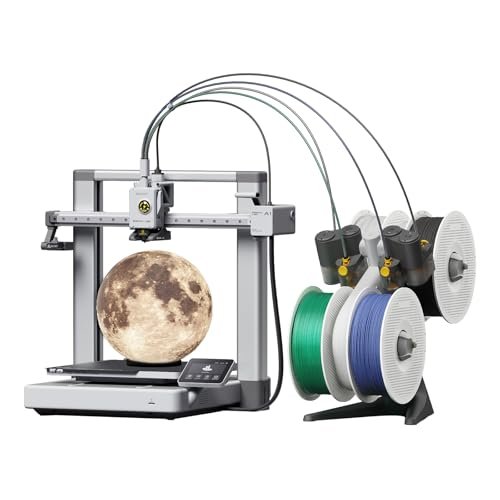
This package takes the beloved Bambu Lab A1 and pairs it with the AMS lite along with a hardware kit to build functional illuminated models right away. The included AMS lite system provides smooth 4-color multi-filament printing with automated spool switching. With full-auto calibration handling Z-offset and vibration cancellation, you spend your time designing rather than fixing layer shifts or first-layer adhesion issues.
Key features that stand out:
– Includes A1 printer, AMS lite 4-color feeder, and complete LED Lamp project kit
– Active flow rate compensation for smooth, uniform walls
– Tool-free 1-clip quick-swap nozzle design
– Automated bed leveling, Z-offset, and motor noise cancellation
– Direct integration with MakerWorld model repository for easy project slicing
Pros:
– Ready to print multi-color decorative lights right out of the box
– AMS lite is open, making filament tangle troubleshooting quick and visible
– Very quiet stepper motors allow printing in shared living spaces
Cons:
– The AMS lite takes up extra desk footprint next to or mounted above the machine.
– Open-bed design restricts material choices mostly to PLA, PETG, and TPU.
Best for: Crafters, educators, and hobbyists who want an out-of-the-box multi-color experience with project-ready hardware.
Expert Opinion: Adding the hardware project kit to the A1 Combo provides an immediate taste of what makes modern 3D printing so rewarding—practical, multi-color finished goods right from day one.
ELEGOO Centauri 2 Combo 3D Printer
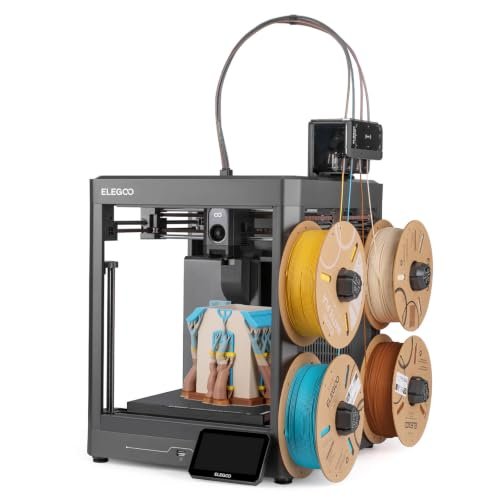
The ELEGOO Centauri 2 Combo brings heavy competition to the budget CoreXY space with its CANVAS 4-color filament system and sturdy aluminum build. Its print head uses independent feeder motors and built-in RFID spool detection to make multi-material printing straightforward for newcomers. Backed by 22 intelligent sensors, this printer actively monitors extrusion, bed clearance, and mechanical alignment to avoid failed prints before they happen.
Key features that stand out:
– CANVAS 4-color multi-material system with automatic refill
– High-speed CoreXY structure reaching 500mm/s and 20,000mm/s² acceleration
– 22 internal monitoring sensors for automated health and error tracking
– Rigid all-aluminum frame with precision linear guides
– 5-inch responsive color touchscreen with intuitive navigation
Pros:
– Rigid frame and linear guides provide excellent layer consistency
– RFID filament recognition simplifies material profiles
– Comprehensive sensor suite catches feeding and adhesion problems early
Cons:
– The Nexprint ecosystem is newer and has fewer community models than MakerWorld.
– The unit has a relatively large desktop footprint once the CANVAS feeder is attached.
Best for: Hobbyists who want an intelligent CoreXY multi-color machine with reliable linear guide rails.
Expert Opinion: ELEGOO has stepped up its software game with the Centauri 2 Combo, delivering a stable linear rail motion system that holds tight tolerances at high feed rates.
FLASHFORGE AD5X Multi-Material 3D Printer
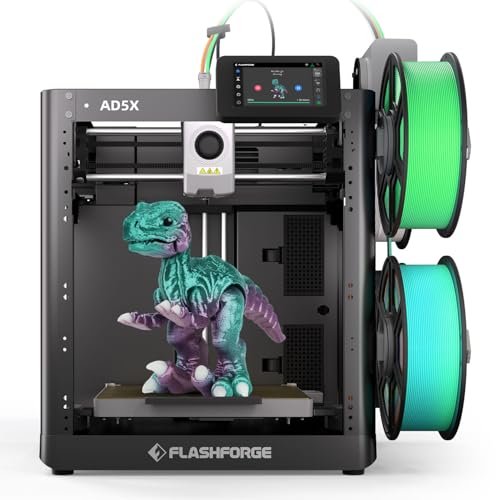
The Flashforge AD5X incorporates an Intelligent Filament System (IFS) that neatly organizes four spools side-by-side to save valuable desk space. Built upon a rigid CoreXY frame, it prints at speeds up to 600mm/s while internal vibration suppression algorithms prevent ringing on high-detail surfaces. It is fully equipped to handle carbon-fiber blends such as PLA-CF and PETG-CF alongside standard multi-color prints.
Key features that stand out:
– Intelligent Filament System (IFS) supporting 4-color multi-material jobs
– CoreXY motion structure offering up to 600mm/s travel speed
– Active vibration compensation algorithms for smooth wall finishes
– Full-auto multi-point bed leveling sensor
– Broad material compatibility including PLA-CF, PETG-CF, and TPU
Pros:
– Side-by-side spool layout takes up less vertical overhead space
– Handles abrasive carbon-fiber filaments without immediate hotend wear
– High-speed CoreXY kinematics keep print times down on bulkier parts
Cons:
– The filament retraction cycles during color swaps can be slightly slow.
– Enclosure is semi-open, requiring careful temperature management for certain materials.
Best for: Makers who need multi-material composite printing and high speed within a compact workspace.
Expert Opinion: The side-by-side filament layout on the AD5X is a smart ergonomic choice that keeps your workspace tidy while delivering high-speed composite capability.
Entina Tina2 Plus 3D Printer
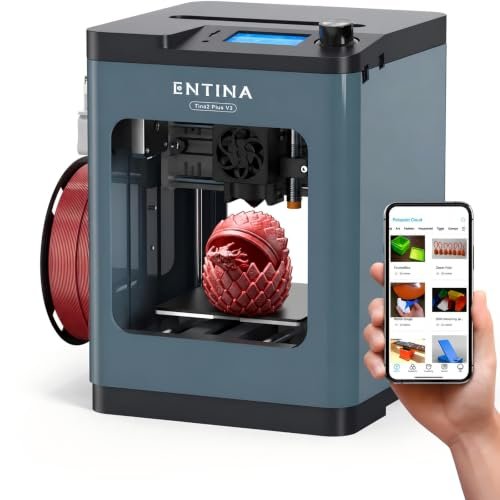
For those looking for the absolute most affordable, compact entry into 3D printing, the Entina Tina2 Plus delivers surprising capability in a tiny footprint. It arrives fully assembled in the box, letting complete beginners start printing within minutes via the preloaded microSD card or phone app. With an upgraded ceramic hotend that heats in 40 seconds and print speeds up to 250mm/s, it runs circles around older entry-level desktop printers.
Key features that stand out:
– Fast 40-second ceramic hotend heating system
– Speeds up to 250mm/s with dual Z-axis stabilization
– Pre-assembled out of the box with auto-leveling installed
– Poloprint Cloud mobile app integration with 3,500+ free models
– Enclosed moving parts for safe home and classroom operation
Pros:
– Incredibly affordable with virtually zero assembly required
– Compact enough to fit on any small shelf or student desk
– Enclosed frame elements make it safer around kids and pets
Cons:
– The small build plate limits you to mini models and smaller parts.
– It lacks the advanced flow rate sensors found on larger premium machines.
Best for: Students, younger makers, and classrooms needing a safe, ultra-affordable first 3D printer.
Expert Opinion: While it does not offer the large build volume of other picks, the Tina2 Plus is the most accessible plug-and-play desktop unit for anyone dipping their toes into the hobby.
FLASHFORGE AD5X Multi-Color 3D Printer (Built-In)
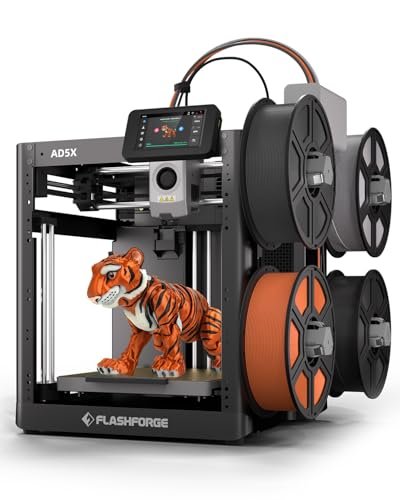
This version of the Flashforge AD5X integrates a 4-color management system directly alongside a capable 300°C direct-drive extruder. It uses dual-channel part cooling to maintain crisp bridges and steep overhangs, even when running at its top speed of 600mm/s. The machine supports swappable nozzle sizes from 0.25mm to 0.8mm, allowing you to switch between hyper-detailed miniatures and rapid large-format structural models.
Key features that stand out:
– 300°C direct-drive extruder paired with dual-channel cooling
– Built-in 4-color printing mechanism with automatic spool feeding
– 1-click automatic bed leveling system
– Broad nozzle support ranging from 0.25mm up to 0.8mm
– Integrated power loss print recovery and filament runout sensors
Pros:
– High hotend temperature allows use of advanced technical filaments
– Excellent overhang performance thanks to aggressive dual-fan cooling
– Larger nozzle compatibility significantly cuts print times on big models
Cons:
– Purge waste during color changes can add up without optimized slicer settings.
– The interface has fewer third-party slicing profiles available compared to Bambu.
Best for: Designers who want high hotend temperatures for technical multi-color and composite prints.
Expert Opinion: With its 300°C hotend and wide range of nozzle sizes, this version of the AD5X gives you great flexibility to print both rapid large structural prints and fine multi-colored details.
Large Cheap 3D Printer Comparison Insights
- CoreXY vs. Bed Slingers: Machines like the Flashforge Adventurer 5M and Bambu Lab P1S use a stationary build plate that moves only on the Z-axis. This allows for much faster acceleration (up to 20,000 mm/s²) without shaking tall prints off the bed. On the other hand, bed slingers like the Bambu Lab A1 are significantly cheaper and quieter, making them the best value if you stick to PLA and PETG.
- Enclosed Chambers for Technical Filaments: If you plan on printing functional automotive brackets or outdoor fixtures, you will need ABS or ASA. An enclosed frame like the Bambu P1S prevents warping and layer splitting by retaining ambient chamber heat, whereas open-frame printers will consistently fail with these materials.
- Multi-Color Systems and Waste: Multi-color units like the Bambu AMS, ELEGOO CANVAS, and Flashforge IFS deliver striking results. However, remember that multi-color printing creates purge waste during nozzle flushes. If your primary goal is printing single-color functional parts quickly, a standalone printer saves you money upfront and cuts cycle times.
- Nozzle Versatility: If your goal is making large objects on a budget, look for support for 0.6mm or 0.8mm nozzles. The Flashforge AD5X handles swappable large-bore nozzles, which can cut print times by more than 50% on big items compared to a standard 0.4mm nozzle.
Final Verdict
Choosing the right affordable printer comes down to your primary use case:
- Top Overall Value: Bambu Lab A1
If you want large-format reliability on a budget, whisper-quiet operation, and hands-off calibration for everyday PLA and PETG projects, this machine is unmatched. - Best for Enclosed Performance: Bambu Lab P1S Combo
When your designs demand technical filaments like ABS or seamless multi-material capabilities with chamber heat retention, the P1S Combo is the most dependable machine in its price bracket. - Best Budget Speedster: Flashforge Adventurer 5M
For pure speed on a tight budget, the AD5M brings CoreXY acceleration and instant nozzle swaps to your bench at an entry-level price point. - Best for Beginners & Classrooms: Entina Tina2 Plus
If budget and desk space are tight, this compact plug-and-play unit is the easiest way to start printing right out of the box without complex calibration.
Large Cheap 3D Printer FAQs
What build volume counts as a large cheap 3d printer?
Most standard desktop printers feature a build area around 220 x 220 x 250 mm. A large cheap 3d printer typically offers build volumes from 256 x 256 x 256 mm up to 300 x 300 x 300 mm while staying under the $400 to $700 price range. This volume gives you enough space to print full-sized helmets, custom storage boxes, and mechanical prototypes in one continuous piece.
Are cheap large-format 3D printers reliable?
Yes, modern budget printers are far more reliable than models from just a few years ago. With features like automatic bed leveling, active resonance compensation (input shaping), and dual Z-axis leadscrews, even budget printers produce clean layer lines and reliable first-layer adhesion without endless manual bed leveling.
CoreXY vs. Cartesian bed slinger: Which is better for large prints?
CoreXY is generally superior for large, tall models. Because the print bed only moves down along the Z-axis, tall prints are not slung back and forth along the Y-axis. This reduces mechanical wobble, prevents prints from detaching from the build plate, and allows for significantly faster print speeds without compromising layer alignment.
Can a cheap 3D printer handle carbon fiber and engineering filaments?
Yes, but you need the right hardware setup. To print materials like PLA-CF or PETG-CF, you need a hardened steel nozzle and drive gears, as carbon fiber quickly wears out standard brass nozzles. To print engineering plastics like ABS, ASA, or Nylon, you will also need an enclosed build chamber to retain ambient heat and stop the print from warping.
How much filament waste does multi-color 3D printing create?
Multi-color printing that uses a single nozzle requires purging filament every time the toolhead switches colors. Depending on the model geometry and number of color swaps, this purge waste (often called the purge tower or poop) can sometimes match or exceed the weight of the model itself. You can reduce waste by printing multiple copies of the item at the same time or calibrating flush volumes in your slicer.
Is an auto-leveling bed really necessary on budget 3D printers?
Automatic bed leveling is essential on any large 3D printer today. Large build plates tend to have slight dips or warps across their surface area due to manufacturing tolerances and heat expansion. An automated probe or strain gauge measures these minor height differences and compensates for them dynamically across the first layer, saving you hours of manual calibration.
Affiliate Disclosure: As an Amazon Associate, I earn from qualifying purchases made through links on this site.