I’ve spent years sanding, priming, and painting both FDM and resin prints, and I know how frustrating it is when paint beads up or hides surface details. Finding the best paint for 3d printing comes down to choosing formulas with rich pigment density, smooth leveling, and dependable adhesion so your prints look crisp. In this guide, I share my hands-on testing of five top paint sets that make finishing 3D models straightforward and rewarding.
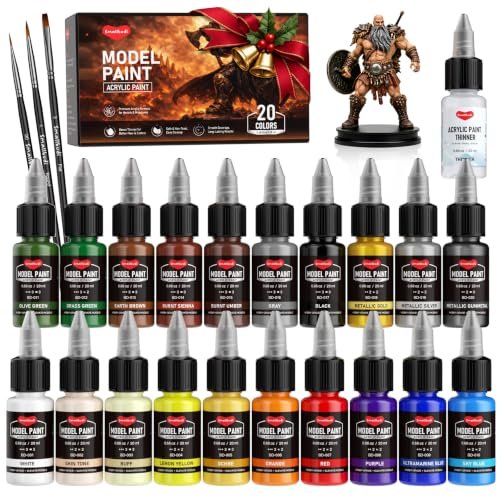
Smallbudi 20 Colors Model Paint Set
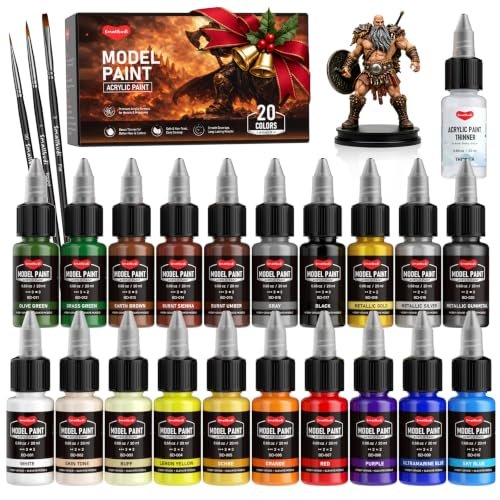
This compact kit is tailored specifically for hobbyists who need reliable coverage on detailed models without obscuring tiny surface textures. The formula features high pigment concentration and smooth flow, allowing you to lay down even base coats on both plastic and resin. Each bottle dries down to a refined matte finish, while the included metallic shades give armor and weapons a convincing sheen. With the included acrylic thinner and detail brushes, it provides an accessible all-in-one painting station right out of the box.
Key features that stand out:
– Complete set with 20 essential colors, 3 fine-detail brushes, and 1 dedicated thinner
– Specially formulated for strong adhesion on plastic, resin, metal, and wood
– High pigment load delivers opaque coverage in fewer coats
– Refined matte finish keeps fine layer textures and features visible
– Color mixing guide and color wheel included for effortless tone matching
Pros:
– Strong opacity means you rarely need more than two thin coats
– Included thinner makes it easy to practice glazing and layering
– Dropper bottles prevent paint from drying out on the workbench
Cons:
– You may eventually want broader flat brushes for painting larger prints.
Best for: Tabletop gamers and beginners painting resin miniatures or small FDM action figures.
Expert Opinion: The paint flows evenly from the dropper bottles and reduces brush drag significantly, which keeps fine facial features and surface ridges crisp on 28mm to 75mm prints.
HissiCo 55-Piece Acrylic Paint Set (36 Colors, 2 oz)
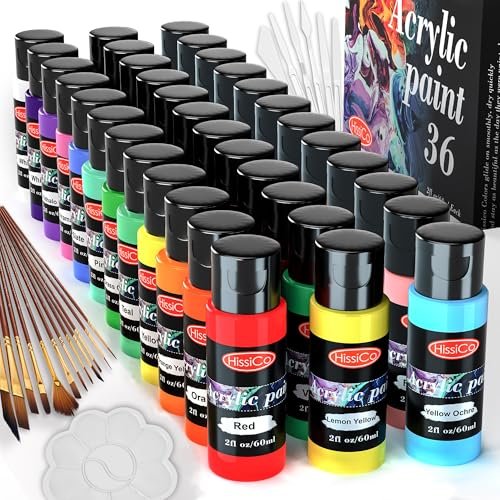
When you are tackling life-sized cosplay props or massive terrain pieces, standard mini bottles run dry far too quickly. This set provides 36 large 2-ounce squeeze bottles, giving you plenty of paint volume to cover broad surface areas without breaking the bank. The paints have a thick, creamy body that holds up well across plastic, wood, and craft foam, making them very adaptable for mixed-media hobby builds. Backed by 12 brushes and a mixing palette, this package is built for extensive DIY and crafting projects.
Key features that stand out:
– Generous 2 oz (60ml) bottles offering high-volume coverage for big prints
– Thick, blendable acrylic formula suitable for FDM prints, foam, and wood
– Includes 12 multi-purpose brushes and a sturdy plastic mixing palette
– Flip-top squeeze caps for easy dispensing and precise paint control
– Certified non-toxic and compliant with ASTM D-4236 standards
Pros:
– Huge paint quantity delivers outstanding value for large-scale projects
– Thick body can be easily diluted with water or medium to your liking
– Wide color range minimizes the need to mix basic shades from scratch
Cons:
– Straight out of the bottle, the paint is too thick for small miniatures and requires thinning to avoid texture marks.
Best for: Life-sized cosplay accessories, architectural mockups, and large FDM terrain tiles.
Expert Opinion: While it requires thinning with water or flow improver for delicate models, this paint is an absolute workhorse for filling out broad cosplay armor plates and expansive scenic terrain.
Artecho 72 Colors Dual Tip Acrylic Paint Markers
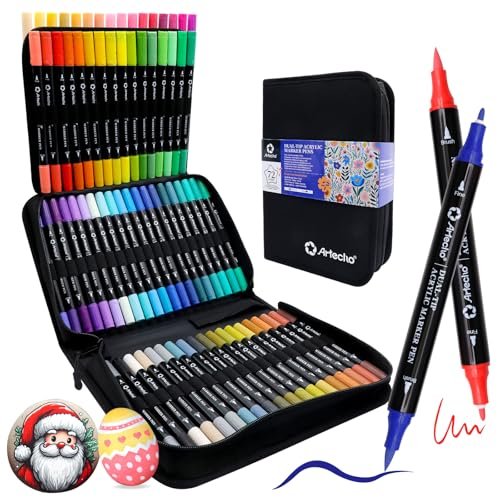
Cleaning brushes and managing wet palettes isn’t always practical when you only need to touch up a few tiny accents. These paint pens feature a dual-tip configuration with a 1mm extra-fine nib on one end and a flexible 0.5–5mm brush tip on the other. The fast-drying, water-based acrylic ink lays down rich, opaque color directly over primed plastics without making a mess. With 72 vivid shades packed in a zip bag, you have an immediate palette ready for sharp edge highlights and intricate linework.
Key features that stand out:
– Dual-ended design featuring a 1mm detail tip and a flexible brush tip
– Fast-drying, waterproof acrylic ink formula that resists smudging
– 72 vibrant colors organized inside a portable canvas carry bag
– Strong opacity that adheres well to primed PLA, PETG, and cured resin
– No prep, water cups, or palette clean-up needed before or after painting
Pros:
– Incredible control for crisp edge highlighting on geometric prints
– Eliminates the mess of dirty brush water and wet palettes
– Dries rapidly so you can handle your models almost immediately
Cons:
– The fine tip can occasionally catch on rough layer lines if an FDM print hasn’t been properly sanded.
Best for: Edge highlighting mechanical parts, detailing eyes and runes, and quick touch-ups.
Expert Opinion: These markers are my favorite tool for crisp mechanical panel lining and pupil work, giving you pencil-like stability with the vibrancy of pure acrylic paint.
FansArriche 28 Colors Model Paint Set
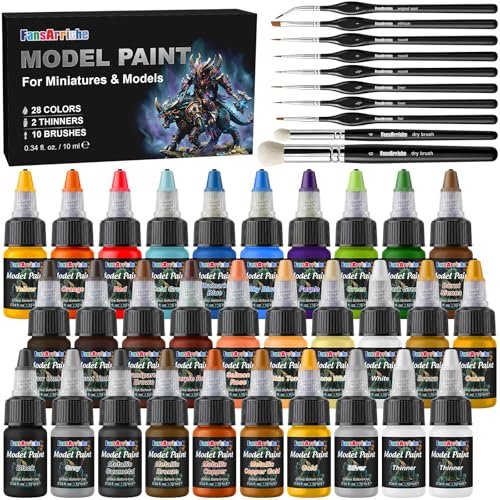
If you like switching between standard brushwork and airbrushing, this balanced 28-color kit offers immense utility. The acrylic paint comes pre-thinned for dual application, allowing it to feed through an airbrush nozzle or glide off a detail brush with minimal resistance. It cures to a true matte, lightfast finish that eliminates unwanted glare on your display shelf, while the metallic paints add realistic sheen to armor and engine parts. You also get 8 detail brushes, 2 drybrushes, and 2 bottles of thinner, making this an exceptionally well-rounded hobby bundle.
Key features that stand out:
– Versatile formula engineered for both smooth brush painting and airbrushing
– 28 balanced shades covering base colors, fleshtones, and realistic metallics
– Includes 2 dedicated drybrushes for quick texture highlighting
– Supplied with 2 bottles of airbrush-friendly acrylic thinner
– Dries to a durable matte texture that prevents models from looking like plastic
Pros:
– Pre-thinned consistency saves you significant setup time
– Dedicated drybrushes make catching raised textures effortless
– Strong lightfast pigments keep painted models from fading in sunlit display cabinets
Cons:
– The 0.34 oz bottles are relatively small, so primary base colors will deplete quickly on larger prints.
Best for: Hobbyists who alternate between airbrushing base coats and hand-brushing fine details.
Expert Opinion: Having dedicated drybrushes and matched thinners inside the box makes this set stand out; drybrushing over dark-primed 3D prints brings out textured details faster than almost any other technique.
Smallbudi 44 Colors Model Paint Set
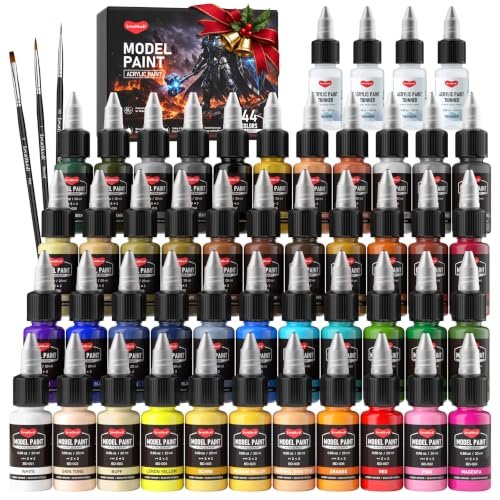
For ambitious painters who want an expansive palette without having to constantly mix custom shades, this 44-bottle collection is hard to beat. It expands on basic starter kits by offering 38 realistic standard shades and 6 metallics, giving you dedicated tones for leather, stone, weathered wood, and skin. The paints have exceptional opacity and fine-ground pigments that preserve every micro-detail on high-resolution resin prints. Bundled with 4 bottles of thinner and precision brushes, it gives you the tools needed for smooth gradients, glazes, and clean airbrush work.
Key features that stand out:
– Extensive palette of 44 colors including specialized terrain and armor tones
– 4 bottles of acrylic thinner to assist with layering, washes, and airbrushing
– Fine pigment suspension that prevents clogging fine details on 8K resin prints
– Hard-wearing matte finish that holds up well to regular tabletop handling
– Color reference chart and color wheel included to guide color choices
Pros:
– Expansive color selection saves time spent mixing specific mid-tones and shades
– Generous amount of thinner supports advanced glazing and wash techniques
– Realistic metallic formulas apply smoothly without visible flecks or glittery textures
Cons:
– The 44-bottle layout requires a decent amount of dedicated desk space to keep organized.
Best for: Experienced hobbyists, tabletop wargamers, and painters working on complex display statues.
Expert Opinion: The nuanced shade variations—especially the neutral greys, browns, and skin tones—make painting complex multi-part resin prints significantly faster while producing natural transitions.
Helpful Comparison Insights
- Pigment Viscosity Matters: Dedicated model paints like Smallbudi and FansArriche feature micro-ground pigments suspended in fluid mediums, making them ideal for preserving high-resolution resin details. In contrast, heavy-body paints like HissiCo provide massive coverage for large FDM prints but require manual dilution to avoid brush strokes.
- Application Workflow: If you prefer instant setup without messy clean-up, Artecho acrylic markers offer pinpoint control for panel lines and borders. For full-surface coverage, FansArriche’s airbrush-ready consistency dramatically cuts down the time spent base-coating large prints.
- Finish and Sheen: While craft paints often dry with an uneven satin or glossy sheen, model-specific sets dry down to a flat matte finish, which absorbs harsh light and makes 3D prints look like professional statues rather than painted plastic.
Final Verdict
Match your choice to the scale and type of printing you do most:
- For Large Cosplay & FDM Builds: Grab the HissiCo 55-Piece Acrylic Set. Its generous 2-ounce bottles give you the coverage you need for armor plates, helmets, and large props at an economical price.
- For Everyday Miniatures & Tabletop Gaming: Pick the Smallbudi 20 Colors Set. It gives you every core shade you need, runs smoothly straight from the bottle, and leaves tiny details sharp.
- For Edge Highlights & Fine Accents: Keep the Artecho 72 Colors Dual Tip Markers on your desk. They completely take the hassle out of painting runes, eyes, and mechanical trim.
- For Airbrushing & Intermediate Techniques: Choose the FansArriche 28 Colors Set or step up to the Smallbudi 44 Colors Set for an expanded color library that supports advanced blending right out of the box.
Frequently Asked Questions About the Best Paint for 3D Printing
Do I need to prime 3D prints before using acrylic paint?
Yes, priming is an essential first step for both FDM and resin prints. Bare PLA, PETG, and photopolymer resin have slick, non-porous surfaces that cause water-based acrylic paint to bead up or peel away over time. A light coat of dedicated acrylic primer provides a micro-textured surface that grips your paint tightly.
What is the best type of paint to use on PLA prints?
Water-based acrylic paints are widely considered the ideal choice for PLA. They dry quickly, do not emit strong solvent odors, clean up easily with plain water, and will not warp or degrade the thermoplastic material during application.
Can model paints be used in an airbrush?
Yes, but viscosity is key. Sets like the FansArriche kit are formulated with thin carriers that can spray cleanly through an airbrush nozzle with little to no thinning. If using thicker paints, mix them with a dedicated acrylic airbrush thinner until they reach the consistency of skim milk to avoid tip dry and clogs.
How do I hide layer lines on FDM prints before painting?
To minimize layer lines, start by wet-sanding the model using progressive grits from 200 up to 600. Following up with a high-build filler primer will settle into tiny layer gaps. Once sanded smooth, your acrylic model paints will lay down flat without emphasizing print striations.
Are acrylic paint markers better than traditional brushes for 3D prints?
Paint markers are not necessarily better for covering broad surfaces, but they excel at fine, controlled tasks. They give you firm, pencil-like control, making them ideal for coloring tiny details, panel lines, and crisp edge highlights without the hand tremors that sometimes happen with flexible brush tips.
Should I seal my painted 3D prints with a varnish?
Applying a clear topcoat is strongly recommended, especially for gaming miniatures or cosplay items that will be handled regularly. A quick spray of matte or satin acrylic varnish protects your paint work from chipping, sweat, and UV-induced color fading.
What is the difference between craft acrylics and model acrylics?
Craft acrylics are designed with thicker binders and broader pigment particles meant for paper, canvas, or wood. Model acrylics use finer ground pigments and flow aids that lay flat in micro-thin layers, ensuring you don’t fill in or obscure delicate mechanical or facial details on your prints.
Affiliate Disclosure: As an Amazon Associate, I earn from qualifying purchases made through links on this site.