Over the years, I’ve spent countless hours sanding, priming, and painting raw plastic to figure out the best paint to use on pla 3d prints without obscuring fine surface details. When you pull a fresh model off the print bed, visible layer lines and slick filament surfaces can prevent color from sticking properly. In this guide, I share my hands-on testing insights covering essential coatings, model paints, and assembly supplies to help you get smooth, vibrant, and durable results on every print.
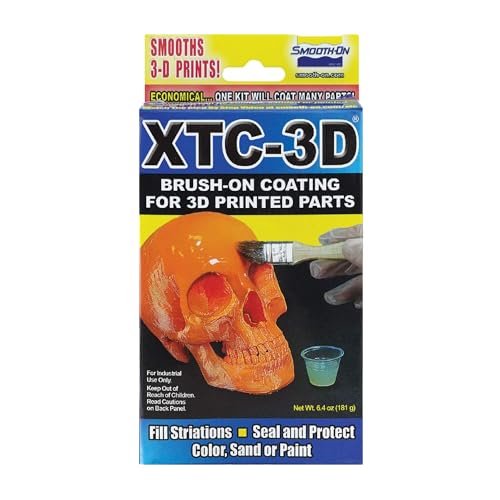
Smooth-On XTC-3D 3D Print Coating & Smoothing Epoxy
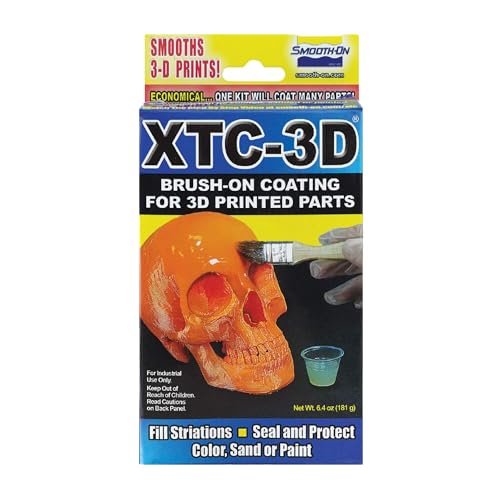
I’ve relied on this two-part epoxy coating whenever I need to eliminate stubborn FDM layer lines without hours of tedious manual sanding. The formula acts as a protective clear top coat that self-levels quickly, settling into microscopic grooves while preserving the core geometry of your print. Because it cures to an impact-resistant 80D Shore Hardness, it creates an ultra-durable shell that accepts both sandpapers and acrylic primers effortlessly. It drastically cuts down your prep time, giving rigid PLA pieces a smooth, cast-resin appearance in just one pass.
Key features that stand out:
– High-performance clear top coat formulated specifically for smoothing and sealing rigid 3D printed parts.
– Broad compatibility with PLA, ABS, SLA, SLS, and wood-infused composite filaments.
– Simple 2A:1B mix ratio by volume with a 10-minute working time and 3.5-hour cure cycle.
– Self-leveling liquid wets out evenly across the surface to eliminate brush marks.
Pros:
– Dramatically reduces visible layer lines with minimal sanding required.
– Hardens into a tough, impact-resistant surface that is easy to paint.
– Seals porous prints against moisture and everyday wear.
Cons:
– The short 10-minute working window means you must apply it quickly to avoid thick buildup.
Best for: Makers looking to smooth layer lines on functional prints or cosplay props before painting.
Expert Opinion: This coating is my top recommendation for the prep phase because it seals layer stepping and creates a non-porous foundation that allows your paints to glide on smoothly.
Smooth-On XTC-3D 20 3D Print Coating (24 oz Pack)
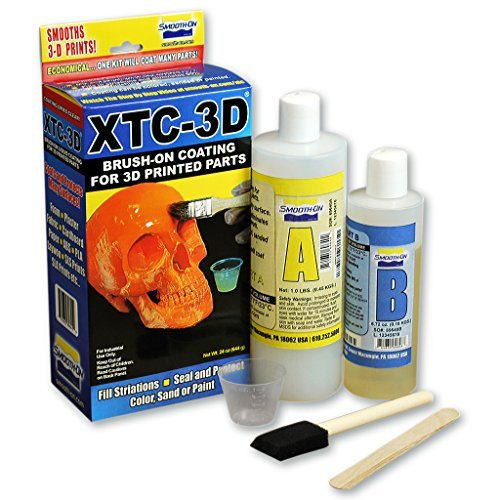
When working on full-size helmet builds, cosplay armor, or batch production runs, this larger 24 oz pack provides the extended coverage and volume you need to tackle big jobs. The epoxy formula spreads thin and even, preventing heavy pooling in recessed panel lines while still bridging layer steps. Its durable 80D Shore Hardness provides a resilient protective layer that stops moisture absorption and prevents base paints from peeling under stress. If you routinely finish large FDM projects, this bulk container keeps you from running out mid-build.
Key features that stand out:
– Extended 24 oz volume tailored for larger models, multi-part prints, and busy workshops.
– Consistent 2A:1B volumetric ratio curing in approximately 3.5 hours to a rigid finish.
– Low-viscosity formulation designed to spread thinly without obscuring fine architectural details.
– Formulated to bond securely to rigid media including PLA, ABS, and powder-printed objects.
Pros:
– Excellent value and volume for oversized props and batch finishing.
– Yields a glassy, uniform finish that requires far fewer coats of primer.
– Self-levels consistently across wide horizontal and vertical planes.
Cons:
– Mixing large batches creates significant heat in the cup that shortens your application time.
Best for: Cosplayers and prop makers who need bulk smoothing material for large-scale PLA assemblies.
Expert Opinion: If you are coating large armor parts, pour your mixed epoxy into a wide, shallow foil tray to dissipate heat and give yourself several extra minutes of working time.
Smallbudi 32 Colors Model Paint Set
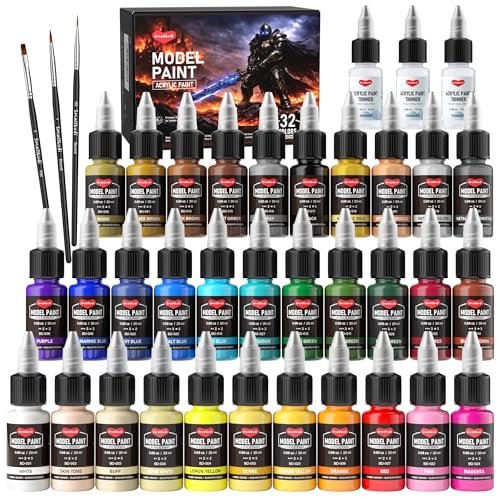
This complete acrylic hobby kit provides 32 vibrant, highly pigmented colors including four metallic tones engineered specifically for plastic miniatures and display prints. The paint formula offers exceptional opacity and smooth coverage, allowing you to lay down rich color in fewer layers without clogging tiny printed textures. It arrives pre-thinned for direct brush application, but also includes dedicated thinners so you can thin the mixture for airbrushing or detailed glazing. Whether you’re working on tabletop gaming figures or multi-color PLA statues, this kit gives you complete creative control right out of the box.
Key features that stand out:
– 32-color set featuring 28 standard matte shades, 4 metallic finishes, 3 detail brushes, and 3 bottles of thinner.
– Specially formulated for strong adhesion to plastic, resin, and textured 3D prints.
– Pre-thinned consistency suitable for straight-from-the-bottle detail brushing or airbrush use.
– Includes a printed color wheel and blending guide to assist with shading and contrast.
Pros:
– Strong pigment density provides solid opacity without requiring thick coats.
– Metallic shades provide a convincing sheen for armor, weapons, and mechanical components.
– The included thinners and fine-tip brushes make it an all-in-one painting solution.
Cons:
– The paint requires a cured primer underneath on PLA to prevent accidental scuffing during handling.
Best for: Miniature painters, tabletop gamers, and hobbyists detailing character prints and figures.
Expert Opinion: In my experience, these paints flow into crevices cleanly without obliterating fine layer textures or facial features, making them a joy to use on detailed FDM and resin prints alike.
3D Printer Model Quick-Drying Gloss Spray
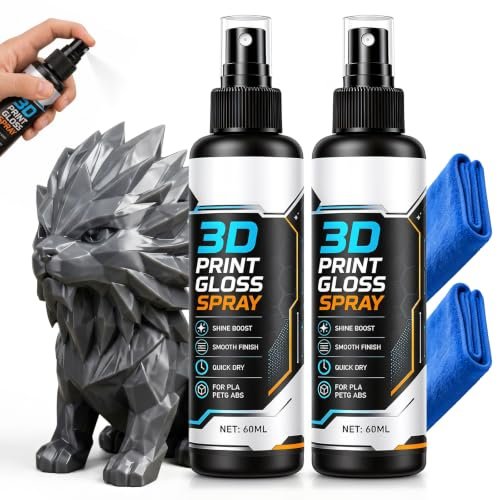
This versatile aerosol provides a texture-reducing gloss varnish designed to protect your prints while dramatically improving surface sheen. When sprayed over raw or painted PLA, it actively conceals micro-layer ridges, leaving behind a bright, porcelain-like protective shell. The quick-drying formula speeds up your post-processing routine, allowing you to handle or display your models without waiting around for days. It serves as a great final topcoat to shield delicate acrylic colors from scratches, dust, and UV exposure.
Key features that stand out:
– Dual-function aerosol spray that reduces surface texture while providing a high-gloss finish.
– Layer-softening properties that help mask subtle stepping lines on display pieces.
– Fast-drying formulation that drastically reduces waiting times between finishing stages.
– Broad compatibility with PLA, PETG, ABS, and cured resin materials.
Pros:
– Dries rapidly to keep your finishing workflow moving without long delays.
– Delivers an even, reflective gloss that makes colors pop.
– Spray nozzle delivers fine atomization to minimize dripping or runs.
Cons:
– A high-gloss topcoat can occasionally emphasize deeper print defects if the surface was not smoothed beforehand.
Best for: Quickly sealing painted prints and achieving a shiny, showcase-ready top coat on display models.
Expert Opinion: When you don’t have the time to mix up a two-part epoxy, a couple of light coats of this spray will quickly blur fine layer lines and protect your paint job underneath.
3D Print Controlled Gel CA Super Glue (2.11 oz)
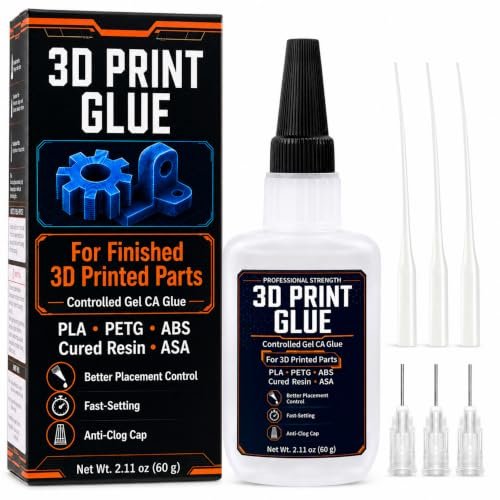
Multi-part prints require clean, seamless assembly before painting can begin, and this controlled-gel cyanoacrylate glue is tailored to join PLA components with zero mess. Its thick gel consistency prevents drips and run-off, keeping the adhesive contained within seams and joints where unexpected squeeze-out could ruin fine paint prep. The kit includes six precision applicator tips, allowing you to reach tight corners, internal pegs, and thin joint lines accurately. Once applied, it sets in under a minute, establishing a strong structural joint that can be sanded flush and primed smoothly.
Key features that stand out:
– Controlled gel viscosity prevents messy runs on vertical edges and exterior visible seams.
– Includes an anti-clog twist cap along with 3 fine dispensing tips and 3 extension tubes.
– Sets firm within 15 to 45 seconds for hassle-free alignment during model assembly.
– Engineered specifically for joining PLA, PETG, ABS, and cured resin parts.
Pros:
– Thick gel formula stays exactly where placed without marring nearby printed details.
– Precision tips make applying tiny glue dots to delicate miniature joints simple.
– Cures to a firm joint that can be easily sanded flush prior to painting.
Cons:
– Reaches full structural strength after 24 hours, so high-stress parts should rest before handling.
Best for: Assembling multi-piece 3D prints, attaching accessories, and making clean repairs prior to priming.
Expert Opinion: Visible seams ruin a paint job faster than anything else; this gel stays put along inner joint edges, preventing unwanted surface overflow that requires heavy sanding later.
Practical Insights: Choosing the Right Finishing Products
Getting high-end results on 3D prints comes down to using the right product at each stage of your finishing workflow. Here are a few practical insights to keep in mind:
- Surface preparation determines paint adhesion: Raw PLA is naturally slick and slightly hydrophobic, meaning water-based paints need a primed or coated surface to grip properly without beading up.
- Epoxy smoothing outperforms heavy sanding: Using an epoxy coating like Smooth-On XTC-3D bridges layer lines and creates an impervious barrier, saving hours of physical labor on curved or grooved surfaces.
- Pigment density preserves small details: Dedicated model paints feature finer pigment grinds than general craft paints, allowing you to apply thin, opaque layers that keep fine sculpt details visible.
- Aerosol coats provide quick protection: Using a spray varnish creates an even, brush-free protective shield that guards delicate acrylic paint from handling oils, chipping, and dust.
- Gel adhesives keep seams paint-ready: Opting for a controlled-gel super glue prevents accidental surface runs that distort surface primers, keeping joint lines tight and easy to hide.
Final Verdict
Instead of searching for a single magic product, achieving a clean painted finish relies on pairing the right prep materials with the right paint for your specific project goals:
- For detailed figurines and tabletop minis: The Smallbudi 32 Colors Model Paint Set offers the opacity, specialized metallics, and flow consistency you need to bring character sculpts to life without muddying details.
- For cosplay armor and large display props: Starting with Smooth-On XTC-3D provides the essential smoothing foundation needed to make layer lines disappear completely before laying down base colors.
- For fast display-ready projects: The Quick-Drying Gloss Spray offers the fastest path to sealing raw or painted PLA while giving your model an attractive, polished gleam.
- For multi-part kits: Keeping the Controlled Gel CA Super Glue on your bench ensures clean, invisible seams that won’t disrupt your primer coats.
Frequently Asked Questions About the Best Paint to Use on PLA 3D Prints
What is the best paint to use on PLA 3D prints?
High-pigment acrylic paint is widely considered the best paint to use on pla 3d prints. Acrylics are water-based, dry quickly, emit no harsh chemical odors, and adhere well to PLA plastic once a proper primer is applied. They also offer flexible cleanup and can be applied with traditional detail brushes or thinned down for airbrushing.
Do I need to sand and prime PLA prints before painting?
Yes, priming is an essential step for PLA plastic. Raw PLA is naturally slick and non-porous, which can cause unprimed paint to bead, streak, or flake off. Lightly sanding the model with 220- to 400-grit sandpaper or applying a smoothing coating creates micro-abrasions that give primer and acrylic paints a strong mechanical bond.
Can I use spray paint directly on PLA without primer?
While some combination spray paints (paint and primer in one) can bond directly to PLA, using a dedicated sandable filler primer yields better results. Direct spray paint may run into the layer lines, highlight surface flaws, or peel away if the plastic was not thoroughly cleaned of finger oils and print bed residue.
How do I smooth out layer lines before painting?
You have two main methods for smoothing layer lines on PLA: mechanical sanding and epoxy coating. Because PLA does not respond to acetone vapor smoothing like ABS, applying a self-leveling epoxy like Smooth-On XTC-3D is the most effective way to fill layer steps quickly. Alternatively, using multiple light coats of high-build automotive primer interspersed with wet sanding will yield a smooth surface.
Are enamel or oil-based paints safe to use on PLA?
Enamel and oil paints can be used on PLA, but they require much longer drying times and require proper surface priming. While enamels produce a tough, durable finish, their harsh solvents can occasionally react with low-quality filaments or certain primers. Most hobbyists prefer acrylics because they dry faster and are much easier to manipulate and blend.
Should I apply a clear coat after painting my 3D printed model?
Applying a clear topcoat is highly recommended to protect your finished work. Acrylic paints can scratch or wear away with repeated handling. A light misting of a matte, satin, or gloss varnish seals the pigment, protects against UV fading, and gives your 3D print an even, unified surface sheen.
Why is my paint peeling off my 3D printed PLA parts?
Paint peeling on PLA is usually caused by inadequate surface preparation. Common culprits include skipping the primer step, failing to clean off skin oils or print bed adhesives before painting, or applying paint coats too thickly before the underlying layer has fully dried. Always wash your print in warm soapy water, let it dry, and apply a light primer coat before painting.
Affiliate Disclosure: As an Amazon Associate, I earn from qualifying purchases made through links on this site.