Over the past few months, I’ve spent dozens of hours troubleshooting toolheads to see how a reliable dual extruder idlers and filament sensor setup transforms multi-material 3D printing. When drive gears lose their grip or a sensor fails to catch runout mid-job, entire spools of filament go to waste. Upgrading to the right assembly keeps filament tension dialed in and ensures smooth filament path switching without annoying false jam alerts.
Dual Extruder Idlers & Filament Sensor for Bambu Lab 3D Printers
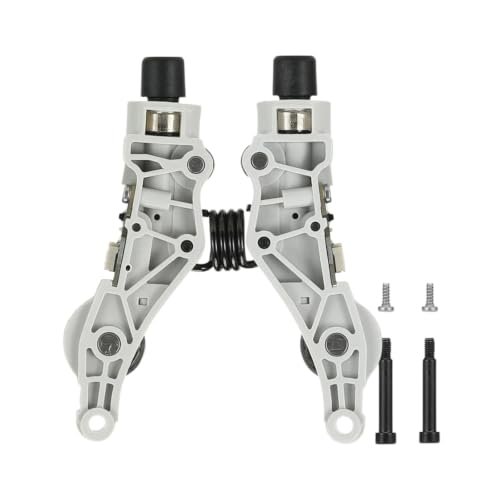
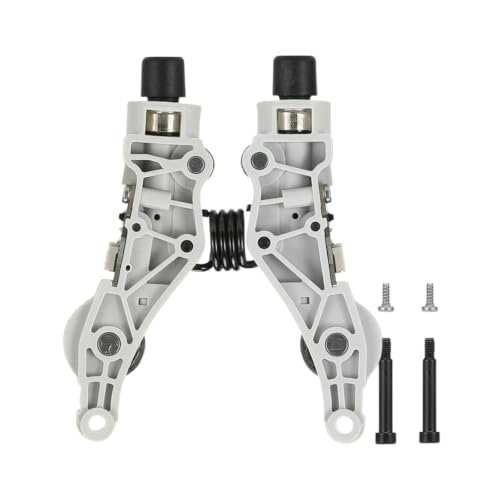
This factory-style assembly works in tandem with your drive gear to ensure stable extrusion pressure across long print jobs. It easily manages the alternating filament paths required for multi-color and multi-material printing, eliminating feeding snags before they start. Because the kit arrives with dedicated mounting screws, swapping out a worn mechanism takes only a few minutes.
Key features that stand out:
– Dual idler design provides balanced grip against primary drive gears
– Internal path routing switches smoothly between spools
– Integrated filament sensor registers loading cycles in real time
– Includes original-spec BT2-5 and MG2.5-19.5 installation screws
Pros:
– Restores original feed calibration without extra firmware adjustments
– Smooth filament transitions during heavy multi-color jobs
– Direct fit for H2-series toolheads
Cons:
– Fits only compatible Bambu Lab H-series toolhead designs.
Best for: 3D printer owners looking for a direct factory replacement to restore reliable multi-material extrusion.
Expert Opinion: This standard assembly is the most reliable baseline upgrade if you notice tension drops or skipping when changing spool feeds.
Dual Extruder Idler Pulley & Filament Sensor Replacement Kit
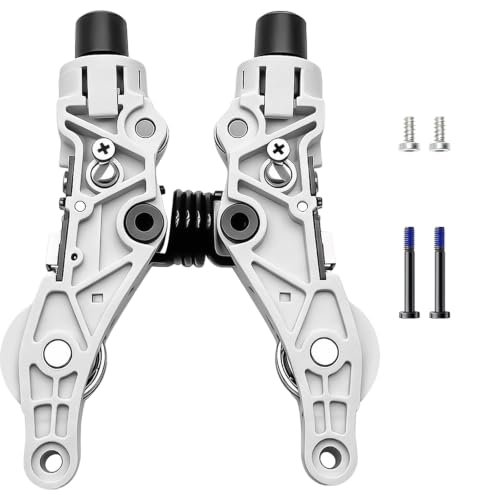
Built as a targeted maintenance upgrade, this assembly features an integrated Hall sensor board that actively resolves frustrating filament jam error codes. The precision idler wheels apply continuous, even pressure against your drive gears to eliminate under-extrusion and filament grinding. As a complete maintenance kit, it provides all the required fasteners to refresh your dual-extrusion system in a single sitting.
Key features that stand out:
– Hall effect sensor board tracks filament presence without physical switch wear
– Precision-machined idler pulleys prevent filament slippage and line starvation
– Direct replacement compatibility for H2D, H2C, and Laser variants
– Comprehensive hardware package includes BT2x5 and M2.5x19x5 screws
Pros:
– Effectively eliminates false runout and jam error codes
– Durable idler bearings minimize friction against abrasive filaments
– Detailed setup follows standard Wiki assembly steps
Cons:
– Installing the tiny fasteners requires steady hands and small metric hex keys.
Best for: Makers troubleshooting persistent filament feed errors or worn-down idler bearings on H2-series extruders.
Expert Opinion: The upgraded Hall sensor board makes this kit the smartest fix when your machine starts throwing phantom jam warnings during long overnight prints.
OEM Dual Extruder Idlers And Filament Sensor Assembly
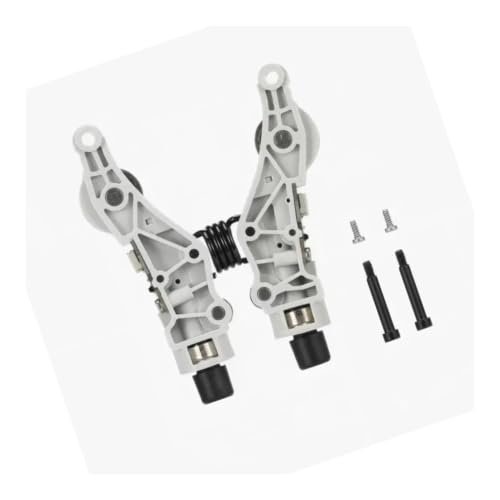
Designed to meet strict manufacturing tolerances, this unit focuses on delivering precise extrusion control during high-speed printing routines. The dual idler arms use calibrated spring tension to grip both stiff PLA and flexible TPU without deforming the filament strand. Its responsive runout detection immediately halts jobs the moment a spool empties, keeping your hotend clean and safe from heat creep.
Key features that stand out:
– Tightly calibrated idler alignment provides steady micro-stepping accuracy
– Reinforced idler arms resist bending under constant spring tension
– Rapid-response runout detection stops prints before air printing occurs
– True OEM mounting points ensure drop-in toolhead alignment
Pros:
– Produces uniform layer lines with minimal flow variance
– Firm grip handles flexible and rigid materials equally well
– Simple plug-and-play wiring connection
Cons:
– Does not include spare tension springs in the package.
Best for: High-precision print jobs where consistent line width and zero idler slippage are critical.
Expert Opinion: If your current dual idler has developed microscopic play causing subtle layer banding, this tightly calibrated OEM unit will clean up your layer consistency immediately.
Bambu P2S Extruder Filament Sensor with Hall Switch
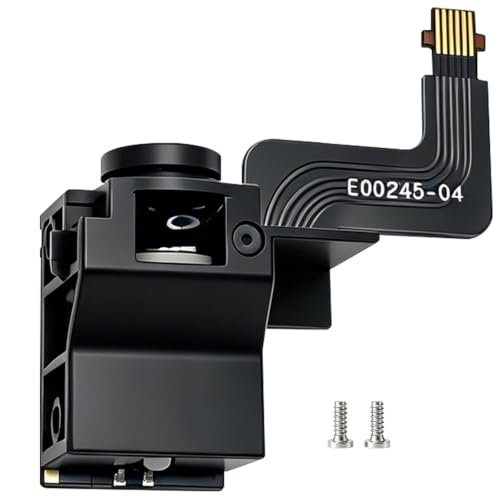
Tailored specifically for the P2S platform, this module provides dual detection monitoring for both incoming filament and the toolhead cutter lever. By utilizing non-contact Hall switch technology, it avoids the physical wear that eventually ruins mechanical switches. When an issue occurs, it triggers an instant HMS alert pause, letting you change spools or clear jams without ruining your print progress.
Key features that stand out:
– Dual-purpose detection tracks filament presence and cutter return position
– Contactless Hall effect sensor design delivers long operational life
– Complete AMS system compatibility for automated spool changes
– Modular layout allows quick swapping using only two screws
Pros:
– Eliminates mechanical microswitch wear entirely
– Syncs smoothly with AMS units for automated filament refills
– Quick two-screw installation reduces downtime
Cons:
– Designed specifically for P2S toolhead architecture and will not fit H-series extruders.
Best for: P2S owners and print farms looking for a durable, non-contact runout and cutter monitoring solution.
Expert Opinion: Moving to Hall effect sensing on the P2S eliminates the mechanical switch failure points that plague print farms running round-the-clock spool changes.
Practical Comparison Insights
When selecting a replacement, matching your toolhead architecture is the most critical step. The H2-series assemblies feature dedicated dual idlers engineered to manage multi-filament switching paths, while the P2S unit focuses on monitoring cutter position alongside filament feed.
Choosing Hall effect sensing over mechanical switches provides a major reliability boost. Contactless sensors don’t suffer from physical arm fatigue or debris buildup, which are the main causes of false jam errors.
Investing in a unit with precision idler bearings directly improves print quality. Worn or loose idler pulleys cause subtle under-extrusion and surface banding that calibration cubes won’t fix. Keeping a complete maintenance kit with factory-spec screws on hand ensures that stripped threads or lost hardware won’t leave your 3D printer sitting idle for days.
Final Verdict
Different printing setups call for specific replacement choices:
- For Standard H-Series Restorations: Pick the Dual Extruder Idlers & Filament Sensor for Bambu Lab 3D Printers. It delivers standard factory fit and includes the exact screws needed for a quick swap.
- For Eliminating False Jam Warnings: Choose the Dual Extruder Idler Pulley & Filament Sensor Replacement Kit. Its upgraded Hall board and precision idlers solve phantom runout alerts fast.
- For Demanding Surface Quality: Go with the OEM Dual Extruder Idlers And Filament Sensor Assembly to maintain tight grip tension on difficult filaments.
- For P2S Ecosystems: The Bambu P2S Extruder Filament Sensor with Hall Switch is the obvious pick for reliable cutter monitoring and smooth AMS integration.
Frequently Asked Questions About Dual Extruder Idlers and Filament Sensor Setups
What does a dual extruder idler do in a 3D printer?
A dual extruder idler holds dual tension pulleys against the main drive gear. It applies continuous, balanced pressure to the filament, ensuring smooth feeding and preventing grinding. In multi-material systems, it also helps guide filament through distinct entry channels without snagging.
How does a Hall effect filament sensor differ from a mechanical switch?
Mechanical filament sensors rely on a physical microswitch or lever that touches the filament. Over time, friction can groove the switch or wear it out. A Hall effect sensor detects movement via magnetic fields without physical contact, making it far more durable and resistant to false jam errors.
Why is my printer showing a filament jam error when filament is moving?
This problem usually happens when the filament detection board becomes dirty, misaligned, or worn out. Dust or debris inside the optical or mechanical sensor path can trick the system into thinking no material is present, pausing the print unnecessarily.
Can a worn idler pulley cause under-extrusion?
Yes. If the bearings inside the idler pulley wear down or the tension arm loosens, the idler cannot press the filament firmly against the drive gear. The gear slips over the filament strand, resulting in skipped steps, clicking sounds, and severe under-extrusion.
Are dual extruder idlers and filament sensor assemblies interchangeable across all models?
No. Extruder assemblies are engineered around specific toolhead dimensions, gear ratios, and screw mountings. For example, an assembly built for an H2-series toolhead will not fit a P2S or X1-series toolhead. Always check your printer model before purchasing replacement hardware.
How often should I replace my extruder idlers and sensor assembly?
Most idlers and sensors last through hundreds of print hours. However, if you regularly print abrasive materials like carbon fiber or glow-in-the-dark filaments, inspect the idler wheels and sensor entry funnel every few months for signs of physical grooving or play.
Do I need to recalibrate my printer after installing a new sensor board?
In most cases, a hardware replacement does not require custom firmware changes. However, running a quick built-in self-test or a toolhead calibration routine ensures that the cutter lever, filament detection trigger, and drive motor are fully synchronized.
Affiliate Disclosure: As an Amazon Associate, I earn from qualifying purchases made through links on this site.