I’ve spent years cleaning, sanding, and coating FDM and resin pieces, and I know how frustrating it is when paint beads up or hides fine layer details. Finding the right paint to use on 3d prints makes all the difference between a rough plastic model and a vibrant, professional display piece. In this guide, I share hands-on testing results for top-rated hobby paints, smoothing coats, and detailing options to help you finish your PLA, PETG, and resin prints with ease.
Smallbudi 20 Colors Model Paint Set

This compact kit is tailored specifically for hobbyists who want high-opacity colors without heavy clumping. The formula delivers strong surface adhesion right over primed plastic and resin, keeping micro-textures crisp on small figures. With pre-thinned consistency, it brushes on smoothly without requiring guesswork on dilution ratios. It also includes dedicated brushes and thinner, making quick touch-ups on 3D models straightforward.
Key features that stand out:
– 20 specialized colors including base shades, skin tones, and metallics
– Pre-thinned water-based formula ready for immediate brush application
– Includes 3 detail brushes, 1 bottle of acrylic thinner, and a color wheel
– Dries to a refined matte finish that preserves tiny surface textures
Pros:
– Excellent coverage on fine resin details with minimal layering
– Complete starter kit with brushes and thinner included
– Dropper bottles prevent the paint from drying out quickly
Cons:
– The included detail brushes wear out quickly with heavy use.
Best for: Miniature painters and tabletop hobbyists working on detailed resin prints.
Expert Opinion: If you’re tired of miniature paints obscuring facial features on 28mm prints, this set provides the thin, high-pigment control you need straight out of the bottle.
3Doodler Start+ Essentials 3D Pen Set

While technically an extrusion tool rather than a liquid paint, this low-temp pen works wonders for color-welding seams and repairing visible print defects. It extrudes child-safe PCL plastic that bonds cleanly to PLA prints, allowing you to add raised dimensional colors and fill gaps without messy putty. The safe, low-heat design ensures no burnt plastic fumes or hot nozzle hazards during detail work. It provides a creative, tactile way to accent physical models directly with color.
Key features that stand out:
– Low-temperature extrusion system with no exposed hot elements
– Uses child-safe, biodegradable PCL plastic filaments
– USB-C rechargeable battery for cordless operation at your workbench
– Includes activity guide, DoodlePad, and mixed-color filament packs
Pros:
– Great for filling deep layer gaps and welding multi-part 3D prints
– Safe and mess-free compared to chemical gap fillers
– Cordless design makes it easy to maneuver around bulky prints
Cons:
– It cannot replace liquid paint for traditional shading or fine surface glazing.
Best for: Adding raised color accents, filling gaps, and repairing print lines on functional PLA models.
Expert Opinion: Keep this on your post-processing bench as a structural coloring tool; it is surprisingly handy for sealing join lines between printed parts before sanding.
VVF 18 Colors Model Paint Set
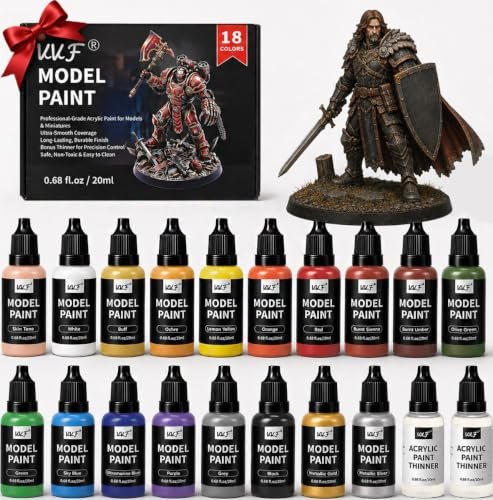
This set is built around a practical balance of utility and flow, offering smooth laydown on hard-to-coat 3D print filaments. The paint features consistent color opacity, which helps mask minor layer lines on FDM prints without looking cakey. Each shade cures to a glare-free matte finish, letting you photograph finished models without harsh reflections. You also get two full bottles of acrylic thinner to prepare custom washes or run mixes through an airbrush.
Key features that stand out:
– 18 essential tones featuring 16 matte colors and 2 metallic shades
– Specially formulated for high flow and surface control on plastics
– Includes 2 dedicated bottles of thinner for adjusting viscosity
– Generous 20ml dropper bottles designed for accurate dispensing
Pros:
– Rich pigmentation provides solid coverage in fewer coats
– Matte finish hides subtle layer steps on FDM prints
– Extra thinner bottles provide great value for airbrush users
Cons:
– Color variety is somewhat limited if you need wide ranges of fantasy skin tones.
Best for: Scale vehicle modelers and sci-fi prop makers needing smooth, uniform coats.
Expert Opinion: The flow rate here strikes a sweet spot; it levels out just enough to soften print striations while holding firmly onto steep vertical surfaces.
Nicpro 18 Colors Model Paint Set
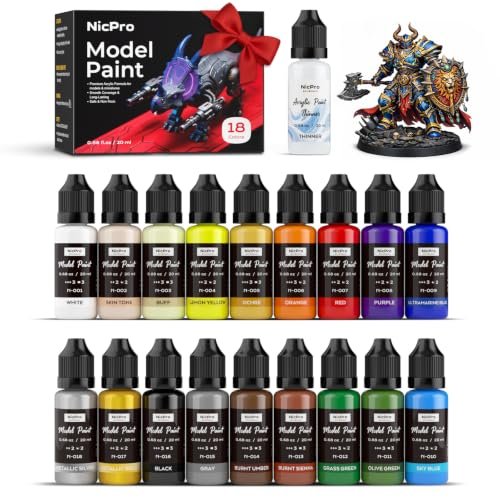
Nicpro’s 18-piece miniature set is engineered specifically to prevent fading and chipping on heavily handled models. The formula uses UV-resistant pigments that lock in color intensity even on display pieces placed near sunny windows. It offers smooth brush flow right out of the dropper, reducing brush drag across ribbed FDM layers. The included mixing guide and color wheel are particularly helpful for hobbyists learning how to blend custom tones.
Key features that stand out:
– 18 versatile model paints with rich pigment concentrations
– UV-resistant, lightfast formula that resists fading over time
– Pre-thinned consistency designed for smooth brush leveling
– Includes 1 bottle of acrylic thinner along with a color wheel guide
Pros:
– Adheres tenaciously to primed PLA, PETG, and photopolymer resin
– Ergonomic dropper tips make palette management clean and simple
– Dries rapidly between coats to speed up multi-stage painting
Cons:
– The paint requires thorough shaking because pigments settle noticeably over time.
Best for: Tabletop gamers who need durable, chip-resistant finishes on frequently handled pieces.
Expert Opinion: For wargaming prints that travel back and forth in foam cases, this acrylic blend provides noticeably better abrasion resistance than standard craft paint.
Nicpro Acrylic Paint Set 24 Colors (2oz Bottles)
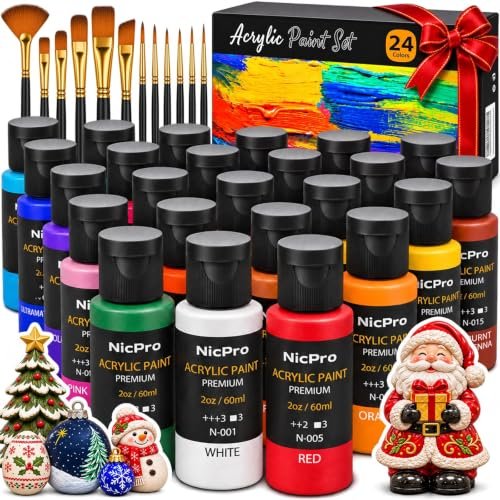
If you print large-scale cosplay props, terrain tiles, or functional housewares, small miniature bottles run dry too fast. This heavy-body set offers large 60ml volume bottles that provide plenty of paint for high-coverage projects. The paint has a creamy, blendable texture that holds up well when drybrushing coarse stone or bark textures on terrain prints. It is non-toxic and washes out of brushes easily with standard water and soap.
Key features that stand out:
– 24 vibrant artist-grade colors in large 2oz (60ml) bottles
– Creamy consistency that works for base-coating large surface areas
– Includes 12 assorted art brushes, a palette, and a color guide
– Conforms to ASTM D-4236 safety standards for non-toxic use
Pros:
– Excellent value for big cosplay pieces and large terrain boards
– High viscosity works wonders for heavy drybrushing techniques
– Brushes and palette included make it ready to use right out of the box
Cons:
– The paint is too thick for small miniatures unless significantly diluted with water or medium.
Best for: Life-sized cosplay helmets, display busts, and large tabletop terrain pieces.
Expert Opinion: Don’t waste your expensive mini droppers on a full-sized Mandalorian helmet; grab this set for wide coverage, then hit it with a clear coat for rugged protection.
VVF 30 Colors Model Paint Set
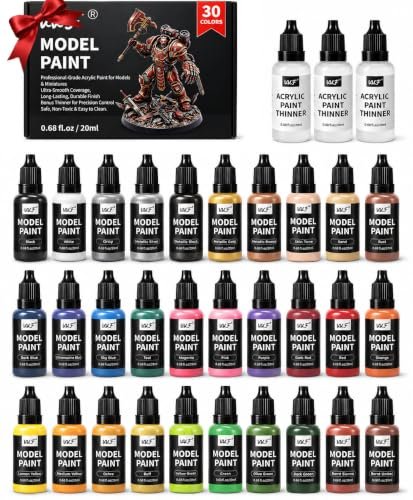
Expanding your palette saves time on manual color mixing, and this 30-bottle collection covers practically every basic hobby need. With 26 smooth matte tones and 4 reflective metallics, you can tackle complex figurines without stopping to formulate shadow tones. The paints maintain strong capillary flow, making edge highlights on 3D prints crisp and uniform. Two included bottles of thinner allow you to switch to glazing techniques in seconds.
Key features that stand out:
– Broad 30-color range containing 26 matte and 4 metallic paints
– Pre-mixed formula designed for controlled, smooth brush application
– Includes 2 dedicated bottles of thinner for fine detail and washes
– Secure 20ml dropper bottles that preserve paint freshness
Pros:
– Huge color selection reduces the need for complex manual mixing
– Metallics provide great shimmer for weaponry and mechanical parts
– Low surface tension helps paint glide into tight miniature crevices
Cons:
– The plastic dropper caps can split if you overtighten them after use.
Best for: Hobbyists looking for a wide color collection to paint varied tabletop armies.
Expert Opinion: Having dedicated shadow, base, and highlight tones ready in droppers speeds up batch-painting 3D printed armadas significantly.
Smooth-On XTC-3D Print Coating & Smoothing Epoxy
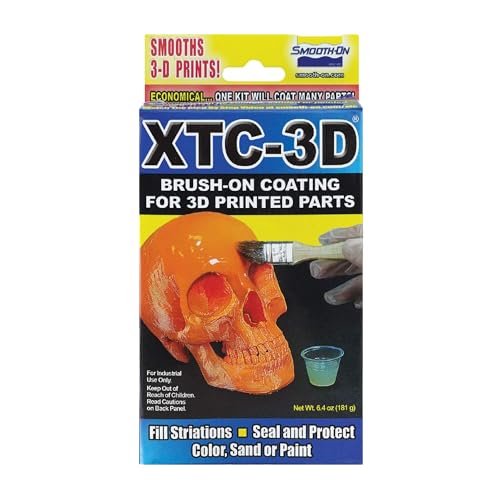
Layer lines are the bane of FDM printing, and this specialized resin coating eliminates them without hours of aggressive sanding. It functions as a self-leveling epoxy coat that flows into low spots while preserving major model contours. Once cured, it leaves a hard, impact-resistant surface with an 80D Shore rating that accepts any acrylic or enamel paint effortlessly. It requires very little product to coat substantial models, keeping details intact.
Key features that stand out:
– 2A:1B volume mix ratio formulated specifically for 3D prints
– Self-leveling liquid cures smooth without showing brush marks
– Fast curing action reaching handling strength in about 3.5 hours
– Compatible with PLA, ABS, PETG, SLA, and SLS printed materials
Pros:
– Radically cuts down sanding time on heavily stepped FDM models
– Creates an ultra-smooth, durable shell ready for primer and paint
– Adds structural strength to thin-walled or delicate prints
Cons:
– It has a short 10-minute working time that requires you to work quickly.
Best for: Eliminating visible layer lines on mechanical parts, helmets, and large display sculptures.
Expert Opinion: Apply this in paper-thin coats with a foam brush; putting it on too thick will pool in sharp corners and soften your print’s crisp edges.
Nicpro All-In-One Miniature Painting Kit (36 Colors)

This comprehensive kit contains virtually every accessory needed to take a freshly cured resin print to a finished showpiece. Alongside 36 pigment-rich paints, it includes 11 specialized hobby brushes, ranging from ultra-fine 10/0 detailers to wide drybrushes. The paint provides rich coverage without filling in recessed panel lines or subtle muscle definition. A built-in mixing tray lets you fine-tune washes and shades before touching the plastic.
Key features that stand out:
– 36 rich acrylic colors formulated for high plastic adhesion
– Includes 8 precision detail brushes and 3 dedicated drybrushes
– Comes with 2 acrylic thinners and a multi-well mixing tray
– High-opacity formulation designed to cover dark primer coats easily
Pros:
– Comprehensive package eliminates the need to buy extra hobby tools
– The included drybrushes make highlighting 3D textures effortless
– Strong pigment saturation prevents patchy, uneven coats
Cons:
– The paint bottles require significant shaking before the first use.
Best for: Intermediate hobbyists wanting a complete, dedicated workstation in a single box.
Expert Opinion: The inclusion of purpose-built drybrushes sets this kit apart; drybrushing is the fastest way to make 3D printed textures pop, and these brushes handle the technique smoothly.
Shuttle Art Acrylic Paint Set (36 Colors)
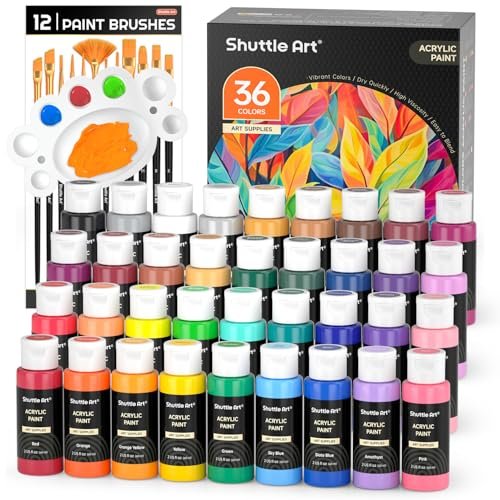
When you need a massive variety of bright tones for everyday crafts, decor prints, and garden models, Shuttle Art delivers solid results. The fast-drying water-based paint seals tight over properly primed surfaces without lingering chemical odors. It features high-viscosity pigment that can be thinned with plain water for washes or used thick for textured art effects. The kit comes packed with brushes and a mixing palette to jump straight into work.
Key features that stand out:
– 36 distinct artist colors including classic gold and silver metallics
– Quick-drying, fade-resistant formulation suitable for varied substrates
– Includes 12 versatile paintbrushes and an easy-clean palette
– Non-toxic and acid-free, certified under ASTM D-4236 standards
Pros:
– Outstanding color diversity for creative and multi-colored projects
– Easy cleanup using just tap water and standard hand soap
– Sturdy organizer box keeps your workspace tidy between sessions
Cons:
– The finish dries with a slight gloss that can exaggerate FDM layer lines.
Best for: Decorative prints, artistic desk accessories, and family crafting projects.
Expert Opinion: Because this formula dries with a gentle sheen, I recommend finishing your printed model with a matte clear coat to keep layer lines from catching bright room light.
Smallbudi 32 Colors Model Paint Set

Smallbudi’s expanded 32-color set gives you extended palette versatility with four dedicated metallic tones for weaponry, engines, and armor plating. The formula offers micro-fine pigment dispersion, which is vital for keeping liquid paint from pooling into unsightly blobs on smooth resin. It dries into a refined uniform matte, creating a realistic, non-reflective base for photography and display. With three bottles of thinner included, dialing in airbrush consistency is hassle-free.
Key features that stand out:
– 32 total colors featuring 28 matte shades and 4 realistic metallics
– Formulated specifically for model plastics, resin, and metal surfaces
– Includes 3 fine-point detail brushes and 3 bottles of acrylic thinner
– Comes with a comprehensive mixing chart and printed color wheel
Pros:
– Smooth flow characteristics make edge highlighting easy to control
– Three bottles of thinner give you plenty of medium for custom glazes
– Metallics contain fine flakes that look like real metal, not glitter
Cons:
– Dropper tips occasionally clog with dried paint if not cleaned after use.
Best for: Detailed sci-fi and fantasy 3D prints requiring complex shading and realistic metal accents.
Expert Opinion: The metallic pigments in this set are ground surprisingly fine; they won’t leave that cheap glittery texture you often see with standard craft metallics on smooth prints.
Comparison Insights for Choosing 3D Print Paints
- Miniature hobby paints excel on small prints: Sets like the Smallbudi 32 Colors and Nicpro Miniature Kit use micro-fine pigments that flow smoothly across tight crevices without obscuring sharp facial features.
- Craft acrylics are best for big builds: Tubes from the Nicpro 24-Color (2oz) Set provide the high fluid volume and thick body necessary to coat large helmets, weapons, and terrain without burning through miniature bottles.
- Surface preparation dictates your finish quality: Using Smooth-On XTC-3D prior to painting creates a glassy, uniform foundation that saves hours of sanding and prevents layer lines from showing through your basecoat.
- Pre-thinned paints speed up workflow: Choosing pre-thinned droppers like those from VVF or Smallbudi lets you apply basecoats directly from the palette without guessing water-to-paint ratios.
- Finish sheen affects surface flaws: Flat matte finishes hide layer lines, whereas semi-gloss and gloss formulas reflect light in ways that highlight print ridges and surface imperfections.
Final Verdict
If you need a complete, ready-to-run solution for detailed resin or FDM figurines, the Nicpro All-In-One Miniature Painting Kit offers the best balance of pigment quality, specialized brushes, and color variety. For makers tackling large FDM models, helmets, or functional pieces with visible layer steps, pairing the Smooth-On XTC-3D smoothing epoxy with the high-capacity Nicpro 24 Colors 2oz Set provides an unbeatable combination of durability, smooth texture, and economical coverage.
FAQs About Paint to Use on 3D Prints
Can you paint 3D prints with regular acrylic paint?
Yes, standard acrylic paint works well on both PLA and resin 3D prints, provided you prepare the surface first. Raw 3D prints are naturally slick and non-porous, meaning unprimed plastic will cause water-based craft paint to bead up or peel off easily. Applying a light coat of spray primer creates a textured mechanical bond that allows standard acrylics to grip the model securely.
What is the best primer to use before painting 3D prints?
An acrylic spray primer or sandable filler primer is generally the most effective choice for 3D printed parts. Filler primers (like automotive spray primer) work best on FDM prints because they fill microscopic layer valleys while creating a matte base. For detailed resin prints, use a fine hobby primer (such as a dedicated plastic primer) to preserve delicate features without building up excess thickness.
Do I need to sand my 3D print before painting it?
Sanding is not strictly mandatory, but it significantly improves paint adhesion and final visual quality. On FDM prints, sanding with progressive grits (from 120 up to 400 grit) levels down prominent layer ridges so they do not show through your paint job. Resin prints usually only need light wet-sanding with fine 600-grit sandpaper around support touchpoints to remove small nubs.
How do I stop paint from peeling off my PLA prints?
Paint typically peels off PLA due to surface oils, lack of primer, or inadequate surface abrasion. Wash your finished print with warm water and mild dish soap to remove finger oils and printing residues before starting. Once dry, scuff the surface lightly with high-grit sandpaper or a scouring pad, apply a dedicated plastic primer, and seal your finished acrylic paint with a clear matte or satin varnish.
Can you use enamel or oil-based paints on 3D prints?
Enamel and oil paints work well on 3D prints and are popular for weathering washes, panel lining, and realistic rust effects. However, they take significantly longer to cure than water-based acrylics and emit strong fumes during application. Always ensure your print material is chemically compatible; while fully cured PLA and resin tolerate oil-based spirits well, uncured surfaces or certain flexible filaments can soften.
Should I clear coat my 3D prints after painting them?
Applying a clear topcoat is essential if you plan to handle, display, or game with your 3D models. Acrylic paint can rub off sharp plastic edges over time, especially on tabletop miniatures or cosplay props. Spraying two light coats of a clear matte, satin, or gloss polyurethane varnish locks the pigments in place, protects against UV fading, and normalizes the overall surface sheen across your model.
Affiliate Disclosure: As an Amazon Associate, I earn from qualifying purchases made through links on this site.