After spending hundreds of hours cleaning supports and testing finishes on PLA and resin, I learned that dialing in printer settings is only half the battle. When makers ask me what to paint 3d prints with, I always emphasize that achieving vibrant, smooth finishes requires matching the right paints, detail tools, and surface prep methods to your print material. In this guide, I break down five practical solutions—from acrylic paints and markers to specialized finishing tools—to help you turn raw plastic prints into display-worthy art.
Smallbudi 20 Colors Model Paint Set
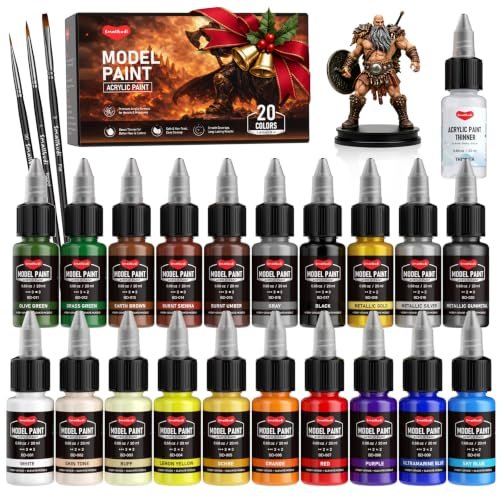
This hobby paint kit delivers a balanced selection of high-pigment acrylic paints that spread evenly across both FDM layer lines and smooth SLA resin prints. The formula comes pre-thinned for smooth brushwork right out of the bottle, preventing the dreaded clumping that often obscures tiny print details. With included detail brushes and an acrylic thinner, it gives you complete opacity control for washes, base coats, and realistic metallic accents.
Key features that stand out:
– 20 rich hobby colors including essential base tones, flesh shades, shadows, and metallics
– Pre-thinned water-based formula designed to preserve fine surface details
– Includes 3 synthetic detail brushes, 1 bottle of acrylic thinner, and a mixing color wheel
– Dries to a smooth, non-reflective matte finish with durable adhesion on plastics
Pros:
– Excellent coverage on raw and primed plastic without masking intricate layer details
– Acrylic thinner lets you easily adapt colors for glazing or airbrush use
– Included color wheel helps beginners learn color theory and shading quickly
Cons:
– The smaller 20ml bottles may run out quickly if you are base-coating large props.
Best for: Tabletop miniatures, gaming terrain, and detailed resin figurines.
Expert Opinion: If you are unsure where to begin with miniature and scale model painting, this set hits the sweet spot. The paint viscosity works naturally with standard synthetic brushes, and the matte finish hides minor FDM layer imperfections far better than high-gloss craft paints.
3Doodler Start+ Essentials 3D Pen Set
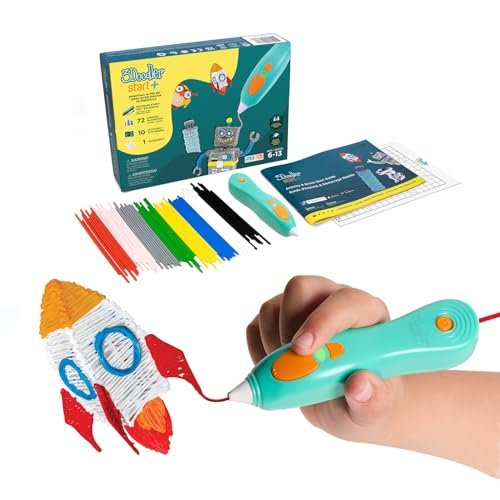
While paints add surface color, using a low-temperature 3D pen lets you fuse colored plastic directly onto your FDM builds for structural touch-ups and raised embellishments. Because it operates at safe, low temperatures without exposed hot elements, it provides an intuitive way for younger creators to color and customize printed toys. The biodegradable PCL plastic bonds reliably with standard PLA, making it handy for filling print voids and adding textured multi-color accents without messy liquids.
Key features that stand out:
– Child-safe design with no external hot parts or burning hazards
– Low-temperature PCL filament extrudes smoothly and hardens rapidly
– Cordless operation via rechargeable USB-C battery
– Complete kit with DoodlePad, mixed filament strands, and project templates
Pros:
– Great for safely adding raised, physical color accents to decorative prints
– Mess-free alternative to wet paints for younger hobbyists and classroom projects
– Fuses well with cold PLA prints to hide minor seam lines
Cons:
– PCL filament produces a softer, flexible finish that does not sand or take fine paint well.
Best for: Young makers, classroom craft projects, and adding quick tactile color accents.
Expert Opinion: Think of this tool as an additive coloring instrument. It is not meant for painting photorealistic shadows, but it works wonders for physically welding contrasting plastic highlights onto larger, functional toy prints.
From 3D Print to Work of Art: Painting & Finishing 3D Prints
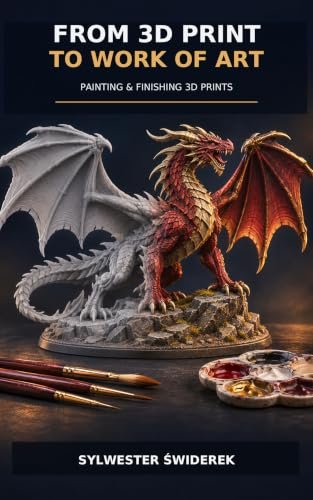
Knowing what medium to brush onto plastic is useless if your print is full of stubborn layer lines, stringing, and poor primer adhesion. This comprehensive reference book serves as a practical finishing blueprint, teaching you how to sand, fill, prime, and coat PLA, PETG, and resin models. It walks you through professional post-processing workflows, showing exactly how to select primers, blend acrylics, and apply protective topcoats for museum-grade results.
Key features that stand out:
– Detailed walkthroughs on sanding, gap-filling, priming, and dry-brushing techniques
– Clear breakdown of material differences between FDM filaments and photo-curable resins
– Visual guides on masking, weathering, washing, and applying protective clear coats
– Troubleshooting tips for peeling paint, brush streaks, and surface adhesion failures
Pros:
– Teaches the critical prep work needed before applying any paint
– Covers both budget-friendly DIY tricks and professional workshop techniques
– Helps eliminate visible layer lines through proven filler-primer strategies
Cons:
– As a physical reference guide, it does not include any actual paints or finishing tools.
Best for: Beginners and intermediate makers wanting to eliminate layer lines and master finishing techniques.
Expert Opinion: Most paint failures on 3D prints happen during prep, not color application. Having this book on your workbench saves hours of sanding frustration and keeps you from wasting expensive paints on improperly primed prints.
MYNT3D Professional Printing 3D Pen with OLED Display
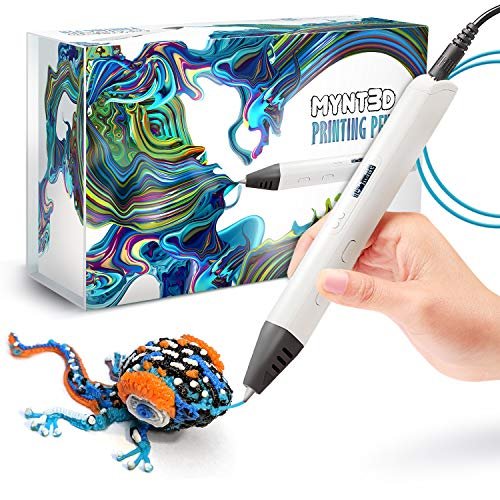
The MYNT3D pen offers a high-precision way to weld colored filament details onto your 3D models with exacting thermal control. Featuring an adjustable temperature system that tunes in single-degree increments, it works seamlessly with PLA, ABS, and specialty filaments to match your original print material. Its stepless speed slider provides fine extrusion control, making it an outstanding tool for repairing support blemishes, bridging print seams, and drawing high-contrast color reliefs.
Key features that stand out:
– Large OLED screen displays current temperature and filament material settings
– Stepless speed adjustment slider for steady, continuous material extrusion
– Broad temperature adjustment range from 140°C to 230°C
– Slim, ergonomic body powered via standard USB adapter
Pros:
– Bonds native PLA or ABS filament directly onto finished prints for strong repairs
– Precise speed adjustment makes it easy to fill gaps without over-extruding
– Allows direct color additions without drying times or paint prep
Cons:
– Requires practice and a steady hand to avoid leaving uneven blobs on smooth print surfaces.
Best for: Advanced makers needing seam repairs, gap-filling, and plastic-on-plastic accent detailing.
Expert Opinion: When dealing with multi-part prints that have visible glue lines, I use this pen loaded with scrap filament from the same spool. It melts seams together smoothly, creating a uniform surface that is ready for light sanding and primer.
Coogert 30 Multicolor Acrylic Paint Pens
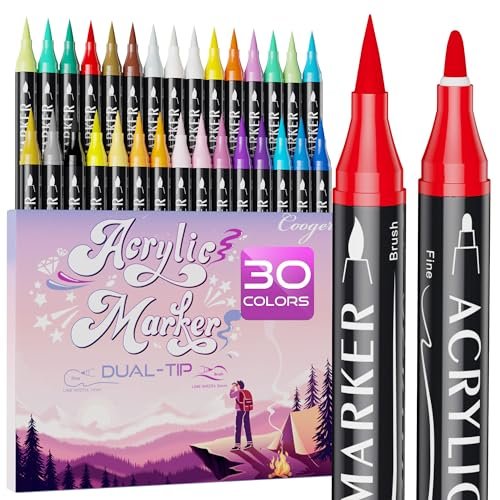
If you want the coverage of acrylic paint without mixing palettes and washing brushes, these dual-tip paint markers are a dependable solution. Each marker features a flexible brush tip for filling broad print facets and a 1mm fine nib for panel lining, eyes, and raised mechanical lettering. The water-based acrylic ink flows smoothly over plastic and resin without flooding recesses, curing to an opaque layer that clings well to clean prints.
Key features that stand out:
– 30 vibrant water-based acrylic paint markers covering primary, pastel, and metallic shades
– Dual-tip design featuring a 0.5–5mm brush tip and a 1mm extra-fine round nib
– Free-flowing valve system that prevents paint pooling and tip jamming
– High-adhesion ink formulated for plastic, resin, wood, and metal surfaces
Pros:
– Significantly faster setup and cleanup than traditional bottle paints and wash cups
– The 1mm fine tip delivers exceptional control for panel lines and small details
– Safe, low-odor water-based ink that dries quickly to the touch
Cons:
– Broad brush tips can wear down faster when applied against rough, unsanded FDM layer lines.
Best for: Rapid prototyping color-coding, lettering, panel lining, and clean decorative crafts.
Expert Opinion: These markers are my go-to when I need to add fast, clean color accents to mechanical models or cosplay props. The 1mm nib offers pinpoint line stability that prevents paint from bleeding across tricky print ridges.
Helpful Comparison Insights
When choosing your finishing setup, the best tool depends entirely on your project’s detail level and surface texture:
- Traditional bottled acrylics deliver the best blending: Bottled sets like the Smallbudi Model Paint Set provide the pigment density and fluid control needed for organic shading, wet blending, and tabletop miniatures.
- Acrylic markers offer speed and line precision: The Coogert Paint Pens remove the friction of setup and cleanup, making them far better suited for edge-highlighting, panel lines, and geometric props.
- Filament tools fix structural flaws before color: Pens like the MYNT3D Professional Pen and 3Doodler Start+ should be viewed as surface prep and accent tools. They repair scars and seams using real plastic, ensuring your paint job has a solid, continuous foundation.
- Knowledge beats expensive gear: Proper prep dictates 80% of your final finish. Referencing detailed post-processing guides like From 3D Print to Work of Art will keep your paint from flaking off raw plastics.
Final Verdict
| If Your Goal Is… | Choose This Solution | Why It Works |
| :— | :— | :— |
| Realistic Shading & Miniatures | Smallbudi Model Paint Set | Matte finish, high pigment density, and included thinner for fine layering. |
| Quick Accents & Line Work | Coogert Acrylic Paint Pens | Zero cleanup, dual tips for broad fills and 1mm details, no paint pooling. |
| Seam Filling & Structural Fixes | MYNT3D Professional Pen | Single-degree heat control welds matching filament straight into print flaws. |
| Safe Family Crafting | 3Doodler Start+ Set | Low-temperature extrusion creates tactile plastic color without hot parts or fumes. |
| Mastering Post-Processing | From 3D Print to Work of Art | Teaches the essential sanding, priming, and finishing steps that ensure paint stays put. |
For most hobbyists looking for an all-around painting solution, start with the Smallbudi 20 Colors Set paired with a thorough read of From 3D Print to Work of Art. That combination gives you both the technical understanding and the physical mediums required to achieve professional paint finishes.
Frequently Asked Questions About What to Paint 3D Prints With
What kind of paint works best on PLA and resin 3D prints?
Water-based hobby acrylic paint is widely considered the best option for both PLA and resin prints. Acrylics dry quickly, emit minimal odors, thin easily with water or acrylic thinner, and adhere tightly once cured. For resin prints, high-pigment miniature acrylics yield the crispest detail without clogging subtle features.
Do I need to sand and prime 3D prints before painting them?
Yes, surface preparation is crucial. FDM prints have distinct layer ridges that catch paint unevenly, while resin prints can have slick, non-porous surfaces. Lightly sanding with 220-to-400 grit sandpaper followed by a light coat of plastic-compatible filler primer creates a uniform base that ensures your paint will not chip or peel.
Can I paint directly on 3D prints with acrylic paint markers?
You can paint directly onto clean prints with acrylic pens, especially for quick color-coding or panel lining. However, on unsanded FDM prints, paint may follow layer ridges through capillary action. Applying an initial matte primer coat prevents this bleeding and gives paint pens a uniform grip.
Can spray paints and airbrushes be used on 3D models?
Both work exceptionally well. Spray paints (such as sandable primer-filler) are ideal for large cosplay armor and functional prints to smooth out print steps. Airbrushes, when combined with properly thinned acrylic paints, provide ultra-smooth gradients and thin, even coats that do not hide miniature details.
How do I protect painted 3D prints from chipping?
Once your paint dries completely, apply a clear acrylic topcoat or varnish. You can choose matte, satin, or gloss clear coats depending on the look you want. A matte varnish eliminates plastic glare and protects tabletop gaming prints from skin oils and frequent handling.
Can a 3D pen be used alongside normal paints on a model?
Yes. Many makers use high-temperature 3D pens to weld seams, bridge gaps, or repair print failures using the same filament material as the print. Once you lay down the plastic patch, you can sand it flush, apply primer, and paint over it seamlessly.
Affiliate Disclosure: As an Amazon Associate, I earn from qualifying purchases made through links on this site.