I’ve spent years sanding, priming, and finishing resin and FDM models, and I know how frustrating it is when coats flake or hide fine details. Choosing what paint for 3d prints makes the difference between a rough plastic prototype and a display-worthy masterpiece. In this guide, I test and break down top-rated paints, primers, smoothing sprays, and kits so you can pick the right finish for your next project.
Smallbudi 20 Colors Model Paint Set
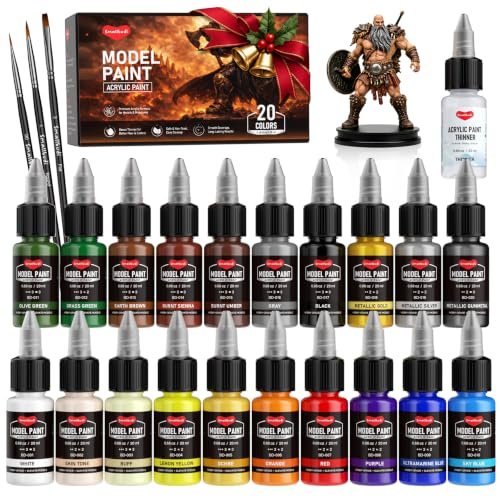
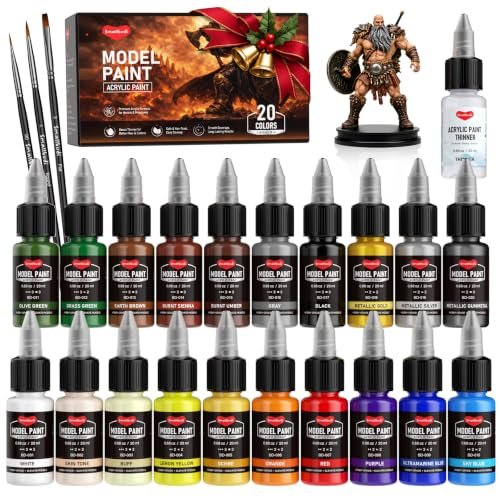
This compact acrylic kit is built to give smooth coverage on both resin miniatures and textured FDM prints without drowning out subtle details. The formula features high pigment concentration that lays down opaque color quickly, saving you from applying countless coats over raw plastic. With the included acrylic thinner and detail brushes, you can jump straight into edge-highlighting or blend shades right on your palette. It dries down to a clean, non-reflective matte finish that looks sharp on tabletop gaming pieces.
Key features that stand out:
– 20 curated colors including base tones, skin tones, and metallics
– Pre-thinned consistency ready for direct brush painting
– Comes with 3 detail brushes, 1 acrylic thinner, and a color wheel guide
– Specialized formula that adheres securely to resin, PLA, and PETG surfaces
Pros:
– High opacity lets you cover dark primer in fewer coats
– Pre-thinned texture flows well right out of the bottle
– Includes essential metallic shades for weapons and armor
Cons:
– The included brushes wear down quickly with regular heavy use.
– The 20ml bottles can run out fast on larger terrain prints.
Best for: Beginners looking for an affordable, balanced color starter kit for tabletop miniatures.
Expert Opinion: This set hits a sweet spot for anyone stepping into mini painting. The flow rate is forgiving on textured print lines, and the included thinner lets you experiment with washes without buying extra additives.
kuailaya 3D Print Primer and Sealing Coating
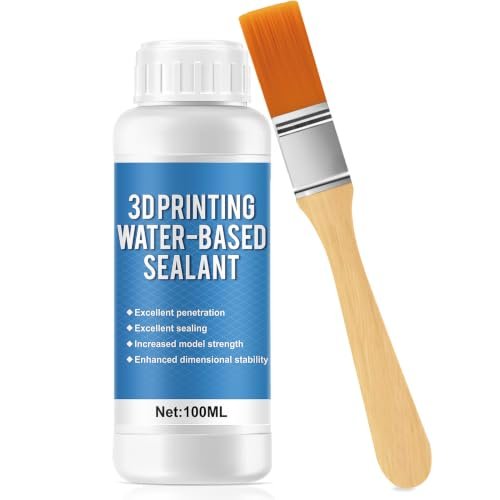
Prepping tricky filaments like PETG, Nylon, or PPA usually leads to peeling paint, but this specialized liquid primer solves that bond issue entirely. Its formula acts as a deep waterproof barrier that seals porous print layers while locking out ambient moisture. You get enhanced structural adhesion that prepares bare FDM surfaces for acrylic or enamel topcoats without heavy sanding. It cures naturally with a standard brush application, providing a durable base layer with scratch resistance.
Key features that stand out:
– Engineered specifically for tough materials like Nylon, PPA, and PETG
– Water-based sealant creates a moisture-resistant protective shell
– Easy brush-on application with no specialized spray booths needed
– Cures to an abrasion-resistant finish that strengthens layer bonds
Pros:
– Grips slick filaments that normal spray primers slide off of
– Odorless water-based formula is safe for indoor use
– Helps smooth microscopic layer gaps before applying color
Cons:
– Brush application can leave faint streaks if applied too thick.
– Requires multiple thin coats to achieve maximum water resistance.
Best for: Functional FDM prints and outdoor functional models needing strong environmental protection.
Expert Opinion: If you print with PETG or engineering filaments, standard craft primers won’t stick reliably. This primer provides a reliable chemical bite, giving your acrylic topcoats a solid anchor point.
2Pcs 3D Print Gloss Spray Layer Line Reducer
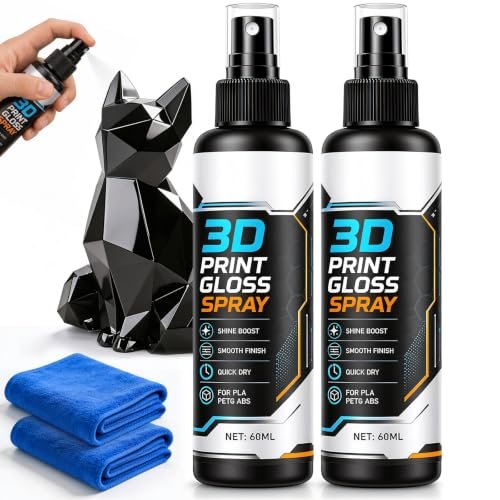
Smoothing out visible layer ridges on FDM models often takes hours of sanding, but this aerosol gloss spray simplifies the job. It utilizes a rapid quick-dry formula that lets you lay down several leveling coats without long wait times between passes. The aerosol mist deposits a high-gloss leveling coating that fills shallow micro-grooves and makes colors underneath look richer. It also ships with a dedicated wiping cloth to help you clean off dust before and after application.
Key features that stand out:
– Dual-can pack with included microfiber cleaning cloth
– High-gloss finish helps minimize visible print layer lines
– Fast-curing formulation shortens post-processing time
– Wide-dispersion spray tip provides balanced coverage on complex geometries
Pros:
– Significantly reduces the look of layer steps on PLA prints
– Dries rapidly so you can apply multiple coats in one session
– Adds a durable protective sheen against scuffs and handling
Cons:
– Strong aerosol fumes require spraying in a well-ventilated area.
– Applying too close can pool and fill in crisp recessed details.
Best for: Cosplay props, decorative desk pieces, and display models needing a quick glossy shine.
Expert Opinion: This spray works wonders on organic curves like helmets or creature sculpts where layer lines stand out most. Keep your can 8 to 10 inches away to avoid runs.
3D Print Gloss Spray Layer Line Reducer
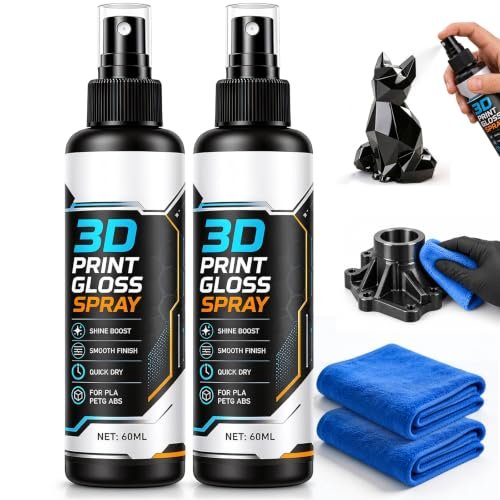
This single-can finishing spray is tuned specifically to refine 3D-printed surfaces and give raw plastic an upgraded look. The pressurized spray delivers even aerosol coverage across intricate crevices without clogging up structural overhangs. Thanks to its fast-drying leveling action, the formula fills minor layer striations and leaves behind a polished, shiny surface. It works across common filaments like PLA, ABS, and PETG without softening or melting the plastic underneath.
Key features that stand out:
– Tailored formulation for layer line reduction on FDM prints
– Fast-drying resin base cuts down finishing wait times
– Broad filament compatibility across standard 3D printing plastics
– High-clarity gloss finish highlights bright surface colors
Pros:
– Easy to use right out of the can without extra mixing
– Gives bare or painted prints an even, reflective sheen
– Helps seal prints against dust and light moisture
Cons:
– It will not hide deep layer gaps caused by severe underextrusion.
– The high-gloss finish can show fingerprint smudges over time.
Best for: Makers who want a fast, single-step gloss coat to finish decorative prints without sanding.
Expert Opinion: Think of this as a hybrid between a clear coat and a light gap filler. It won’t replace heavy sanding for mirror finishes, but it saves plenty of time on everyday display prints.
ELEGOO 3D Paint Kit for Printing Models
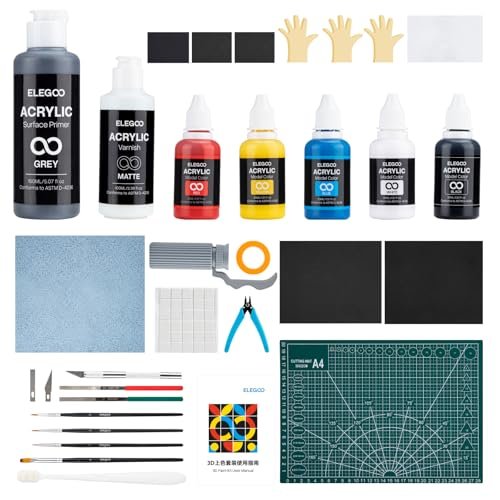
Designed by a well-known name in 3D printing, this kit gives you a complete post-processing setup straight out of the box. It features an all-in-one tool collection that includes quality brushes, a painting handle for steady gripping, and a specialized wet palette. The included water-based paint system offers low odor and safe indoor use, backed by a detailed mixing guide to turn basic tones into endless custom shades. The paints lay down cleanly on both SLA resin prints and smoothed FDM parts.
Key features that stand out:
– Comprehensive kit with paints, brushes, painting handle, and wet palette
– Wet palette keeps paints moist and workable for days
– Ergonomic model handle holds prints securely during fine detail work
– Non-toxic, water-based formula designed for low odor indoor use
Pros:
– Wet palette prevents paint from drying out mid-session
– The painting handle prevents hand cramps on tiny miniatures
– Step-by-step guides make color mixing straightforward for beginners
Cons:
– The limited starting color palette requires mixing for specific shades.
– The paint bottles are smaller than standard standalone hobby paints.
Best for: Resin printer owners who need an all-in-one workstation to start painting tabletop figures.
Expert Opinion: The inclusion of a wet palette and miniature holder makes this kit an incredible value. It provides the exact workflow tools experienced painters rely on, packaged neatly for newcomers.
Smallbudi 44 Colors Model Paint Set
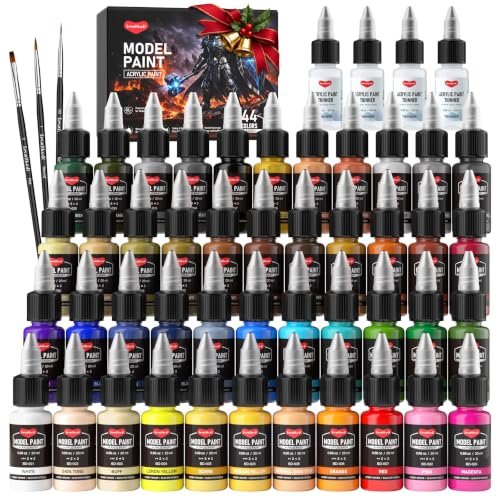
If you need a massive color selection without spending hours hand-mixing every transition, this 44-bottle setup is built for you. It boasts 38 standard colors and 6 metallics that cover everything from weathered earth tones to polished steel for mech armor. The professional-grade acrylic formula delivers dense coverage that prevents print layer lines from showing through your base coats. The bundle also provides four bottles of acrylic thinner, giving you plenty of medium to dilute paint for airbrushing or subtle glazes.
Key features that stand out:
– 44 total colors covering realistic military, fantasy, and sci-fi palettes
– 6 dedicated metallic paints designed for mechanical details and weapons
– Includes 4 bottles of acrylic thinner and 3 detail brushes
– Strong matte dry-down that maintains sharp surface edges
Pros:
– Huge variety of pre-mixed colors saves significant prep time
– Thins smoothly for airbrush application without clogging nozzles
– Excellent opacity over grey, black, and white base primers
Cons:
– The large box footprint takes up significant desk space.
– The included detail brushes bend under heavy daily pressure.
Best for: Serious hobbyists painting large dioramas, scale military vehicles, and varied miniature armies.
Expert Opinion: Having dedicated shades for leather, dirt, skin tones, and metals makes painting complex prints much faster. The matte finish helps mask slight print imperfections naturally.
MYNT3D Professional Printing 3D Pen with OLED Display
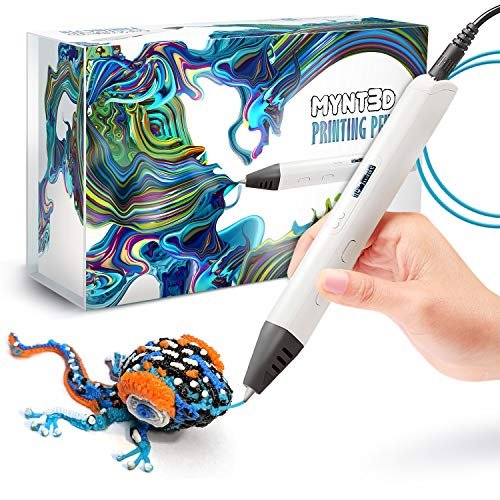
While not a traditional liquid paint, this precision 3D pen acts as an indispensable “plastic welder” and color-accent tool for finishing prints. It features 1-degree temperature adjustments on a crisp OLED screen, letting you match the exact melting point of PLA, ABS, or specialty filaments. The stepless adjustable feed slider gives you surgical control over material extrusion, allowing you to fill seam lines, fix print flaws, or draw colored plastic details directly onto parts. It lets you repair broken prints or weld multi-part assemblies using matching colored plastic.
Key features that stand out:
– Precision OLED display for real-time temperature tracking up to 230°C
– Variable speed slider to regulate plastic flow from slow detail to fast fill
– Ergonomic, lightweight design with USB power flexibility
– Compatible with standard 1.75mm PLA and ABS filament strands
Pros:
– Fills deep seam lines on multi-part prints with identical plastic
– Allows you to weld broken limbs or supports back together cleanly
– Adds raised, tactile 3D color accents that paint cannot replicate
Cons:
– Requires steady hand practice to avoid leaving melted blobs on surfaces.
– It cannot replace liquid paints for broad surface coloring.
Best for: Post-processing enthusiasts who want to weld seams, patch print defects, and add raised color details.
Expert Opinion: I keep this tool on my finishing bench specifically to hide seams on large multi-piece prints. Melting matching filament directly into join lines gives you a stronger, cleaner bond than glue and putty.
Smallbudi 32 Colors Model Paint Set
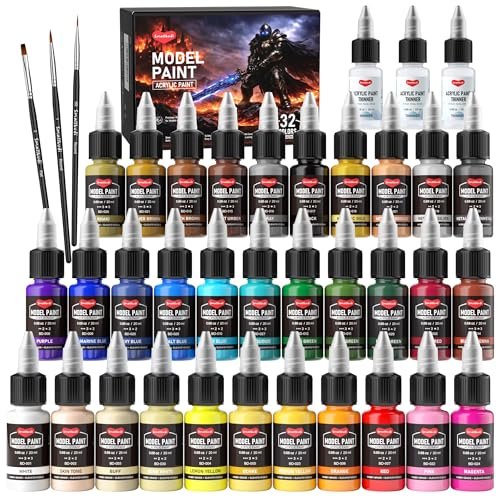
Sitting comfortably between basic kits and massive sets, this 32-bottle collection offers balanced utility for scale modeling. It features high pigment loading that ensures clean, uniform coats across textured PLA and ultra-smooth SLA resin surfaces. The kit supplies 3 acrylic thinners and 4 metallic shades, giving you the flexibility to lay down solid base coats or thin washes that settle into recessed panel lines. It dries down to a tough, smudge-resistant matte finish that handles regular tabletop gaming contact.
Key features that stand out:
– 32 color selections including 28 standard hues and 4 metallic finishes
– Comes with 3 acrylic thinners for layering, glazing, and airbrush use
– Includes 3 fine-tip detail brushes and a color mixing reference wheel
– Adheres reliably to plastic, cured photopolymer resin, and wood
Pros:
– Well-chosen color palette covers most fantasy and sci-fi projects
– High pigment count requires fewer passes over light primers
– Dries to an even matte texture that looks realistic under lighting
Cons:
– Paint caps can dry shut if paint builds up around the nozzle.
– Metallic shades require thorough shaking to redistribute settled pigments.
Best for: Tabletop wargamers and hobbyists who want a wide palette without paying for redundant color tones.
Expert Opinion: The paint consistency in this set is very reliable. It flows neatly into crevices without pooling erratically, which is critical when painting highly detailed resin prints.
Nicpro All-In-One Miniature Painting Kit
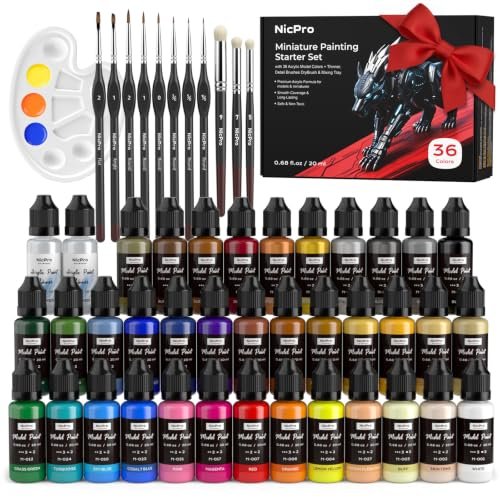
Nicpro assembled a complete workstation kit that eliminates the guesswork for painters tackling raw prints. The box includes 36 high-pigment acrylic paints alongside an expansive brush selection featuring 8 precision detail brushes and 3 drybrushes. The water-based paints provide a smooth, velvety matte finish that resists fading, while the included mixing palette makes diluting paints effortless. Whether you need to drybrush chainmail texture on FDM prints or line eye details on resin faces, the tools are ready to roll.
Key features that stand out:
– 36 model paints formulated for high opacity on plastic and resin
– 11-piece brush kit containing flat, angled, fine detail, and drybrushes
– 2 bottles of specialized acrylic thinner and a durable mixing tray
– True matte finish that prevents glare on display models
Pros:
– Dedicated drybrushes make highlighting 3D print textures effortless
– Strong brush variety handles everything from broad coats to 10/0 micro-details
– Paints dilute smoothly without breaking pigment cohesion
Cons:
– Drybrushes shed a few loose bristles during initial use.
– Dropper bottles require a firm squeeze to dispense thick pigment.
Best for: Beginners who want a complete, quality painting setup with dedicated drybrushing tools included.
Expert Opinion: The inclusion of three dedicated drybrushes is a massive plus for 3D print painters. Drybrushing is the easiest way to catch raised layer details and edges on FDM pieces, and these brushes handle the technique well.
Honoson 12 Pcs Cat 3D Printed Animal Figurines Painting Kit

If you want an accessible project kit for kids or casual craft time, this complete pack offers immediate fun. It comes with 12 articulated cat figurines printed from sturdy, non-toxic PLA, featuring flexible joints that move smoothly. The set includes 3 sets of 6 basic paints, multiple brushes, and mixing palettes so several people can paint at the same time. The smooth exterior of the PLA animals accepts the basic acrylic paints easily, making it a great creative gift or weekend family activity.
Key features that stand out:
– 12 pre-printed flexible cat figures made from durable PLA plastic
– Articulated joints provide interactive, moving desk toys
– Includes 3 paint sets, 6 craft brushes, and 3 paint palettes
– Safe, non-toxic water-based paints clean up easily with water
Pros:
– Ready to paint straight out of the box with zero 3D printer required
– Articulated design makes finished painted models fun to pose
– Great group activity kit with plenty of shared materials
Cons:
– The included paints are basic craft grade and lack high miniature pigment density.
– Joint areas can scrape away wet paint if moved before fully curing.
Best for: Family craft sessions, classrooms, and gifts for kids interested in 3D-printed toys.
Expert Opinion: This set is a great low-pressure way to introduce someone to painting 3D prints. Because the prints are already made and articulated, painters can jump straight into the fun of coloring without technical setup.
Helpful Comparison Insights for 3D Print Paints
- Acrylic model paints offer the most consistent coverage on both resin and FDM prints because their water-based binders grab micro-textured plastic without melting it.
- Dedicated primers are non-negotiable for functional filaments like PETG and Nylon; standard craft paints simply peel off without an adhesive intermediate layer like Kuailaya’s primer.
- Aerosol gloss and line-reducing sprays cut post-processing time by leveling minor layer gaps on FDM parts, making them ideal precursors before brushwork or clear-coating.
- Sets with included acrylic thinners provide superior control, allowing you to turn thick, opaque basecoats into translucent washes that define shadow details in print crevices.
- Complete kits featuring drybrushes or wet palettes save you money in the long run by keeping acrylics workable longer and providing the exact brush shapes required for textured plastic.
Final Verdict: Which Paint Should You Choose?
Your ideal painting choice comes down to your print type and how much prep work you want to do:
- For All-Around Tabletop & Resin Figures: Grab the ELEGOO 3D Paint Kit if you want the best beginner workstation with a wet palette and painting handle. If you already have tools and just want a broad color range, the Smallbudi 32 or 44 Color Sets provide the best pigment performance for your buck.
- For Fast Layer Smoothing & Cosplay Finishes: The 2Pcs 3D Print Gloss Spray is the top pick for knocking down layer lines and giving large PLA prints a glossy, sealed exterior quickly.
- For Hard-to-Paint Engineering Filaments: Use the kuailaya 3D Print Primer to ensure your paint doesn’t flake off slick PETG or Nylon parts.
- For Fixing Seams and Multi-Part Prints: Keep the MYNT3D Professional Pen close by to weld seams with matching filament before painting over them.
Frequently Asked Questions About What Paint for 3D Prints
What type of paint sticks best to 3D prints?
Water-based acrylic model paint is widely regarded as the best paint for 3D prints, whether you print with PLA, ABS, PETG, or photopolymer resin. Acrylics dry quickly, do not emit harsh chemical fumes, clean up with water, and flex slightly with the plastic. Enamel and lacquer paints can also be used, but they require chemical thinners and proper ventilation.
Do I always need to use a primer before painting 3D prints?
Yes, using an acrylic or surface primer is highly recommended. Raw 3D prints—especially FDM prints with layer striations and slick resin prints—have low surface tension, which can cause unprimed paint to bead up, run, or chip off later. A good base primer creates a consistent matte texture that gives topcoats strong adhesion.
How do I hide layer lines before painting FDM 3D prints?
To minimize visible layer lines, start by sanding your print progressively with 200 to 600-grit sandpaper. Following up with a dedicated 3D print gloss spray, high-build filler primer, or multiple thin coats of brush-on primer will fill remaining micro-ridges. Once the primer dries smooth, your acrylic paints will apply cleanly without catching in horizontal layer grooves.
Can you use regular craft acrylic paint on 3D printed models?
You can use budget craft acrylics, but they typically have larger pigment particles and lower pigment concentration than specialized model paints. This means craft paints often require thick, repeated coats to achieve full opacity, which can obscure fine print details. Miniature and model paints (like Nicpro or Smallbudi) feature finely milled pigments that maintain crisp edges while providing solid coverage.
Should I clear coat my 3D prints after painting?
Applying a clear matte, satin, or gloss varnish is essential if you plan to handle your prints. Unsealed acrylic paint can wear down or scratch off easily from skin oils and friction, especially on tabletop gaming miniatures or cosplay props. A light spray or brush-on clear coat locks in the paint and protects your finished piece from UV fading and moisture.
How do I paint resin 3D prints versus FDM PLA prints?
Resin prints usually require thorough washing in isopropyl alcohol and complete UV curing before painting; any residual resin will cause paint to peel immediately. Once fully cured, resin prints have a smooth surface that takes detail paints effortlessly. In contrast, FDM PLA prints require more initial surface preparation—such as light sanding, seam filling, and filler priming—to smooth out noticeable print layers before detailed color application.
Affiliate Disclosure: As an Amazon Associate, I earn from qualifying purchases made through links on this site.