After spending hundreds of hours running test prints across various setups in my workshop, I’ve found that getting clean prints with the best 3d filament printers comes down to pairing reliable motion hardware with consistent, well-wound filament. Even top-tier FDM machines will choke on brittle, out-of-spec spools, while high-grade filament can make budget printers punch well above their weight class. In this guide, I’ve rounded up and tested the standout printers and filament bundles that deliver smooth extrusion, crisp details, and dependable results every single time.
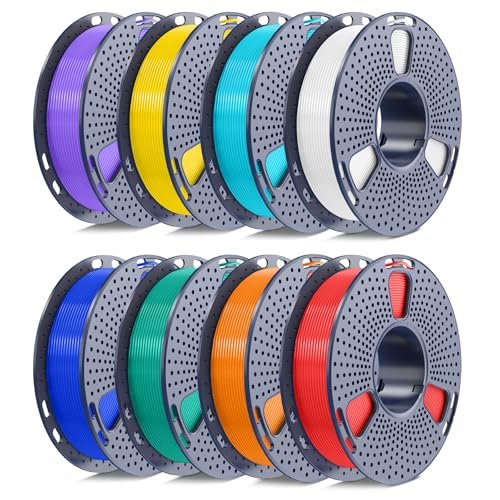
SUNLU PLA Filament 1.75mm, 250g Spool Bundle

If you want to print multi-color models without cluttering your shelves with giant 1kg spools, this compact 250g mini spool bundle provides just the right amount of material for accent parts. I ran several test prints on open spool holders, and the neat mechanical winding kept the lines moving freely without snags or mid-print pauses. Thanks to a tight ±0.02mm diameter tolerance, you get uniform extrusion from the base layer right up to fine top-surface details. It’s a reliable, low-warp material that makes testing fresh color combinations straightforward and fun.
Key features that stand out:
– Compact 250g spools that let you test multiple colors without waste
– Standard 1.75mm diameter with ±0.02mm tolerance for consistent flow
– Tightly wound spools engineered to stop crossovers and jams
– Compatible with common PLA print profiles and open spool holders
Pros:
– Gives you plenty of color variety without taking up heavy shelf space
– Excellent first-layer bed adhesion with minimal stringing
– Feeds smoothly through standard extruders
Cons:
– You will need a printed adapter ring to use these smaller spools inside automated multi-material feeders.
Best for: Hobbyists who want accent colors for small figurines without wasting leftover filament.
Expert Opinion: This mini bundle takes the headache out of multi-tone projects, though you’ll want to print a simple adapter ring if you plan to run these spools inside an automated feeder like the Bambu AMS.
SUNLU PLA 3D Printer Filament, Black, 1KG
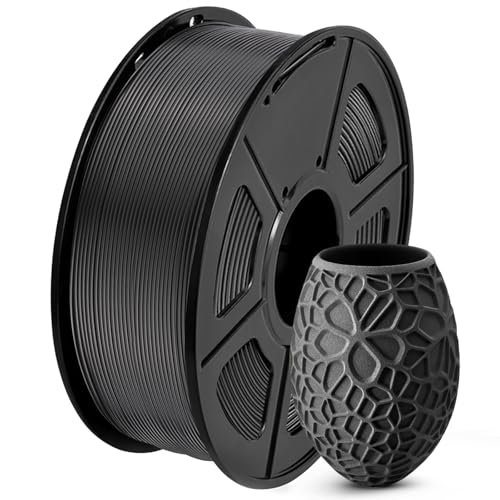
Every busy workshop needs a reliable everyday material, and this standard 1kg black PLA spool has become my go-to choice for functional parts and rapid mockups. It melts predictably across a broad 200°C to 230°C temperature range, ensuring rock-solid layer bonding on structural components. The tangle-free spooling process keeps feeding resistance low, virtually eliminating under-extrusion issues on longer overnight builds. It produces clean, deep-black parts that look crisp right off the build plate without requiring heavy post-processing.
Key features that stand out:
– Full 1kg spool formatted with standard hub dimensions
– Dimensional accuracy of ±0.02mm for predictable flow rates
– Proprietary neat winding eliminates spool crossovers and knots
– Broad printing speed support from 50mm/s up to 100mm/s
Pros:
– Extremely dependable extrusion with virtually zero nozzle clogs
– Uniform matte finish that hides layer transitions nicely
– Very low odor during extended indoor printing sessions
Cons:
– High-speed setups pushing past 200mm/s will require bumping up nozzle temperatures to prevent under-extrusion.
Best for: Daily structural prototyping, functional brackets, and general everyday printing.
Expert Opinion: If you just want a reliable black filament that you never have to baby, this spool delivers predictable flow rates and clean finishes on almost every FDM bed.
AMOLEN PLA Silk 3D Printer Filament Dual Color Bundle
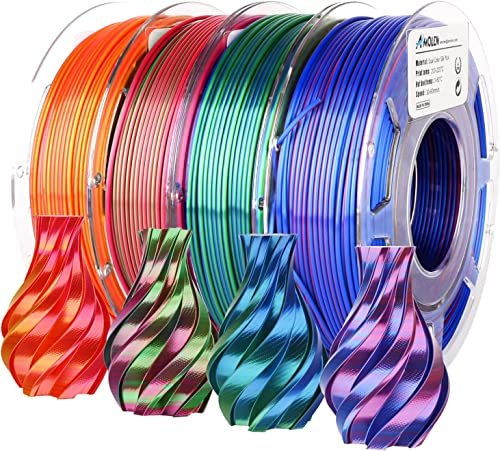
For showpieces, vases, and decorative models, this dual-color co-extruded silk PLA creates a striking two-tone sheen that shifts shades as your model turns. The formulation delivers a luxurious glossy surface finish that naturally hides layer lines better than standard matte filaments. Thanks to strict bubble-free vacuum packing, the filament melts smoothly with zero sputtering or popping at the nozzle tip. It turns basic geometric designs into eye-catching desk art without needing any complex dual-extruder hardware.
Key features that stand out:
– Four 200g spools featuring co-extruded two-tone color splits
– Silky reflective sheen that effectively conceals layer lines
– Standard 1.75mm diameter with ±0.02mm dimensional precision
– Tough formulation designed to avoid brittle breaks during feeding
Pros:
– Creates a multi-color look directly from a single standard nozzle
– Great bed adhesion across both textured PEI and smooth glass plates
– Comes thoroughly dried and vacuum-sealed with desiccant
Cons:
– Silk additives make layer-to-layer adhesion slightly weaker than standard mechanical PLA.
Best for: Display models, artistic vases, holiday decorations, and cosplay props.
Expert Opinion: The co-extruded split color looks spectacular on curved models, giving you a dynamic two-tone finish without needing an expensive multi-material automated changer.
Bambu Lab P1S Combo, P1S 3D Printer and AMS
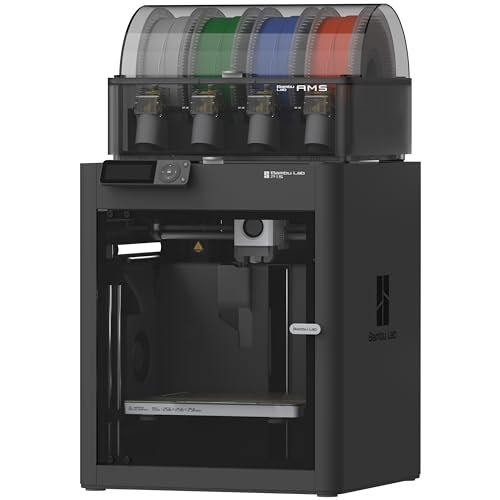
The P1S Combo stands out as a top-tier benchmark among modern consumer machines, pairing a fully enclosed CoreXY chassis with print speeds reaching up to 500mm/s. The included Automated Material System (AMS) handles 4-color switching automatically, taking the friction out of intricate multi-material builds. With hands-off automatic bed leveling and vibration compensation, you get clean, dimensionally accurate parts without spending hours turning adjustment knobs. It heats up quickly, keeps ambient chamber temperatures stable, and cuts typical print times in half.
Key features that stand out:
– Blazing 500mm/s print speed backed by 20000 mm/s² acceleration
– Fully enclosed build chamber suited for ABS, ASA, and PETG
– Automated Material System (AMS) enabling 4-color printing out of the box
– Integrated vibration compensation and automated bed leveling
Pros:
– Fast printing speeds while maintaining sharp, crisp corner details
– Multi-color filament management is smooth and largely automated
– Fast setup that takes roughly 15 minutes from unboxing to your first print
Cons:
– The proprietary software and hardware ecosystem can limit custom third-party firmware modifications.
Best for: Makers, small print farm operators, and hobbyists who want rapid, hassle-free multi-color printing.
Expert Opinion: The P1S Combo sets the standard for consumer FDM reliability; it handles high speeds effortlessly while turning multi-color printing into a true plug-and-play experience.
Frucindra Glow in The Dark PLA+ 3D Printer Filament
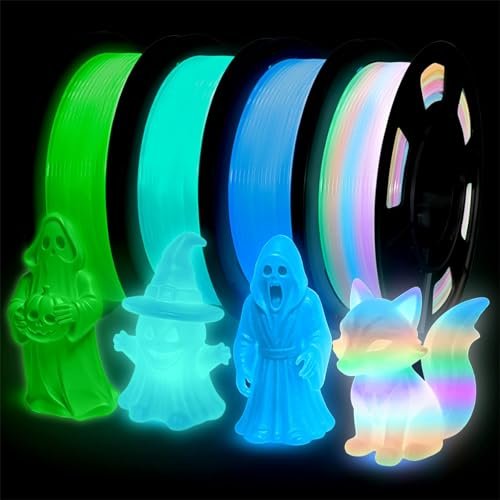
If you want to build novelty desk items, switch covers, or Halloween props, this luminous phosphorescent PLA+ pack absorbs room light or UV rays to produce a bright, lasting night glow. The modified PLA+ polymer base offers noticeably better impact resistance than traditional, brittle glow filaments. With four distinct glowing colorways, you can produce diverse nighttime prints that stand out in the dark. It lays down smooth perimeter walls and handles small overhangs well when dialed in with standard PLA settings.
Key features that stand out:
– Four 250g spools including green, blue, blue-green, and crystal rainbow
– Phosphorescent additives that charge quickly under sunlight or UV light
– PLA+ impact-resistant blend reduces post-print brittleness
– Sealed vacuum packaging with desiccant to keep moisture away
Pros:
– Produces a strong, vivid glow after just a brief light charge
– Feeds cleanly through standard 0.4mm hotends without bubbling
– Minimal bed warping when printed on standard heated build surfaces
Cons:
– Abrasive phosphorescent particles will wear down standard brass nozzles after a few spools.
Best for: Halloween projects, light switch plates, nighttime markers, and kids’ toys.
Expert Opinion: It produces an exceptionally vibrant glow that lasts for hours, but make sure to swap in a hardened steel nozzle so the abrasive phosphors don’t erode your brass tip.
SUNLU 250G PLA Filament 16 Color Bundle Multicolor, 4kg
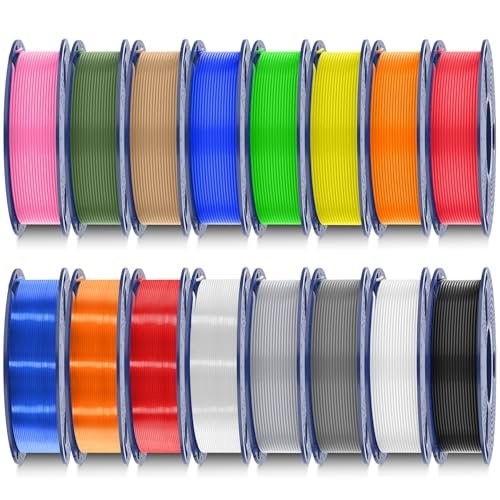
If you want an entire rainbow in your shop without spending hundreds on individual 1kg rolls, this 16-color 4kg variety bundle covers almost any hue you will need. Each spool features precision mechanical winding that keeps feeding tension low across extended, multi-hour print jobs. The filament supports speeds up to 200mm/s, pairing nicely with modern high-speed printers when using basic spool adapters. It’s an economical way to produce detailed multi-color figurines and educational prototypes without amassing half-used spools on your workbench.
Key features that stand out:
– 16 distinct color selections including primary hues, pastels, and wood tone
– 4kg total filament weight divided into practical 250g spools
– Consistent ±0.02mm diameter helps prevent under-extrusion
– Formulated to support modern high-speed printing profiles up to 200mm/s
Pros:
– Gives you a huge color palette in a single cost-effective box
– Consistent extrusion width produces smooth side surfaces
– Great cost-per-color value for small businesses and hobbyists
Cons:
– Keeping track of sixteen separate partial spools requires a bit of extra shelf organization.
Best for: Multi-color design creators, hobbyists printing detailed miniatures, and educational classrooms.
Expert Opinion: This bundle gives you tremendous creative freedom; you get every primary and accent color needed for intricate multi-color models without stockpiling giant 1kg spools.
Practical Buying Insights and Comparisons
Choosing the right combination of printer hardware and filament comes down to your project goals, speed requirements, and maintenance preferences:
- Hardware vs. Filament Synergy: A high-speed CoreXY machine like the Bambu Lab P1S Combo requires filament with consistent melting characteristics and uniform diameters (±0.02mm). Running low-grade, out-of-round filament at 300mm/s or faster will quickly cause feeding pauses and heat creep.
- Spool Sizing Matters: Standard 1kg spools are the most cost-effective choice for large structural prints and everyday prototyping. However, 250g mini bundles prevent filament waste if you only need small accents for multi-color designs, though you may need a printable ring adapter to run them inside enclosed material systems.
- Nozzle Wear Considerations: Standard materials like SUNLU PLA Black and silk blends run safely through ordinary brass nozzles. In contrast, specialty filaments like the Frucindra Glow in the Dark PLA+ contain hard minerals that will widen a brass nozzle opening within a few print jobs, making a hardened steel nozzle an essential upgrade.
- Silk vs. Standard PLA Strength: While AMOLEN Silk PLA gives an incredible glossy finish that conceals layer lines, the silk additives reduce sheer strength. Stick to standard PLA or PLA+ for functional mechanical brackets, and save silk blends for decorative vases and showpieces.
Final Verdict
If you want an automated, reliable system that handles multi-color prints right out of the box, the Bambu Lab P1S Combo is the standout choice. Its speed, enclosed design, and seamless material switching eliminate the traditional guesswork of 3D printing.
When it comes to feeding your printer, your best choice depends on what you are making:
– For daily structural parts and functional prototyping, grab the SUNLU 1KG Black PLA for its dependable flow and no-nonsense reliability.
– For maximum artistic variety without clutter, pick up the SUNLU 16 Color 4kg Bundle or the SUNLU 250g Spool Bundle.
– For eye-catching decorative prints, the AMOLEN Silk Dual Color Bundle provides dynamic color shifts without needing multi-extruder hardware.
– For specialty nighttime novelties, the Frucindra Glow PLA+ delivers unmatched luminescence—just remember to pair it with a hardened nozzle.
Frequently Asked Questions About the Best 3D Filament Printers
What makes a 3D filament printer reliable for beginners?
A reliable filament printer needs three main things: hands-off automatic bed leveling, a direct-drive extruder, and a flexible PEI build plate. These features eliminate the most common failure points, such as bad first layers and filament slipping. Modern printers also feature input shaping and vibration compensation, which keep prints looking sharp even at fast speeds.
Can I use 250g mini spools in the Bambu Lab AMS?
Yes, but you will need an adapter. The Bambu Lab AMS uses rollers designed for standard 1kg spools with an 8-inch outer diameter. To run 250g spools smoothly, you can easily download and print a snap-on spool adapter ring from community sites like MakerWorld, which lets the smaller rolls rotate properly without jumping the track.
Do glow-in-the-dark filaments damage standard 3D printer nozzles?
Yes. Glow-in-the-dark filaments are infused with phosphorescent ceramic compounds like strontium aluminate. These particles act like liquid sandpaper inside your hotend. A standard brass nozzle will wear out after just one or two spools, leading to uneven extrusion. Always install a hardened steel or ruby-tipped nozzle before running luminous filaments.
What is the difference between standard PLA and PLA+?
PLA+ is modified with impact modifiers and specialized additives to overcome the natural brittleness of standard polylactic acid. It generally offers better layer adhesion, higher impact resistance, and slightly higher heat tolerance. It prints at slightly higher hotend temperatures (typically 210°C to 230°C) but handles mechanical stress much better than standard PLA.
Why do my silk PLA prints have weaker layer adhesion?
Silk PLA gets its high-gloss, reflective appearance from added elastomers and silicone oils. While these additives create a smooth finish that hides layer seams, they slightly interfere with thermal bonding between consecutive layers. For maximum strength on functional parts, stick to standard PLA, PETG, or ABS instead of silk blends.
How should I store open filament spools to prevent moisture damage?
Filament materials, especially PLA, PETG, and TPU, absorb ambient moisture from the air over time. This leads to stringing, nozzle popping, and brittle filament that snaps inside feeding tubes. Store your spools in airtight plastic containers or vacuum-sealed bags with fresh silica gel packs. If a spool gets wet, dry it in a dedicated filament dryer at 45°C to 50°C for 4 to 6 hours before printing.
Affiliate Disclosure: As an Amazon Associate, I earn from qualifying purchases made through links on this site.