When I first set up my workshop, figuring out the true 3d resin printer cost felt like solving a puzzle with missing pieces. Between factoring in the machine price tag, slicing software, and ongoing bottles of photopolymer, I spent months running test prints to see which setups deliver real value without draining your wallet. In this guide, I break down the actual upfront and running costs across top-rated machines and essential resins so you can invest wisely.
ANYCUBIC Photon Mono 4 Resin 3D Printer
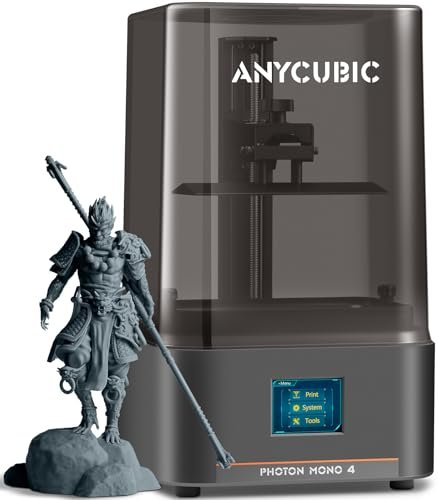
The ANYCUBIC Photon Mono 4 makes high-resolution printing accessible without demanding a premium price tag. Featuring a 7-inch 10K monochrome LCD screen with a microscopic 17×17μm XY pixel size, it reproduces crisp miniature details that used to cost thousands of dollars. The upgraded LighTurbo matrix light source ensures uniform exposures across the build plate, preventing warped edges and ugly layer lines. For anyone watching their initial investment, it hits a great sweet spot between cost and visual quality.
Key features that stand out:
– 7-inch 10K monochrome LCD with 9024×5120 resolution
– LighTurbo matrix light system for balanced UV exposure
– 153.4 x 87 x 165 mm build volume
– Laser-engraved build plate 2.0 for dependable bed adhesion
– Power-loss resume printing function to save failed prints
Pros:
– Superb 10K resolution captures tiny facial features on miniatures
– Bed leveling holds securely with a simple four-screw setup
– Compact footprint fits easily on smaller workbenches
Cons:
– It lacks companion mobile app support for remote monitoring.
Best for: Tabletop gamers and miniature painters who need ultra-fine detail on a budget.
Expert Opinion: The Photon Mono 4 proves you do not need to spend enterprise money to get studio-grade prints. The lack of Wi-Fi app support is a minor annoyance, but the sheer pixel density at this price range easily outweighs it.
ELEGOO Mars 5 Resin 3D Printer

The ELEGOO Mars 5 cuts down the hidden costs of resin printing by preventing ruined parts and broken screens before they happen. Its one-click automatic leveling takes the guesswork out of calibration, making it practically plug-and-play for newcomers. A built-in smart mechanical sensor checks for leftover debris in the vat, protecting the screen against expensive puncture damage. Paired with a sharp 4K mono LCD, it delivers crisp everyday prints with minimal setup friction.
Key features that stand out:
– One-click automatic bed leveling system
– Smart mechanical sensor for residue and tank shortage detection
– Pre-print one-click hardware self-check
– 4K mono LCD coupled with an efficient COB light source
– Automatic overheat protection that halts printing over 80°C
Pros:
– Built-in sensors prevent costly screen cracks caused by cured debris
– Zero manual leveling required right out of the box
– Quiet cooling fans prevent overheating during long jobs
Cons:
– The 4K screen resolution is lower than newer 9K and 10K alternatives.
Best for: Beginners looking for a hassle-free, low-risk entry into resin printing.
Expert Opinion: Screen replacements are one of the most frustrating hidden expenses in resin printing. By adding mechanical residue detection and auto-leveling at an entry-level price, the Mars 5 saves you serious cash on replacement parts.
ELEGOO Mars 5 Ultra Resin 3D Printer

If printing speed directly affects your productivity, the ELEGOO Mars 5 Ultra is built to move fast without sacrificing sharpness. It combines a 7-inch 9K monochrome screen with an innovative tilt-release vat system that peels layers in fractions of a second, clocking speeds up to 150 mm/h. An integrated AI camera system monitors prints in real time to catch failed adhesion early, cutting down wasted resin. It also features Wi-Fi cluster management, letting you control multiple units from a single workstation.
Key features that stand out:
– 7-inch 9K mono LCD with 18 μm XY resolution
– Tilt-release peeling mechanism hitting up to 150 mm/h print speeds
– Built-in AI camera for error alerts and time-lapse capture
– Mechanical residue detection and automatic leveling
– Wi-Fi connectivity with multi-printer cluster control
Pros:
– Blazing fast layer cycle times drastically cut project hours
– AI camera halts printing to stop you from burning through expensive resin
– Network printing eliminates the need for USB stick swapping
Cons:
– The tilt mechanism introduces extra moving parts that require careful cleaning.
Best for: Small print farm operators and busy creators who value rapid turnaround times.
Expert Opinion: Time is money, and the Mars 5 Ultra saves both. The tilt-release vat significantly speeds up print cycles, while the AI detection catches detachments before you waste half a bottle of resin on an empty plate.
ELEGOO Saturn 4 Ultra 16K Resin 3D Printer
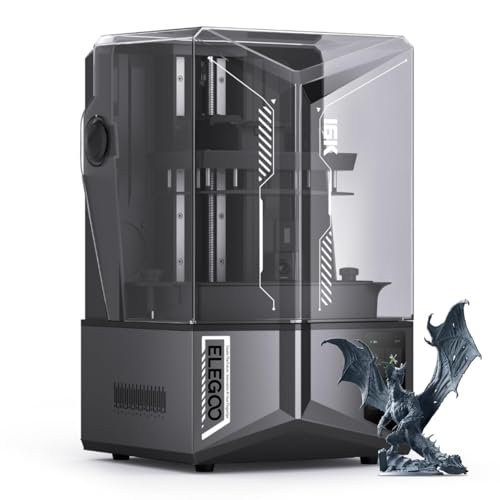
The ELEGOO Saturn 4 Ultra 16K brings high-volume production into your home studio while minimizing failed prints caused by temperature fluctuations. Its standout smart tank heating system maintains photopolymer liquid at a steady 30°C, ensuring optimal flow and layer cohesion during chilly winters. The massive 16K monochrome screen renders flawless surface textures across larger statues, functional prototypes, and batch prints. With automatic leveling and a chamber light for dark rooms, it handles demanding workloads with ease.
Key features that stand out:
– 16K resolution monochrome LCD for lifelike textures
– Intelligent vat heating system holding resin at 30°C
– Integrated AI monitoring camera with chamber lighting
– Hands-off automatic bed leveling
– High-speed tilt-release technology supporting up to 150 mm/h
Pros:
– Active vat heating ends seasonal cold-weather print failures
– Massive build area handles large multi-part assemblies with ease
– Incredible 16K resolution eliminates visible stepping layers
Cons:
– The larger footprint and higher initial purchase price require a dedicated workspace and budget.
Best for: Serious hobbyists, digital sculptors, and small businesses needing volume and precision.
Expert Opinion: Cold ambient temperatures ruin more prints than almost anything else. Having built-in vat heating alongside 16K resolution makes the Saturn 4 Ultra a dependable workhorse that justifies its higher initial investment.
SuperValue Ultra Low Cost 3D Printer Resin
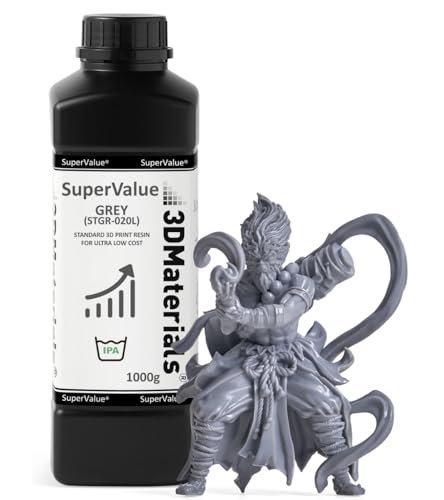
Keeping your ongoing 3d resin printer cost manageable means finding dependable liquid photopolymer that does not break the bank. SuperValue resin is formulated specifically to keep consumable costs down while maintaining a low viscosity formula that flows easily during fast layer exposures. It yields solid, opaque parts with deep pigments and low material shrinkage. Because it cures cleanly across standard 405nm light sources, it works smoothly with nearly every consumer desktop machine.
Key features that stand out:
– Low-cost formulation manufactured in South Korea
– Low viscosity supporting fine 16μm resolution layers
– High-concentration SuperColor pigments for deep blacks and solid whites
– Low-shrinkage oligomer and tough monomer base
– Broad compatibility across consumer LCD printers
Pros:
– Noticeably reduces your cost-per-print on bulk prototypes
– Thin viscosity drains well from hollowed prints, reducing waste
– Solid color saturation looks clean without primer
Cons:
– It has a stronger chemical scent compared to plant-based alternatives.
Best for: High-volume prototypers looking to minimize ongoing consumable expenses.
Expert Opinion: If you run multiple machines or print large architectural drafts, material expenses add up fast. SuperValue delivers reliable mechanical dimensions and decent detail at a fraction of the cost of specialty resins.
SUNLU Fast Curing Standard 3D Resin 1kg
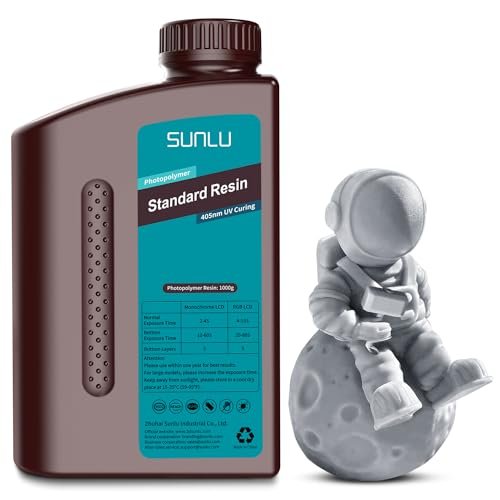
SUNLU Standard 1kg resin has become a staple for budget-minded makers who need consistent quality on daily prints. It features a fast-curing formula that reduces single-layer exposure times without causing brittleness or dimensional warping. The liquid is easy to rinse away in isopropyl alcohol, making post-processing fast and painless. Thanks to its leak-proof patented bottle design, you avoid messy spills during delivery and storage.
Key features that stand out:
– Fast photocuring response compatible with 365-405nm UV wavelengths
– Minimal shrinkage for dimensionally accurate models
– Low odor emission suitable for indoor workshops
– Wide color selection including standard, clear, and pastel shades
– Patented leak-proof bottle packaging
Pros:
– Clean post-processing with fast wash times in alcohol
– Affordable price point with frequent multi-pack discounts
– Mild scent makes long printing sessions more comfortable
Cons:
– Standard formulations can chip if dropped onto hard surfaces.
Best for: Everyday miniature printing, rapid prototyping, and budget-conscious hobbyists.
Expert Opinion: SUNLU nails the balance between price, print fidelity, and odor control. It is an ideal baseline resin when you want dependable, repeatable results without running up high material bills.
ELEGOO ABS-Like 3.0+ 3D Printer Resin 1000g
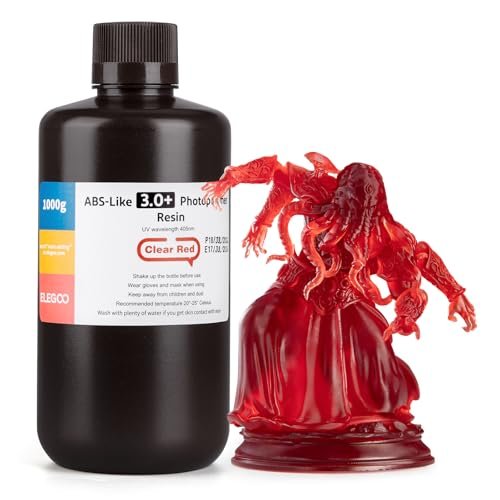
Standard resins often snap under pressure, but ELEGOO ABS-Like 3.0+ is built for parts that need real durability. It offers elevated heat resistance up to 55°C, preventing structural softening when models sit in warmer environments. The enhanced toughness allows you to tap, thread, and drill printed parts without worrying about micro-fractures or shattering. Good fluidity helps it return quickly across the release film, keeping print success rates high even during fast layer cycles.
Key features that stand out:
– Heat resistance rated up to 55°C without deformation
– High impact strength allowing functional drilling and tapping
– Balanced fluidity for rapid bed refilling and easy separation
– Low shrinkage rate for mechanical part fitment
– Fast curing profile tailored for modern monochrome screens
Pros:
– Stands up to drops and functional mechanical stress
– Can be machined or threaded directly for assembly projects
– Smooth surface finish accepts paint and primer evenly
Cons:
– It carries a slightly higher price per kilogram than standard resin.
Best for: Functional engineering brackets, snap-fit enclosures, and articulated action figures.
Expert Opinion: If you are tired of dropping a miniature and watching a sword shatter, stepping up to ABS-Like 3.0+ is well worth the extra few dollars per bottle. Its impact resistance saves you from having to reprint broken parts.
ELEGOO ABS-Like 3.0 3D Printer Resin 1000g

ELEGOO ABS-Like 3.0 delivers exceptional durability for mechanical components while keeping viscosity remarkably low. Its formula features 25% to 47% lower viscosity than earlier generations, allowing it to refill the vat quickly and peel effortlessly from release films. The cured plastic resists stress cracks and retains dimensional stability over time without warping. It also displays exceptional pigment stability, meaning you will not get separated colors or uneven streaks on taller prints.
Key features that stand out:
– Reduced viscosity for quick tank reflow and easy release
– Impact-resistant formula designed for mechanical durability
– Non-delaminating pigment stability eliminates frequent stirring
– High dimensional accuracy with reduced volume shrinkage
– Universal 405nm light curing compatibility
Pros:
– Thin consistency washes away easily in cleaner baths
– Minimal pigment settling over multi-day print jobs
– Holds tight dimensional tolerances for interlocking assemblies
Cons:
– Thinner consistency makes it easier to accidentally splash during pouring.
Best for: Precise functional parts and snap-together prototype enclosures.
Expert Opinion: The reduced viscosity in ABS-Like 3.0 solves one of the biggest headaches with tough resins: slow flow rates. It cures fast, peels easily, and gives your functional prints enough flex to survive everyday wear and tear.
ANYCUBIC Photon Mono 4 10K Resin Printer (Retail Edition)
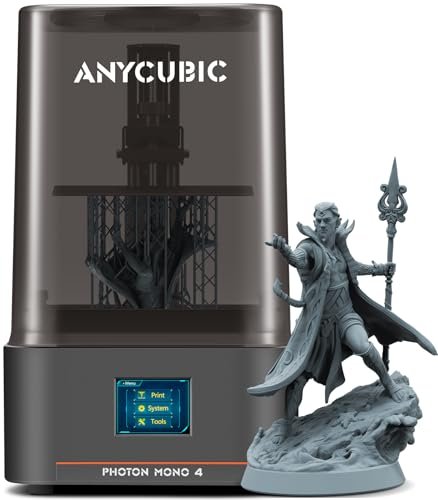
This factory-tuned edition of the ANYCUBIC Photon Mono 4 emphasizes long-term ownership value with extended coverage. It brings the same 7-inch 10K monochrome display and 1.5-second layer exposures, backed by an extended 6-month LCD screen warranty alongside a full year of machine support. The laser-etched platform prevents parts from peeling midway through a print, while the automated power-recovery feature saves you from ruined projects during brief electrical hiccups.
Key features that stand out:
– 7-inch 10K screen producing 17×17μm XY pixel precision
– LighTurbo matrix light source cutting layer times down to 1.5 seconds
– Laser-textured build plate for reliable first-layer stick
– Factory pre-calibrated and tested before packaging
– Extended 6-month LCD warranty with 1-year machine coverage
Pros:
– Generous screen warranty helps offset unexpected replacement costs
– Pre-calibrated out of the box for quick setup
– Power-loss resume function saves half-finished prints
Cons:
– The included basic plastic scraper can scratch the build plate if used aggressively.
Best for: Value-minded creators who want extra warranty protection against screen burnouts.
Expert Opinion: Because replacement LCD screens can account for nearly half of an entry-level machine’s original value, having an extended six-month warranty on the screen makes this specific Mono 4 package a smart hedge against early maintenance costs.
ANYCUBIC 405nm UV Standard Resin 1kg
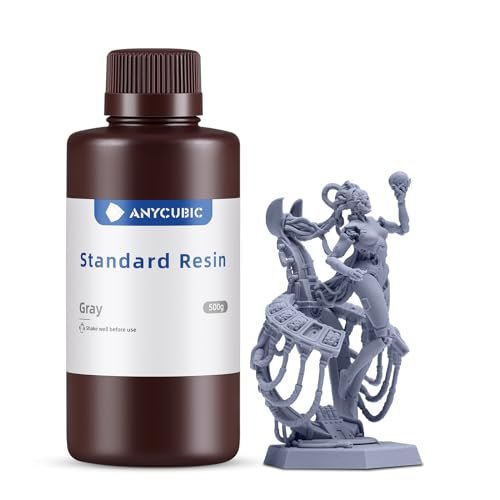
ANYCUBIC UV Standard Resin remains one of the most reliable and affordable choices for daily hobby printing. It cures quickly under 405nm light, striking a practical balance between rigidity and toughness that keeps fine model details intact while remaining easy to detach from the build plate. The fluid exhibits low volumetric shrinkage, ensuring your fantasy terrain or character models match their digital scale. Safe, air-cushioned packaging guarantees that your supplies arrive intact without messy postal leaks.
Key features that stand out:
– Fast photopolymer reaction for shortened layer times
– Balanced rigidity and flex for easy support removal
– Low shrinkage rate preserving fine relief patterns
– Inflatable bubble packaging for secure transit
– Compatible with all consumer DLP and LCD 3D printers
Pros:
– Consistently low price point keeps your recurring expenses down
– Supports snap away cleanly without leaving massive gouges
– Wide user base makes slicer settings easy to find online
Cons:
– Requires thorough shaking prior to use to prevent pigment separation.
Best for: Tabletop terrain, costume props, and high-volume visual displays.
Expert Opinion: You can find cheaper off-brand liquids, but ANYCUBIC Standard is thoroughly tested across almost every slicing profile in existence. When factoring your overall material expenses, predictable curing behavior saves you money on failed prints.
Helpful Cost Comparison Insights
Calculating your actual investment goes far beyond the printer’s sticker price. Keep these practical factors in mind when mapping out your budget:
- Upfront hardware vs. maintenance: Entry-level printers like the ANYCUBIC Photon Mono 4 or ELEGOO Mars 5 cost around $180 to $260 initially. However, replacement LCD screens, fresh FEP release films, and replacement vats can add $40 to $80 per year depending on how frequently you run jobs.
- Smart features pay for themselves: Premium units like the ELEGOO Mars 5 Ultra and Saturn 4 Ultra 16K carry higher initial price tags, but their mechanical residue detection, AI camera monitoring, and vat heaters drastically reduce costly print failures and broken screens.
- Consumable trade-offs: Budget standard resins like SUNLU and SuperValue cost around $14 to $18 per kilogram, making them ideal for display pieces. If you need functional parts that survive accidental drops, spending $22 to $28 per kilogram on ELEGOO ABS-Like 3.0 prevents the time and material loss of reprinting broken models.
- The post-processing equation: Remember to budget approximately $60 to $120 for essential cleaning equipment, including 99% isopropyl alcohol, wash and cure stations, nitrile gloves, and silicone mats.
Final Verdict
- The Smart Budget Winner: ANYCUBIC Photon Mono 4
Delivering stunning 10K resolution at an entry-level price, it gives you incredible miniature fidelity without blowing your initial equipment budget. - The Zero-Frustration Pick: ELEGOO Mars 5
With automatic bed leveling and physical vat residue detection, it protects your investment and spares beginners from costly mistakes. - The High-Speed Production Workhorse: ELEGOO Mars 5 Ultra
Its tilt-release mechanism cuts production time in half, while the AI camera keeps your resin waste to an absolute minimum. - The Prototyping Powerhouse: ELEGOO Saturn 4 Ultra 16K
Active vat heating and a massive 16K screen make this the top choice for serious creators whose priority is dimensional perfection in any climate. - The Daily Material Value: SUNLU Standard Resin paired with ELEGOO ABS-Like 3.0
Use SUNLU for budget-friendly visual displays, and switch to ABS-Like when you need drop-resistant functional parts that last.
Real Answers About 3D Resin Printer Cost
What is the average total 3d resin printer cost for a complete beginner setup?
A complete entry-level resin printing setup typically costs between $280 and $450. This includes a budget-friendly monochrome 3D printer ($180–$250), two bottles of photopolymer resin ($30–$40), a two-in-one wash and cure station ($80–$120), and safety consumables like 99% isopropyl alcohol, nitrile gloves, and paper towels ($30–$50).
How much does resin cost to run per miniature or model?
A standard 32mm tabletop miniature uses about 8 to 12 grams of resin including supports. Using an average standard resin priced at $18 per 1,000 grams (1kg), each miniature costs approximately $0.15 to $0.25 in raw liquid material. Even larger 75mm display figures generally cost less than $1.50 in resin.
The most common recurring expenses include isopropyl alcohol or cleaning solvents ($20–$30 every few months), replacement release films (FEP/PFA) ($10–$25 per multi-pack), and replacement LCD screens ($35–$90), which typically last around 1,500 to 2,000 printing hours before pixel degradation occurs.
Does 3D resin printer electrical consumption add significantly to utility bills?
No, resin 3D printers are remarkably energy-efficient. Most desktop LCD printers draw between 40 and 100 watts during operation. Running a printer for 10 hours a day usually adds less than $2 to $5 per month to your electric bill, depending on your local energy rates. Printers with active heaters draw slightly more, but still remain economical.
Is standard resin cheaper in the long run than ABS-like resin?
While standard resin has a lower upfront cost per bottle, ABS-like resin often saves money for functional parts. Standard resin models can shatter easily if dropped, forcing you to consume extra resin, cleaning alcohol, and time on reprints. If parts are handled frequently, durable ABS-like material is often more economical overall.
How does print failure rate affect overall 3d resin printer cost?
Failed prints are the fastest way to drive up your expenses. Every failure wastes the liquid resin used, wears out release films, and increases isopropyl alcohol contamination. Investing in printers with automatic leveling, vat heating, or AI monitoring can save dozens of dollars in wasted materials over your first few months.
Can water-washable resin reduce my total setup costs?
Yes, choosing water-washable resin removes the need to buy gallons of isopropyl alcohol, saving roughly $20 to $40 upfront. However, the dirty wash water cannot simply be poured down household drains; it still requires safe evaporation under UV light before disposal, and the resin itself is often slightly more brittle and expensive per bottle.
Affiliate Disclosure: As an Amazon Associate, I earn from qualifying purchases made through links on this site.