I spent the past few months running real-world benchmark tests on the latest batch of desktop machines, putting print speeds, dimensional accuracy, and layer consistency to the test. In this hands-on guide to the 3d printers best 2026 lineup, I’ll walk you through how each machine handles everyday PLA models, tricky multi-color prints, and advanced engineering filaments. Whether you’re upgrading an old bed-slinger or picking your very first desktop unit, this breakdown will help you find the right tool for your workbench.
FLASHFORGE Adventurer 5M 3D Printer
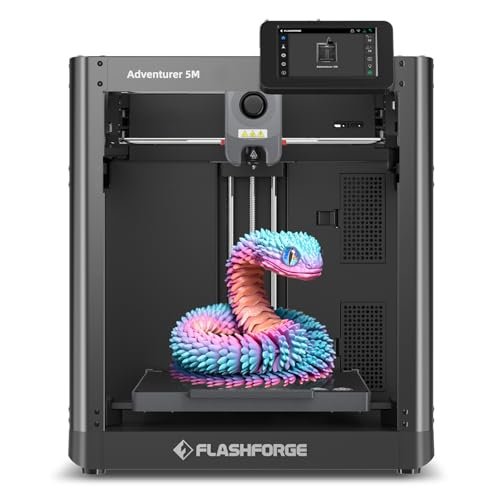
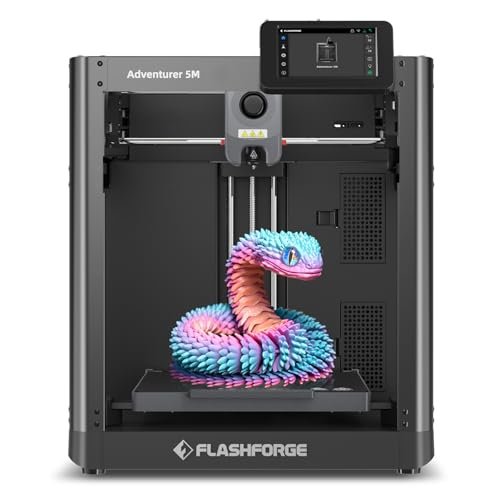
The Flashforge Adventurer 5M is an open-frame CoreXY powerhouse built for makers who prioritize raw print speed without the usual setup headaches. Its blistering 600mm/s print velocity and rapid 20,000mm/s² acceleration drastically cut down prototyping times on routine shop tasks. I was particularly impressed by the one-click full auto-leveling, which nailed first-layer squish consistently across my testing rounds. The tool-free 3-second quick-swap nozzle makes switching between fine-detail passes and high-flow production prints remarkably simple.
Key features that stand out:
– CoreXY motion structure capable of speeds up to 600mm/s and 20,000mm/s² acceleration
– Full one-click automated bed leveling system with zero manual adjustment knobs
– Rapid 3-second quick-release nozzle mechanism with high-flow 32mm³/s output
– 280°C direct drive extruder with dual-fan auxiliary part cooling
– Fast bed heating reaching 200°C nozzle temps in roughly 35 seconds
Pros:
– Incredibly fast print speeds cut routine print times by more than half
– Seamless first-layer adhesion directly out of the box
– Dual-sided textured PEI sheet releases finished prints with a gentle flex
Cons:
– The open-frame design makes it prone to warping when printing ABS in drafty workspaces.
Best for: Hobbyists and makers wanting fast prototyping and simple maintenance without complex manual calibration.
Expert Opinion: The Adventurer 5M delivers commercial-grade CoreXY speed at an accessible price point, making it one of the easiest high-speed recommendations for everyday PLA and PETG projects.
FLASHFORGE AD5X Multi-Material 3D Printer
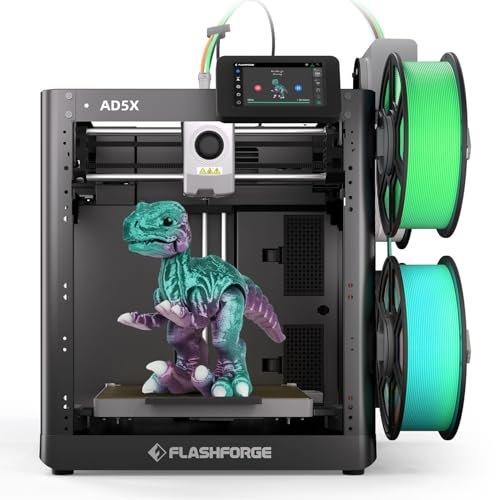
Multi-color 3D printing often takes up tons of counter space, but the Flashforge AD5X integrates a compact 4-color Intelligent Filament System (IFS) directly alongside the chassis. Its rigid all-metal CoreXY frame works hand-in-hand with active vibration suppression algorithms to keep layers aligned even when pushing speeds up to 600mm/s. During multi-material testing, switching between support materials and rigid filaments was smooth, producing crisp color transitions without mechanical jams.
Key features that stand out:
– Integrated Intelligent Filament System (IFS) supporting 4-color multi-material workflows
– High-speed CoreXY mechanics delivering up to 600mm/s with 20,000mm/s² acceleration
– Multi-point automatic bed leveling sensor for consistent first-layer squish
– Active vibration compensation algorithms to eliminate surface ghosting
– Broad filament compatibility handling PLA, PETG, TPU, and carbon-fiber blends
Pros:
– Side-by-side spool arrangement saves considerable desktop footprint
– Smooth filament retraction and switching reduce manual intervention
– Direct-drive setup handles tricky flexible filaments like TPU cleanly
Cons:
– Frequent multi-color filament changes produce noticeable purge waste over extended print runs.
Best for: Designers and crafters who want multi-color models without dealing with messy external spool boxes.
Expert Opinion: Flashforge’s integrated IFS approach is a smart engineering choice that solves the desk-clutter problem common to modern multi-color 3D printers.
AOSEED AI 3D Printer for Kids

Designed specifically for younger creators, the AOSEED AI printer eliminates the steep learning curve of traditional CAD software. Kids can generate models easily using voice and text prompts via AI Doodle, or turn family photos into cartoon statues with the AI MiniMe tool. The fully enclosed, pinch-resistant safety housing keeps heated elements safely out of reach while still achieving respectable print speeds up to 400mm/s.
Key features that stand out:
– AI-driven modeling software turning text, voice, and sketches into printable 3D files
– Fully enclosed child-safe chassis built with pinch-resistant doors and quiet fans
– Upgraded printing speeds reaching 220–250mm/s with bursts up to 400mm/s
– Integrated camera for live progress monitoring and automatic time-lapse generation
– Complete starter kit with 8 rolls of ISO-tested kid-friendly PLA filament
Pros:
– AI software makes model creation accessible for kids with no CAD training
– Enclosed chassis and safe materials give parents total peace of mind
– Over 20,000 curated, tested models available for instant one-tap printing
Cons:
– The print head only supports single-color output per job, requiring manual assembly for multi-color toys.
Best for: Young students, elementary classrooms, and families looking for a safe, educational introduction to 3D printing.
Expert Opinion: By combining prompt-based generative AI with a shielded, plug-and-play machine, AOSEED has created one of the most accessible STEM toys on the market today.
Creality K2 Plus Combo 2026 Multi Color 3D Printer
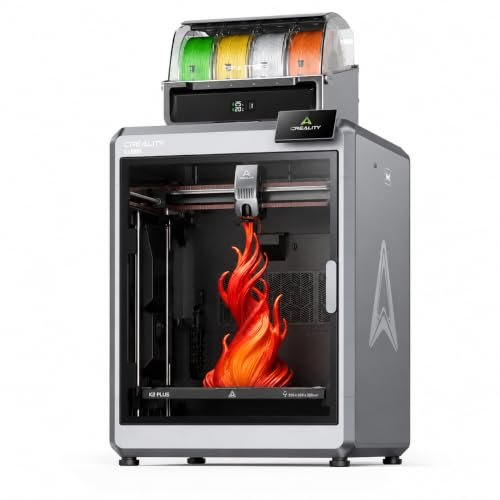
The Creality K2 Plus Combo is a high-capacity production beast offering an enormous 350x350x350mm build volume suited for life-sized props and batch manufacturing. It comes standard with the Color Filament System (CFS), which provides 4-color automated switching alongside active sealed spool drying. The printer also incorporates dual AI cameras with 18 sensor checkpoints that monitor for layer shifting, nozzle clogs, and spaghetti failures in real time.
Key features that stand out:
– Huge 350x350x350mm build chamber constructed with aerospace-grade aluminum
– CFS multi-color management unit with sealed, heated filament drying slots
– High-velocity motion system pushing 600mm/s with 30,000mm/s² acceleration
– Dual AI camera inspection system for real-time print defect detection
– Quiet drive system operating under 45dB during standard continuous printing
Pros:
– Massive print bed accommodates large helmets and full-scale prototypes in one piece
– Enclosed dry-box storage keeps moisture-sensitive filaments in peak printing condition
– Advanced AI error detection pauses prints before filament is wasted
Cons:
– The machine’s large footprint and heavy frame require an exceptionally sturdy, dedicated table.
Best for: Advanced makers, cosplay creators, and small businesses requiring large build capacity and automated multi-color production.
Expert Opinion: The K2 Plus Combo is a true flagship powerhouse; pairing active filament drying directly into the multi-color feeder fixes the most common cause of high-speed print failures.
FLASHFORGE AD5X Multi-Color 3D Printer (High-Temp Edition)
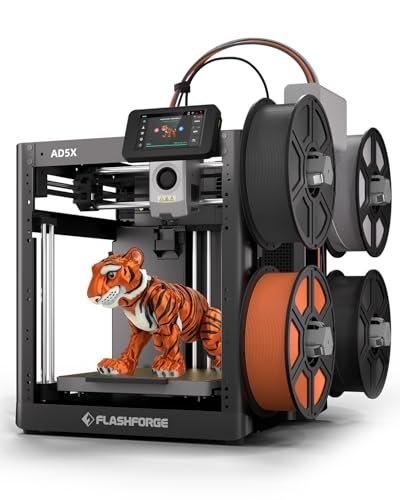
This variant of the Flashforge AD5X targets functional hobbyists who want color versatility alongside technical filament support. It features a 300°C direct-drive extruder capable of printing engineering-grade plastics while managing a 4-color automated switching system. The broad nozzle ecosystem (0.25mm to 0.8mm) makes it easy to switch from fine architectural miniatures to thick, heavy-duty structural parts.
Key features that stand out:
– Built-in 4-color switching system with auto-feeding and retraction mechanics
– High-temperature 300°C all-metal hotend paired with dual-channel cooling
– Rapid CoreXY frame hitting 600mm/s with 20,000mm/s² acceleration
– Full compatibility with nozzle sizes ranging from ultra-fine 0.25mm to broad 0.8mm
– Flash Maker mobile connectivity for wireless slicing, control, and alerts
Pros:
– 300°C nozzle allows printing with tough materials like nylon blends and polycarbonate
– One-click auto bed calibration eliminates first-layer inconsistencies
– CoreXY kinematics deliver smooth, clean walls even at high traversal speeds
Cons:
– Alternative nozzle sizes must be purchased separately since only the standard 0.4mm comes installed.
Best for: Makers who want both colorful display prints and the thermal headroom needed for functional technical plastics.
Expert Opinion: The extra hotend temperature capacity makes this version of the AD5X a more capable all-rounder for functional prototyping than standard desktop multi-color units.
FLASHFORGE Adventurer 5M Pro 3D Printer
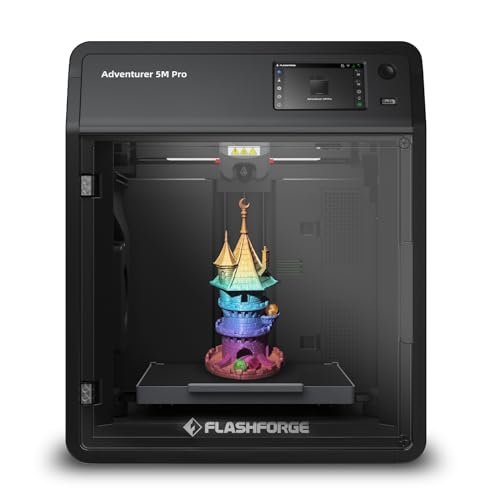
The Flashforge Adventurer 5M Pro takes high-speed desktop fabrication and seals it inside a fully enclosed, dual-filtered chassis. Its internal HEPA and activated carbon filtration system effectively scrubs odors and ultrafine particles, making it safe for bedrooms and offices. With an operating volume whisper-quiet under 50dB, you can run long overnight prints without being disturbed, while the 280°C hotend and 110°C heated bed easily handle ABS, ASA, and PETG-CF.
Key features that stand out:
– Enclosed chamber equipped with dual filtration (HEPA and activated carbon)
– 600mm/s top speed powered by a rigid CoreXY frame and input shaping
– Tool-free quick-swap nozzle system swappable in roughly 3 seconds
– High-temp 280°C hotend paired with a 110°C heated build platform
– Built-in monitoring camera for live smartphone streaming and time-lapse captures
Pros:
– Dual filtration safely neutralizes harsh fumes from technical materials like ABS
– Extremely low noise profile keeps office and classroom environments quiet
– Quick-change nozzle setup makes clearing clogs or changing sizes painless
Cons:
– Build volume is restricted to standard dimensions, limiting single-piece oversized prints.
Best for: Classrooms, shared apartments, and engineers who frequently print technical, fume-heavy materials indoors.
Expert Opinion: For anyone printing ABS or ASA in enclosed indoor living areas, the 5M Pro’s built-in air filtration and quiet operation make it well worth the step up from open-frame alternatives.
Entina Tina2C 3D Printer

If you’re on a tight budget or working with minimal desk space, the Entina Tina2C is a mini desktop machine that gets you up and printing within 5 minutes. It comes fully assembled with factory auto-leveling presets, bypassing complex mechanical setups. The flexible magnetic build plate makes removing small prints completely effortless—just lift the plate and bend it.
Key features that stand out:
– Ready-to-use factory assembled unit requiring no complex mechanical setup
– Poloprint Cloud app integration featuring AI text-to-3D tools and model libraries
– Pre-calibrated auto-leveling bed for immediate first-layer adhesion
– Compact 3.9 x 3.9 x 3.9-inch print area with quiet stepper motor drivers
– Quick-swap nozzle design and power-loss recovery safeguards
Pros:
– Extremely compact footprint fits easily on crowded student desks or bookshelves
– Budget-friendly price point lowers the barrier to entry for beginners
– Phone-based app controls allow one-tap printing without desktop slicing software
Cons:
– The 3.9-inch cubic build volume restricts projects to mini figurines and small utility prints.
Best for: Absolute beginners, elementary students, and makers looking for an ultra-compact secondary printer.
Expert Opinion: The Tina2C functions more like a home appliance than a complex machine, making it a stress-free entry point for anyone curious about 3D printing.
Practical Insights: How These Printers Compare
Choosing between these modern machines comes down to your print volume, material needs, and multi-color priorities:
- Speed and Kinematics: Most modern contenders—like the Flashforge 5M series and Creality K2 Plus—rely on CoreXY motion platforms reaching 600mm/s, leaving traditional bed-slingers in the dust.
- Multi-Color Management: If multi-color printing is your main goal, the Creality CFS offers sealed spool drying, which is critical for moisture-sensitive filaments, while the Flashforge AD5X integrates its spools beside the chassis to conserve valuable workspace.
- Enclosed vs. Open Frame: Open machines like the standard Adventurer 5M offer incredible value for basic PLA and PETG, but enclosed chambers with HEPA filtration (seen on the 5M Pro) are mandatory if you want to print warp-prone, fume-heavy materials like ABS or ASA indoors.
- Beginner Accessibility: For kids and absolute beginners, the AOSEED AI printer and Entina Tina2C remove CAD hurdles entirely via smartphone-guided printing and generative AI tools, whereas the Creality and Flashforge units cater to makers who prefer standard slicing workflows.
The Final Verdict
Here is how I would categorize these machines based on specific workshop needs:
- Best Overall Speed and Value: The FLASHFORGE Adventurer 5M delivers top-tier 600mm/s CoreXY speeds, rapid nozzle swaps, and automated leveling at a price that is tough to beat.
- Best Large-Format Multi-Color: The Creality K2 Plus Combo takes top honors for heavy-duty makers thanks to its massive 350mm build envelope, AI camera monitoring, and integrated filament-drying CFS.
- Best Indoor Office Workhorse: The FLASHFORGE Adventurer 5M Pro stands out for apartments, classrooms, and offices due to its quiet sub-50dB volume and dual air filtration system.
- Best for Young Creators: The AOSEED AI 3D Printer provides the safest, most engaging platform for kids through voice-to-model AI generation and a fully protected build area.
3d printers best 2026: Frequently Asked Questions
What makes CoreXY 3D printers better than traditional bed-slingers?
CoreXY 3D printers keep the heavy print bed stationary on the Y-axis (only moving it vertically along the Z-axis), while lightweight belts move the print head rapidly across both the X and Y axes. This drastically cuts down mechanical inertia, allowing these printers to achieve speeds of 600mm/s with minimal vibration, ringing, or layer shifting compared to older bed-slinging designs.
Do I really need an enclosed 3D printer?
If you only print standard PLA, PETG, or TPU, an open-frame printer works fine. However, an enclosed 3D printer is essential if you plan to print technical materials like ABS, ASA, or nylon. Enclosures maintain ambient chamber heat to stop plastic from warping and, when paired with HEPA or carbon filters, prevent harmful VOC fumes from escaping into your living space.
How does multi-color 3D printing work, and does it waste filament?
Modern multi-color systems use an automated filament switcher (like Creality’s CFS or Flashforge’s IFS) that retracts one spool and feeds another into a shared hotend whenever the design calls for a color change. Because the nozzle must be purged clean between colors to prevent bleeding, multi-color prints do generate scrap filament (known as purge towers or poop).
How important is auto bed leveling on modern 3D printers?
Auto bed leveling is practically a standard necessity today. Instead of spending 15 minutes manually sliding pieces of paper under nozzle corners, automated sensors measure multiple points across the build plate and compensate for micro-deviations electronically. This guarantees consistent first-layer squish and eliminates the most common cause of failed prints.
Can beginners use high-speed 3D printers without advanced technical skills?
Yes. Today’s high-speed printers come almost fully assembled with pre-tuned slicing profiles, one-click vibration calibration, and automated filament loading. Many also feature smartphone apps with cloud slicing, making high-speed 3D printing as straightforward as running an ordinary paper printer.
What maintenance is required to keep high-speed printers running smoothly?
To keep your printer running at peak performance, clean and grease the linear rods or guide rails every couple of months, inspect drive belt tension periodically, and wipe down the textured PEI build plate with isopropyl alcohol or warm dish soap to remove finger oils that harm first-layer adhesion.
Affiliate Disclosure: As an Amazon Associate, I earn from qualifying purchases made through links on this site.