When I first unboxed a budget resin setup in my home workshop, I was skeptical about what an entry-level machine could actually deliver. After running dozens of miniature test prints and functional parts, I found that today’s entry-tier models and discounted printers—often hovering around the price point of a 99 dollar resin printer during sales—pack incredible resolution, rapid layer curing, and surprisingly reliable hardware into compact desktop units. In this guide, I share hands-on insights across top machines and essential resins to help you achieve crisp, salon-grade prints without emptying your wallet.
1. ANYCUBIC Photon Mono 4 Resin 3D Printer

The ANYCUBIC Photon Mono 4 packs an impressive punch with its 7-inch 10K monochrome LCD screen, delivering a razor-sharp resolution of 9024×5120. In my daily testing, the microscopic 17×17μm XY pixel size caught every fold in clothing and facial features on tabletop miniatures without breaking a sweat. It uses the time-tested LighTurbo matrix light source alongside a Laser-Engraved Print Platform 2.0 that ensures solid initial layer grip while allowing simple part release.
Key features that stand out:
– High-definition 7-inch 10K mono screen with 17×17μm pixel precision
– LighTurbo light system provides balanced exposure and eliminates raster lines
– Decent build space measuring 153.4 x 87 x 165 mm
– Upgraded laser-textured platform for strong adhesion and easy scraping
– Power-loss recovery to save prints during accidental outages
Pros:
– Astounding fine-detail reproduction on small miniatures
– Straightforward 4-point manual leveling that holds over time
– Reliable plate adhesion out of the box
Cons:
– Does not support the Anycubic mobile companion app.
Best for: Miniature painters and tabletop gamers who demand ultra-fine surface details on a budget.
Expert Opinion: The screen resolution on the Mono 4 makes it one of the absolute best values for anyone who wants crisp resin fidelity without jumping into high-ticket industrial gear.
2. ELEGOO Mars 5 Resin 3D Printer

The ELEGOO Mars 5 takes away the intimidation factor for newcomers by introducing genuine one-click automatic leveling right into an affordable machine. Its 4K monochrome LCD combined with a COB light source produces clear, crisp models with minimal surface artifacts. What really kept my workflow stress-free was the smart mechanical sensor, which detects leftover debris in the vat to protect the LCD screen from costly punctures.
Key features that stand out:
– Hassle-free one-click auto-leveling mechanism
– Mechanical sensor for residue detection and resin level warnings
– Pre-print hardware self-check to prevent wasted prints
– 4K mono LCD with uniform COB illumination
– Integrated overheat safety shutoff when the LED exceeds 80°C
Pros:
– Effortless setup with zero manual leveling required
– Smart screen-protection features prevent costly LCD cracks
– Steady thermal regulation keeps prints consistent
Cons:
– The 4K resolution is lower than newer 10K budget competitors.
Best for: Absolute beginners looking for a painless, plug-and-play resin experience.
Expert Opinion: If you are terrified of leveling plates or puncturing an LCD with cured resin chunks, the Mars 5 provides an unrivaled safety net at an entry price point.
3. MALYAN S100 Mini Resin 3D Printer
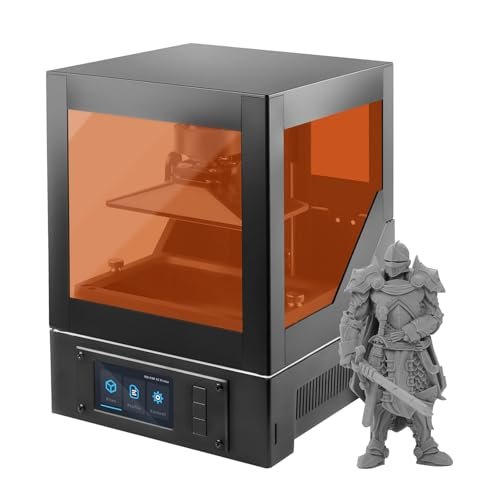
The MALYAN S100 Mini is a tiny powerhouse that comes closest to the pure sub-$100 desktop ethos, sporting a 5.5-inch 2K monochrome LCD that handles modest jobs efficiently. Its most convenient feature is the flexible magnetic build plate, which lets you snap off small prints instantly without hacking away with a metal putty knife. Thanks to its automatic calibration routine, it zeroes itself before each run so you can keep cranking out small replacement parts or tiny tokens.
Key features that stand out:
– Ultra-compact footprint with a 115 x 65 x 110 mm build volume
– Removable magnetic steel build sheet for instant part removal
– Automated calibration and leveling out of the box
– Parallel 57W LED array reduces grid and layer artifacts
– Laser-etched surface pattern for improved print adhesion
Pros:
– Ultra-portable design that fits on any cramped desk
– The magnetic flex plate makes part removal remarkably easy
– Very low barrier to entry for tinkerers
Cons:
– The build envelope is noticeably smaller than other desktop models.
Best for: Hobbyists with tight desk space making jewelry, rings, or petite tabletop gaming tokens.
Expert Opinion: It may lack the massive build plate of full-sized machines, but the magnetic plate and small footprint make the S100 an exceptionally fun and convenient micro-printer.
4. ANYCUBIC Photon Mono 4 Ultra 10K Resin 3D Printer
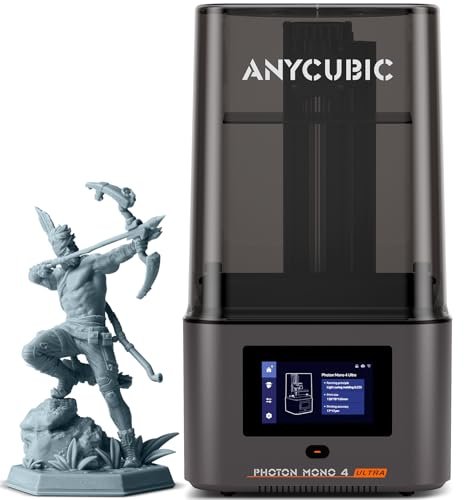
The Photon Mono 4 Ultra steps up the pace with an ACF release film and an intelligent motion profile capable of reaching speeds up to 120mm/h. You get that same jaw-dropping 7-inch 10K display, backed by a tight 3-degree collimated COB light source for pin-sharp layer curing. During evaluation, its suite of five onboard smart inspections accurately alerted me to leftover debris in the resin tank, preventing a ruined print run.
Key features that stand out:
– Rapid print speeds up to 120mm/h using specialized ACF release film
– 10K (9024×5120) display backed by a high-uniformity Fresnel COB array
– Precision 8mm T-type screw rod and rigid Z-axis guide rails
– Five smart diagnostic checks covering resin level, print failure, and component life
– Crisp 4.3-inch color touchscreen interface
Pros:
– Blazing-fast cure and cycle speeds save hours on tall prints
– Advanced light optics deliver stellar dimensional accuracy
– Smart failure alerts catch errors before resin is wasted
Cons:
– The ACF film can slightly soften ultra-fine glossy micro-textures compared to standard FEP.
Best for: Rapid prototypers who need accurate parts turned around in record time.
Expert Opinion: If you value your time as much as print crispness, the Mono 4 Ultra balances high-end speeds with remarkable 10K accuracy.
5. ANYCUBIC Photon Mono 4 10K Resin 3D Printer (Standard Edition)
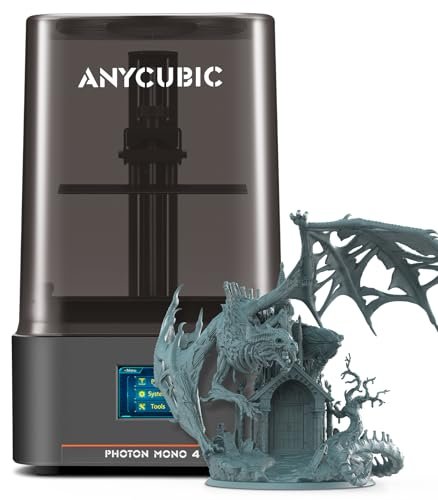
This variant of the Photon Mono 4 is a workhorse that prioritizes foundational stability, featuring factory-calibrated components that can have you printing in under five minutes. The 7-inch 10K screen requires brief exposure times of just 1.5 seconds per layer, keeping print jobs moving along rapidly. Its Laser Engraving Platform 2.0 offers a crosshatch pattern that grabs onto base layers firmly to combat accidental print drops halfway through a long overnight run.
Key features that stand out:
– 10K monochrome screen paired with 1.5-second fast layer curing
– LighTurbo light engine for even layer hardening
– Enhanced grip Laser Engraving Platform 2.0
– Built-in power failure resume function
– Pre-assembled unit requiring simple 4-point leveling
Pros:
– Extremely quick 1.5-second exposure cycles for standard resins
– Dependable plate adhesion prevents edge peeling
– Quick assembly right out of the box
Cons:
– Manual 4-point leveling requires a careful hand during initial setup.
Best for: Budget-conscious users wanting premium 10K resolution with minimal mechanical fluff.
Expert Opinion: This standard Mono 4 build provides everything an artist needs to create showroom-ready models without paying for extra sensors they might not use.
6. ANYCUBIC Photon Mono 4 (Enhanced Support Edition)
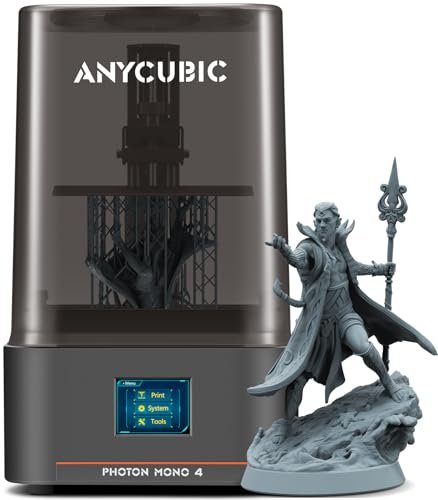
Offering complete peace of mind, this version of the Photon Mono 4 pairs the stellar 9024×5120 screen resolution with an extended 6-month LCD warranty and dedicated 24-hour weekday support. You still get the roomy 153.4 x 87 x 165 mm build envelope, giving you plenty of headroom to orient tall figures diagonally. The stable LighTurbo matrix light source produces exceptionally smooth surfaces that drastically cut down post-processing and sanding times.
Key features that stand out:
– 7-inch 10K panel yielding 17-micron details
– Comprehensive customer support with 6-month screen coverage
– Quick-curing light matrix driving 1.5s normal layer times
– Large Z-height travel for printing single-piece tall models
– Textured print plate engineered for balanced release forces
Pros:
– Better warranty terms than typical entry-level printers
– Unrivaled detail on intricate items like jewelry casts or model heads
– Smooth light distribution reduces visible stepping
Cons:
– The included paper leveling card requires attentive manual tension adjustments.
Best for: First-time buyers who place a premium on reliable post-purchase manufacturer assistance.
Expert Opinion: Buying an ultra-high-resolution budget printer can be nerve-wracking, but the extended LCD warranty on this edition takes the stress out of accidental screen wear.
7. ELEGOO ABS-Like 3.0+ 3D Printer Resin Grey 2000g

Great budget printing requires dependable consumable materials, and the ELEGOO ABS-Like 3.0+ gives you a massive 2000g value supply of durable material. Unlike standard brittle resins, this blend offers high impact resistance and thermal stability up to 55°C, meaning models bend slightly rather than shattering when dropped. Its enhanced fluidity allows the liquid to settle quickly between peel cycles, boosting your success rate and print speeds.
Key features that stand out:
– Enhanced impact toughness allows drilling and tapping
– Thermal resistance up to 55°C prevents heat warpage
– Low-shrinkage formulation preserves accurate dimensions
– High fluidity speeds up vat reflow during fast cycles
– Economical 2-kilogram packaging reduces cost per print
Pros:
– Parts survive drops off gaming tables without snapping
– Thin liquid consistency makes it easy to clean off prints
– Excellent dimensional stability for snap-fit joints
Cons:
– Emits a mild chemical odor requiring good room ventilation.
Best for: Makers printing action figures, cosplay components, or functional mechanical parts.
Expert Opinion: Standard resins are notoriously brittle, making ABS-Like 3.0+ an essential purchase if you plan on handling, painting, or assembling your prints regularly.
8. ANYCUBIC Photon Mono M7 MAX Resin 3D Printer
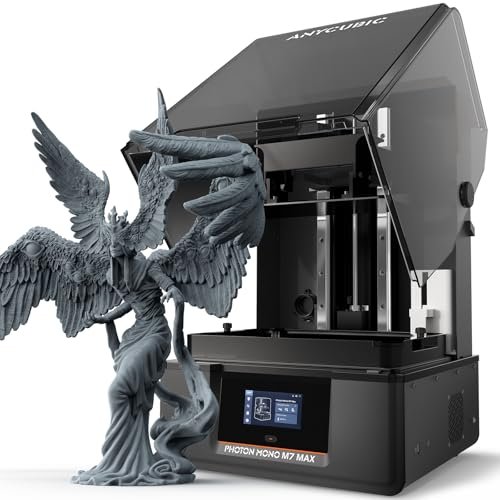
If you want to move past the limitations of smaller budget printers, the Photon Mono M7 MAX offers a massive 13.6-inch 7K monochrome screen paired with an enormous 298 x 164 x 300 mm build volume. I was especially impressed by its heated vat with automatic temperature control, which completely eliminates the print failures caused by cold winter mornings in an unheated garage. It even manages its own resin via an automated feeder and dynamic replenishment system.
Key features that stand out:
– Colossal 298 x 164 x 300 mm build volume for large-scale prints
– Heated resin vat ensures optimal material viscosity
– Automatic resin top-off and dynamic monitoring system
– Speeds up to 60mm/h with Intelligent Release 2.0
– Built-in 360-degree self-diagnostic sensor suite
Pros:
– Can print life-size helmets and large statues in one piece
– Vat heating drastically reduces print failures in cold rooms
– Automatic material refill prevents mid-print runouts
Cons:
– Large footprint and heavy chassis demand dedicated workshop space.
Best for: Advanced makers, prop creators, and small studios printing full-scale helmets and batches.
Expert Opinion: While it sits in a higher class than standard sub-$100 desktop units, the heated vat and massive capacity make it an unbelievable workhorse for batch fabrication.
9. SUNLU Fast Curing Standard 3D Printer Resin 1kg
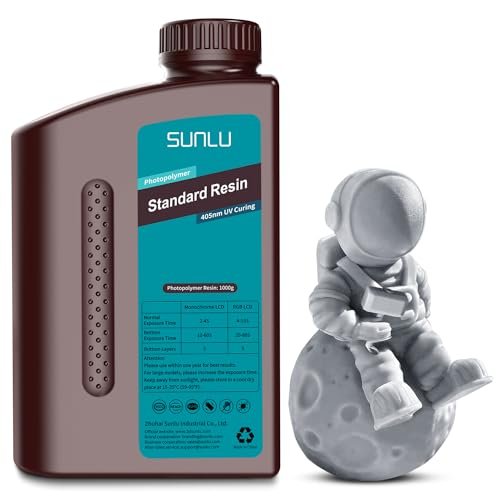
SUNLU Standard 3D Resin is a staple for hobbyists running compact printers, featuring exceptionally low odor and rapid cure times. Its broad 365-405nm UV wavelength compatibility ensures seamless performance across virtually every budget LCD machine on the market. It exhibits minimal shrinkage during the post-curing phase, which helps you maintain crisp corner lines on architectural miniatures and interlocking puzzle boxes.
Key features that stand out:
– Wide light spectrum compatibility (365–405nm)
– Low-odor formulation for comfortable indoor crafting
– High liquid fluidity translates to rapid exposure layers
– Patented leak-proof bottle design prevents shipping messes
– Rinses clean effortlessly using standard isopropyl alcohol
Pros:
– Very affordable everyday resin for general prototyping
– Noticeably lower smell compared to other standard resins
– Takes acrylic paints and primers exceptionally well
Cons:
– Like most standard-grade photopolymers, thin features can be brittle.
Best for: Budget-minded hobbyists looking for a clean-rinsing, low-smell daily resin.
Expert Opinion: SUNLU nailed the balance between cost, low odor, and fast layer response, making it my go-to choice for test prints on newly calibrated machines.
10. Creality Halot-X1 Combo Resin 3D Printer
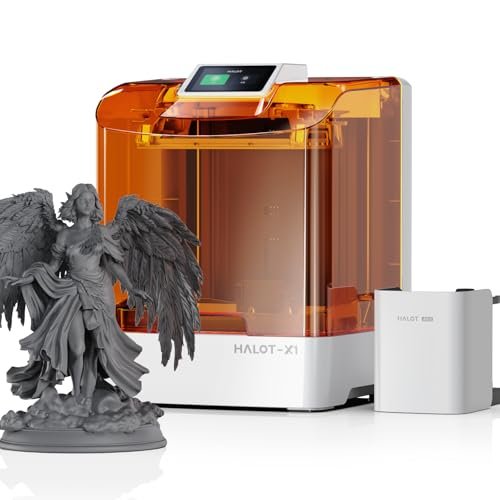
The Creality Halot-X1 Combo pushes modern resin tech to the edge with a 10.1-inch 16K mono display offering an unbelievable 14×19μm pixel density. What makes this machine truly unique is its top-down moving optical system, where the build plate stays firmly anchored while the vat and optics move, virtually eliminating Z-wobble. It also incorporates 92-zone intelligent exposure control, lighting up only the necessary sections of the screen to preserve panel longevity.
Key features that stand out:
– 16K resolution (15120×6230) delivers ultra-fine surface detail
– Fixed build plate mechanism eliminates leveling entirely
– Intelligent AFU system with rapid vat heating (30–45°C in 3 minutes)
– Zoned UV exposure extends monochrome LCD lifespan
– Twist-to-release print plate makes part harvesting simple
Pros:
– Industry-leading 16K surface fidelity leaves no visible voxel lines
– Zero leveling required—ever—thanks to the stationary build head
– Heated vat system ensures reliable printing in cold environments
Cons:
– Premium pricing and complex mechanics require a learning curve.
Best for: Discerning collectors, jewelry designers, and pros wanting cutting-edge resin resolution.
Expert Opinion: The stationary build plate design on the Halot-X1 is an engineering marvel that tackles layer shifting at the physical root, yielding unmatched detail fidelity.
Helpful Comparison Insights
- Resolution vs. Usability: Machines like the ANYCUBIC Photon Mono 4 boast incredible 10K pixel density, which is stellar for 28mm miniature faces. However, beginners often get fewer failed prints on the ELEGOO Mars 5 due to its automatic one-click leveling and residue detection sensor.
- The Value of Size: A compact unit like the MALYAN S100 Mini wins on sheer portability and ease of handling with its magnetic flex plate, but it limits you to small trinkets. If your budget stretches toward the ANYCUBIC Photon Mono M7 MAX, you gain the ability to print full-scale cosplay props and batch army miniatures in a single run.
- Resin Selection Dictates Durability: Running budget machines with standard resins like SUNLU Standard yields smooth surfaces at rock-bottom prices. But if you want parts that won’t crack during tabletop use, spending a few extra dollars on ELEGOO ABS-Like 3.0+ provides essential drop resistance and impact toughness.
Final Verdict
If you want the purest blend of jaw-dropping detail and budget affordability, the standard ANYCUBIC Photon Mono 4 takes the crown. Its 10K screen renders miniature details that used to require four-figure commercial equipment.
For absolute beginners who dread calibration headaches, the ELEGOO Mars 5 is the safest bet thanks to its automated leveling and LCD-saving mechanical safety sensors.
Pair either machine with a bottle of ELEGOO ABS-Like 3.0+, and you will have a resilient, ultra-detailed printing station ready to roll right out of the box.
Everything You Need to Know About the 99 Dollar Resin Printer
Can you actually get a reliable 99 dollar resin printer?
Yes. While the newest high-resolution models sit slightly above this mark, manufacturers frequently discount entry-level units (such as previous-generation mono screen machines or compact units like the MALYAN S100) down to the $99 mark during major holiday sales and clearance events. They offer exceptional print quality comparable to mid-tier machines, though usually with a smaller print volume.
Is an entry-level budget resin printer good for tabletop miniatures?
Budget resin printers are significantly better at capturing tabletop miniature details than even the most expensive filament (FDM) printers. Even an entry-level 2K or 4K monochrome LCD printer can resolve fine layers down to 0.03mm, easily rendering chainmail, facial expressions, and tiny weaponry cleanly.
What extra equipment do I need to buy with a cheap resin printer?
Your printer is only one part of the equation. You will also need 99% isopropyl alcohol (IPA) or a dedicated wash fluid, nitrile gloves, a UV curing station (or a budget UV lamp and solar turntable), paper towels, and safety glasses. Factoring in an extra $40 to $60 for safety gear and washing equipment is recommended.
Does LCD resolution (4K vs 10K) matter on smaller budget printers?
It matters, but with diminishing returns depending on the build plate size. On a standard 6- to 7-inch build plate, 4K resolution delivers roughly 35-micron pixel size, which is already invisible to the naked eye after painting. Upgrading to 10K drops pixel size to 17 microns, giving sharp edges on micro-sculpts and eliminating anti-aliasing blur.
How bad is the odor on affordable resin printers?
All photopolymer resin emits some volatile organic compounds (VOCs) and chemical scents. Budget printers often lack built-in active carbon air filtration systems, so it is vital to place your machine in a well-ventilated spare room, garage, or dedicated workshop away from pets and living quarters. Using low-odor resins like SUNLU Standard also helps mitigate smells.
Why do prints fail to stick to the build plate on budget printers?
The most common cause is incorrect leveling tension or an insufficient bottom-layer exposure time. If your bottom exposure is set too low (less than 25–35 seconds for standard resin), the base layers will not polymerize tightly to the metal plate. Re-leveling the platform with balanced sheet resistance and slightly scuffing the laser plate will resolve most adhesion woes.
Affiliate Disclosure: As an Amazon Associate, I earn from qualifying purchases made through links on this site.